
Steve Jobs once said, “Technology is nothing. What’s important is that you have a faith in people, that they’re basically good and smart, and if you give them tools, they’ll do wonderful things with them.” This wisdom perfectly captures the relationship between skilled professionals and the digital resources that amplify their capabilities.
Today’s independent professionals face unique challenges in managing their work. They need effective solutions to handle multiple clients while maintaining high standards. The right selection of digital resources can transform how they operate.
This guide explores carefully selected applications across various categories. These resources help freelancers stay organized and save valuable time. They range from free options to premium solutions for different business stages.
Each recommendation focuses on practical implementation for maximum efficiency. The goal is to create a cohesive digital ecosystem that supports professional growth and client satisfaction.
Key Takeaways
- Modern freelancers benefit from specialized digital resources that enhance productivity
- Carefully selected tools help manage multiple clients while maintaining professional standards
- Both free and premium options are available for different business growth stages
- Integration capabilities allow for creating a cohesive digital workflow system
- Automation features reduce manual work and repetitive tasks significantly
- Proper tool implementation can streamline operations and improve client communication
- The right digital ecosystem ultimately supports increased earning potential
Introduction: Why Freelancers Need Digital Tools
Independent professionals operate without traditional office support systems. They juggle multiple projects and deadlines simultaneously. This creates unique organizational challenges that require smart solutions.
Modern technology provides essential resources for maintaining professional standards. These applications help streamline daily operations and improve efficiency. They transform how freelancers manage their work and client relationships.
The right selection of digital resources saves valuable time on administrative tasks. This allows more focus on billable projects and client services. Automation handles repetitive activities like scheduling and reminders.
Remote work arrangements demand sophisticated communication capabilities. Digital platforms enable seamless collaboration regardless of location. They help present a professional image through polished interactions.
Choosing appropriate tools requires careful consideration of features and pricing. Integration capabilities create cohesive workflow systems. Proper implementation makes the difference between struggling and thriving.
These resources provide valuable data and insights for business decisions. They track time usage and analyze operational efficiency. The information helps optimize processes and increase earning potential.
This guide compiles 35 essential resources for 2025. It eliminates hours of research by presenting carefully selected options. Each recommendation addresses specific pain points in client management and project delivery.
Essential Scheduling Tools for Client Meetings
Coordinating appointments with multiple clients can become a logistical challenge. These applications streamline the entire process through smart automation. They eliminate endless email chains and save valuable time for everyone involved.
Modern scheduling platforms sync with existing calendars to prevent conflicts. They offer customizable availability settings and automatic reminders. This creates a professional experience while reducing administrative overhead.
Calendly: Streamlined Appointment Booking
Calendly provides an intuitive interface that integrates seamlessly with Google Calendar. Its generous free plan allows unlimited meetings with branded booking links. Users appreciate the automatic reminders and customizable availability settings.
The platform integrates with Zoom for virtual meetings. It offers different appointment types with varying durations. This flexibility makes it ideal for various client services.
Vcita: All-in-One Client Management
Vcita functions as a comprehensive solution beyond just scheduling. It combines appointment booking with payment processing and client communication. The 14-day free trial provides full access without requiring credit card information.
Pricing starts at $29 per month after the trial period. This platform helps track client interactions and manage workflow efficiently. It’s particularly useful for freelancers offering multiple services.
Cirrus Insight: Advanced Calendar Integration
Cirrus Insight stands out with its advanced integration capabilities. It offers Salesforce compatibility and Smart Scheduler features for team routing. Three pricing plans start from $14 per user monthly.
The platform provides sophisticated tools for sales-oriented professionals. Its automation features streamline the scheduling process significantly. This helps maintain productivity during busy periods.
Doodle: Poll-Based Meeting Scheduling
Doodle offers a unique approach through its poll-based system. Participants don’t need accounts, making coordination with multiple people effortless. The free plan includes one booking page and unlimited polls.
This tool simplifies finding common availability among groups. It’s perfect for quick meetings with clients or teams. The simplicity saves time while ensuring everyone can participate.
CozyCal: Branded Appointment Pages
CozyCal focuses heavily on branding and customization options. Freelancers can create scheduling pages that match their business identity. The platform even processes payments through Stripe integration.
Pro plans cost $20 monthly while Plaid plans are $30. This tool helps present a professional image to clients. The customization options make each interaction feel personalized.
These scheduling solutions transform how independent professionals manage their time. They automate the entire meeting coordination process from start to finish. This allows more focus on actual work rather than administrative tasks.
Most platforms offer free tiers or trials for testing. This makes them accessible before committing to paid plans. The right tool can significantly improve client communication and satisfaction.
Video Conferencing Solutions for Remote Work
Face-to-face meetings remain vital for building strong client relationships. Modern video platforms bridge geographical gaps with crystal-clear communication. They transform how professionals connect across different locations.
These services support various interactive features that enhance collaboration. Screen sharing allows seamless presentations of work progress. Virtual whiteboards enable real-time brainstorming sessions with teams.
Most platforms offer free access with basic functionality. This makes them ideal for freelancers with limited meeting needs. Paid plans remove time restrictions and add advanced capabilities.
Zoom: Comprehensive Meeting Platform
Zoom stands as the industry standard for video communication. Its free plan supports 40-minute meetings with essential features. The Pro plan costs $14.99 monthly with extended time limits.
This platform offers breakout rooms for team collaborations. Virtual backgrounds maintain professionalism during client calls. Meeting recordings help capture important updates and content discussions.
Google Meet: Integrated Google Workspace Solution
Google Meet integrates perfectly with the Google ecosystem. Users can join meetings directly from Gmail without downloads. Free meetings last up to 60 minutes with full functionality.
Google Workspace integration starts at $6 monthly. This allows seamless scheduling through Calendar applications. The platform ensures smooth communication within existing workflows.
TrueConf: Self-Hosted Privacy-Focused Option
TrueConf offers a unique self-hosted solution for privacy-conscious professionals. It provides high-quality video calls without third-party servers. The free version includes essential features for basic needs.
This platform uses a licensing model for pricing. It gives users complete control over their data and communication process. TrueConf is ideal for those prioritizing security in client services.
Security features have become increasingly important across all platforms. Password protection and waiting rooms prevent unauthorized access. End-to-end encryption ensures private conversations remain confidential.
Integration capabilities allow these tools to connect with scheduling applications. They automatically add meeting links to calendar events. This streamlines the entire process from invitation to completion.
The choice between platforms often depends on existing tool ecosystems. Google Meet works best for Google Workspace users. Zoom offers broader compatibility with various systems and devices.
These video solutions transform remote work experiences significantly. They enable professional presentations and effective team collaborations. The right platform enhances how freelancers communicate with clients worldwide.
Communication and Collaboration Platforms
Modern communication platforms transform how professionals coordinate projects across distances. These systems centralize discussions and file sharing in organized spaces. They eliminate email clutter while keeping everything accessible.

These platforms have evolved into comprehensive collaboration hubs. They handle project discussions and team coordination seamlessly. The right system creates efficient workflows for multiple clients.
Pumble: Free Unlimited Communication Tool
Pumble offers an exceptional free plan with unlimited users. Message history remains accessible without restrictions. This makes it ideal for growing businesses.
Paid plans start at $2.49 per user monthly. The platform supports file sharing and channel organization. It integrates with popular productivity tools smoothly.
Freelancers appreciate the cost-effective approach to team communication. Client projects stay separated in dedicated channels. This maintains clear boundaries between different works.
Slack: Team Collaboration Hub
Slack stands as the industry standard for team collaboration. It supports organized channels and powerful search functionality. File sharing includes integration with Google Drive.
The platform offers voice notes and Zoom integration. These features enhance remote communication significantly. Teams stay connected through mobile applications.
Threaded conversations prevent message overload. Reaction emojis provide quick feedback without lengthy responses. Message formatting maintains clarity in complex discussions.
Guest access allows controlled client participation. Freelancers invite clients into specific channels only. This protects sensitive information while enabling collaboration.
These communication tools reduce email overload dramatically. They create searchable archives of all project discussions. Decisions and updates remain easily accessible for reference.
Integration capabilities connect with other essential platforms. Calendar apps and project management systems sync seamlessly. This creates a cohesive digital ecosystem for professionals.
Mobile applications ensure constant connectivity. Freelancers respond quickly even when away from their desks. This responsiveness impresses clients and builds trust.
The right platform choice depends on specific business needs. Some prefer unlimited free access while others need advanced features. Testing different options reveals the ideal fit.
These collaboration platforms ultimately save valuable time. They streamline communication and keep projects organized. The efficiency gains directly impact profitability and client satisfaction.
Top Digital Tools Every Freelancer Should Use for Note-Taking
The evolution from paper notebooks to digital systems represents a quantum leap in information management. Modern applications capture ideas across devices and transform them into actionable plans. They help professionals organize meeting notes and research materials efficiently.
These sophisticated platforms handle more than simple text capture. They organize content through notebooks, tags, and searchable databases. Advanced features include optical character recognition and handwriting support.
Integration capabilities connect note-taking with other workflow tools. This creates automated triggers based on captured information. The right system saves valuable time while improving organization.
Evernote: Powerful Organizational System
Evernote provides a comprehensive solution for complex note organization. Its notebook and tag structure creates logical hierarchies for different projects. Web clipping capabilities capture online content directly into the system.
The platform integrates with email and cloud storage services seamlessly. A free plan is available for basic needs. The Professional plan costs $17.99 monthly for advanced features.
Google Keep: Simple Cloud-Based Notes
Google Keep offers straightforward note-taking within the Google ecosystem. It features color-coded notes and voice memo capabilities. The tool is completely free without any subscription requirements.
Quick access across devices makes it ideal for spontaneous ideas. It syncs automatically with Google accounts. The simplicity appeals to those preferring minimalistic solutions.
Notion: All-in-One Workspace
Notion combines notes, tasks, and databases in a customizable environment. Users create personalized workspaces for different client work. The free version provides substantial functionality for most needs.
Template systems support recurring note types and project structures. The platform adapts to individual workflow preferences perfectly. It represents the all-in-one approach to information management.
Editpad: Web-Based Minimalist Tool
Editpad provides a no-commitment solution for quick notes. It requires no installation or login, making it ideal for temporary use. The platform is totally free without hidden costs.
This minimalist approach suits those needing simple text capture. It handles quick ideas and temporary information efficiently. The web-based nature ensures accessibility from any device.
Tactiq.io: Meeting Transcription Service
Tactiq.io addresses the specific need for meeting documentation. It provides automatic transcription for Zoom and Google Meet calls. The free plan saves up to 10 transcripts for reference.
The Pro plan costs $12 per user monthly for unlimited access. This tool captures important discussions and action items accurately. It transforms spoken content into searchable text efficiently.
These note-taking tools help professionals capture and organize critical information. They transform scattered thoughts into structured systems. The right choice depends on individual workflow needs and preferences.
Advanced features support tablet users with handwriting recognition. Template systems streamline recurring note tasks. Integration capabilities create cohesive digital ecosystems.
The selection ranges from simple text capture to complex knowledge management. Each option serves different purposes in the professional workflow. Testing free versions helps identify the ideal solution.
Writing and Editing Tools for Professional Content
Clear written communication separates amateur freelancers from true professionals. Quality writing tools provide the polish that elevates client deliverables. They ensure error-free content across all business communications.
These platforms handle everything from basic grammar checks to advanced style improvements. They help maintain consistent quality across multiple projects. The right tools save time while enhancing professional reputation.
Grammarly: Advanced Writing Assistant
Grammarly offers comprehensive writing assistance across multiple platforms. Its free version includes basic grammar and spelling checks. The premium plan costs $30 monthly for advanced features.
This tool provides style suggestions and tone detection capabilities. Plagiarism checking ensures original content creation. It works seamlessly within web browsers and word processors.
Real-time suggestions appear during the writing process. This immediate feedback improves content quality instantly. Professionals appreciate the cross-platform compatibility.
Google Docs: Cloud-Based Document Creation
Google Docs provides free document creation with any Google account. It offers real-time collaboration features for team projects. Automatic saving prevents data loss during work sessions.
The platform integrates seamlessly with other Google Workspace applications. Multiple users can edit documents simultaneously. Change tracking maintains version history for reference.
Cloud storage ensures access from any internet-connected device. This flexibility supports remote work arrangements perfectly. Documents remain protected against local hardware failures.
Hemingway Editor: Readability Improvement Tool
Hemingway Editor focuses specifically on readability improvement. The basic web version is available for free use. Plus plans range from $10 to $15 monthly for additional features.
This tool highlights complex sentences and passive voice constructions. It suggests simpler alternatives for clearer communication. The desktop app costs $19.99 as a one-time payment.
Color-coded suggestions make editing intuitive and efficient. Adverb identification helps create more direct content. Readability scores guide improvements for target audiences.
These writing platforms transform how professionals approach content creation. They reduce errors that could undermine client confidence. The combination significantly improves writing quality and efficiency.
Integration capabilities allow smooth workflow transitions. Documents move easily between different applications. This creates a cohesive content creation process.
Professional freelancers benefit from these specialized tools. They maintain high standards across all written communications. The right selection supports business growth and client satisfaction.
Design and Visual Content Creation Tools
Visual communication has become essential for modern professionals. These platforms transform complex ideas into engaging graphics. They help create professional materials without design experience.
Modern design tools make visual content accessible to everyone. They provide intuitive interfaces and ready-made templates. This saves time while maintaining quality standards.
These platforms handle various types of visual projects. They support social media graphics and professional presentations. The right tools enhance client communication significantly.
Canva: User-Friendly Design Platform
Canva offers a drag-and-drop interface with thousands of templates. Users create social media graphics and marketing materials easily. The platform includes a generous free version.
Pro plans unlock advanced features and more templates. This tool helps maintain brand consistency across materials. It supports collaboration with clients on design projects.
Stock libraries provide access to photos and illustrations. Users customize elements with brand colors and fonts. The mobile app enables work from any location.
Freepik: All-in-One Creative Solution
Freepik combines traditional assets with AI generation tools. It creates images, videos, and text content through artificial intelligence. The platform merges new technology with classic editing features.
This solution offers comprehensive creative capabilities. Users access millions of design elements and templates. AI features handle background removal and image enhancement.
The platform supports various content creation needs. It helps professionals produce high-quality visual materials. This eliminates the need for expensive software or outsourcing.
These design platforms transform how freelancers approach visual projects. They provide professional results without formal training. The right choice depends on specific workflow requirements.
Free tiers make these tools accessible to beginners. Premium plans offer advanced capabilities for growing businesses. Testing different options helps find the perfect fit.
Visual content creation becomes efficient and enjoyable. These platforms support business growth and client satisfaction. They represent essential resources for modern professionals.
Social Media Management Applications
Maintaining an active social media presence requires strategic planning and consistent effort. Professionals need efficient solutions to manage multiple accounts without constant manual updates. These platforms streamline the entire content distribution process.
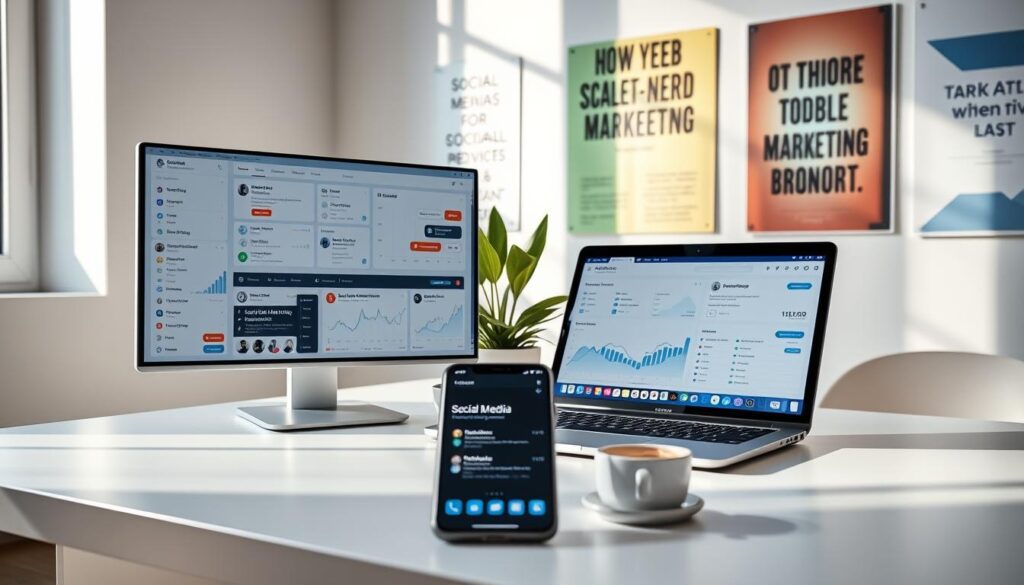
Social media management tools help professionals maintain consistent online visibility. They eliminate the need for daily manual posting across different networks. This automation saves valuable time for other important work.
These platforms provide centralized dashboards for content scheduling. Users can plan posts weeks or months in advance. This ensures consistent engagement without daily effort.
“Social media is about the people, not about your business. Provide for the people and the people will provide for you.”
Buffer: Multi-Platform Scheduling
Buffer offers a clean interface ideal for independent professionals. It supports scheduling across Instagram, X, LinkedIn, and Facebook. The platform provides basic analytics for performance tracking.
This tool simplifies content management across multiple networks. Users can create and schedule posts from a single dashboard. The visual calendar helps maintain balanced content distribution.
Buffer’s analytics features provide valuable data insights. Professionals can see which content resonates with their audience. This information helps refine marketing strategies over time.
| Feature | Benefit | Ideal For |
|---|---|---|
| Multi-platform scheduling | Saves time on manual posting | Professionals managing multiple accounts |
| Content calendar | Visual planning and organization | Maintaining consistent posting schedule |
| Basic analytics | Performance tracking and insights | Data-driven strategy adjustments |
| Team collaboration | Client approval workflows | Working with virtual assistants |
| Mobile access | On-the-go management | Remote work flexibility |
These applications transform social media from a time-consuming task into an efficient marketing channel. They provide the tools needed for professional online presence management. The right platform supports business growth through consistent engagement.
Mobile applications enable quick updates and monitoring from smartphones. This ensures professionals can manage their social presence anywhere. The flexibility supports modern remote work arrangements perfectly.
Collaboration features allow working with clients or team members. Approval workflows maintain quality control while enabling efficient processes. This is particularly valuable for larger projects.
Content suggestion features help overcome creative blocks. Integration with stock libraries provides additional resources. These features support consistent content creation.
The analytics provided by these platforms offer valuable insights. Professionals can understand audience preferences and engagement patterns. This data informs better content decisions.
Choosing the right social media management tool depends on specific needs. Some professionals prefer simplicity while others need advanced features. Testing different options helps find the perfect fit.
These platforms ultimately save significant time on social media management. They allow professionals to focus on creating quality content rather than manual posting. The efficiency gains directly impact business productivity.
Email Marketing Platforms for Client Communication
Effective email communication serves as the backbone of professional client relationships. Strategic messaging keeps customers informed about project updates and service offerings. These specialized platforms transform simple emails into powerful marketing channels.
Email marketing tools help independent professionals maintain consistent communication. They move beyond basic messaging to structured campaign management. This approach builds stronger connections with current and potential clients.
Mailchimp: Campaign Management Tool
Mailchimp stands out with its user-friendly interface and comprehensive features. The platform offers drag-and-drop editing and pre-designed templates. These elements make professional email creation accessible to everyone.
Automation capabilities handle welcome sequences and follow-up campaigns. Audience segmentation targets messages based on client categories. Open rate tracking provides valuable performance data.
The free plan offers substantial functionality for beginners. It supports basic email campaigns and list management. This makes it ideal for freelancers starting their marketing journey.
Key benefits include:
- Professional templates ensure brand consistency across all communications
- Automation workflows save time on repetitive messaging tasks
- Audience segmentation enables targeted communication strategies
- Analytics provide insights for improving campaign effectiveness
- Integration capabilities connect with other business tools seamlessly
These email platforms help professionals nurture leads and promote their services. They transform sporadic messages into coordinated communication strategies. The right system supports business growth through better client relationships.
Compliance features ensure messages meet legal requirements. Unsubscribe options and consent management protect both parties. This maintains professional standards in all communications.
Even free versions provide sufficient features for most independent professionals. They offer scalable options as business needs evolve. The platform grows alongside the freelancer’s practice.
Integration with other systems creates cohesive marketing ecosystems. CRM connections and landing page compatibility enhance overall effectiveness. This streamlined process improves efficiency significantly.
Email marketing tools represent essential resources for modern professionals. They maintain engagement with current clients while attracting new opportunities. The right platform transforms how freelancers communicate their value.
File Storage and Sharing Solutions
Modern professionals require reliable systems for organizing and distributing digital materials. Cloud-based platforms have transformed how independent workers handle their important documents and project assets. These solutions provide secure, accessible storage with powerful collaboration features.
Traditional methods like email attachments and physical drives create limitations. They restrict file sizes and lack version control capabilities. Cloud storage eliminates these constraints while maintaining professional standards.
Google Drive: Cloud Storage and Collaboration
Google Drive stands as a comprehensive solution for document management needs. It provides 15GB of free storage space for all users. This generous allocation supports various file types and sizes.
The platform integrates seamlessly with Google’s productivity suite. Users can create and edit Docs, Sheets, and Slides directly within the system. Real-time collaboration allows multiple people to work on documents simultaneously.
Advanced sharing permissions give precise control over file access. Professionals can set viewing, commenting, or editing privileges for each collaborator. This maintains security while enabling efficient teamwork.
Mobile applications ensure files remain accessible from any device. Internet connection provides instant synchronization across all platforms. This flexibility supports remote work arrangements perfectly.
Automatic saving protects against data loss from technical issues. Version history preserves previous edits for reference and recovery. These features prevent work interruptions and maintain project continuity.
Search capabilities help locate specific files quickly. Filters by file type, owner, or modification date streamline organization. Keyword searches scan document content for relevant matches.
Integration with other tools creates contextual workflows. Files connect directly to projects, tasks, and communication platforms. This cohesive approach enhances overall productivity and efficiency.
Cloud storage solutions have become essential components of professional toolkits. They provide secure, scalable options for growing businesses. The right platform supports successful client relationships and project delivery.
Time Tracking and Productivity Management
Understanding how hours are spent directly impacts freelance success. Professionals need clear insights into their daily activities. These specialized platforms transform raw data into actionable intelligence.
Accurate time tracking ensures proper billing for client projects. It reveals patterns in work habits and efficiency levels. This information helps optimize workflows and increase earnings.
Productivity management addresses the challenge of digital distraction. Multiple applications can fragment attention throughout the day. Consolidated workspaces bring focus back to important tasks.
Toggl Track: Simple Time Monitoring
Toggl Track offers effortless time tracking with one-click functionality. Users assign sessions to specific projects and clients easily. The system captures every minute without complicated setup.
Visual reports transform raw numbers into understandable patterns. Color-coded graphs show where time goes each week. Calendar views display daily and weekly activity at a glance.
Cross-device synchronization ensures continuity across platforms. Mobile access allows tracking away from the main workspace. This flexibility supports modern remote work arrangements.
Rambox: Workspace Organization Tool
Rambox consolidates multiple applications into organized workspaces. It reduces constant switching between different platforms. This streamlined approach saves valuable time and mental energy.
Custom workspaces group tools by project or client needs. Unread counters help prioritize attention effectively. Notification settings prevent constant interruptions during focused work.
The platform supports various operating systems seamlessly. It brings harmony to the digital work environment. This organization directly enhances overall productivity levels.
| Feature | Toggl Track | Rambox |
|---|---|---|
| Primary Function | Time recording and analysis | Application consolidation |
| Key Benefit | Accurate project billing | Reduced context switching |
| Reporting | Visual data representations | Unread message counters |
| Cross-Platform | Full synchronization | Multiple OS support |
| Integration | Accounting systems | Various applications |
These platforms work together to create comprehensive systems. Time tracking provides the data for informed decisions. Productivity management implements those decisions effectively.
Mobile applications ensure functionality beyond the desktop. Professionals can track time and manage tasks anywhere. This flexibility supports the modern freelance lifestyle.
Automated features reduce manual data entry requirements. Computer activity monitoring creates time records automatically. This accuracy improves billing precision and client trust.
The combination delivers powerful insights into work patterns. Professionals identify time drains and efficiency opportunities. This knowledge transforms how they approach their daily schedule.
Task Management Systems
Juggling multiple client demands requires systematic organization. Task management platforms provide the structure needed to handle competing priorities. They transform chaotic workloads into organized systems.
These systems create clarity around deadlines and responsibilities. Professionals see exactly what needs completion for each project. This visibility prevents important items from getting overlooked.

Modern tools offer more than simple to-do lists. They provide comprehensive solutions for project coordination. The right system becomes the central hub for all work activities.
Todoist: Flexible Task Organization
Todoist stands out with its clean interface and intuitive design. Users create tasks with natural language input for due dates. Priority levels help identify urgent items quickly.
The platform supports detailed project categorization. Subtasks break complex assignments into manageable steps. Recurring tasks handle regular responsibilities automatically.
Calendar integration syncs deadlines across devices. Mobile access ensures lists remain available anywhere. Reminders prevent missed deadlines and keep projects on track.
Collaboration features enable shared task lists with clients. Progress tracking provides transparent updates for everyone involved. This maintains clear communication throughout projects.
Automation reduces manual data entry for repetitive work. Templates standardize common project workflows. These features save valuable time and mental energy.
Visualization options include calendar views and kanban boards. Different perspectives help manage various project types effectively. Filter systems focus attention on current priorities.
Completion analytics provide insights into productivity patterns. Professionals understand their work habits better over time. This data helps optimize personal management strategies.
| Feature | Benefit | Use Case |
|---|---|---|
| Natural language input | Quick task creation | Adding items during client calls |
| Priority levels | Focus on urgent items | Managing multiple deadlines |
| Recurring tasks | Automate repetition | Weekly client check-ins |
| Subtasks | Break down complexity | Large project phases |
| Mobile access | Work anywhere | Field work or travel |
| Collaboration | Shared responsibility | Team projects |
| Integration | Workflow automation | Email to task creation |
These tools transform overwhelming task lists into organized systems. They provide clarity about what needs attention each day. The right platform coordinates all business activities seamlessly.
Integration capabilities connect with other essential tools. Email messages can generate new tasks automatically. Calendar events sync with deadline reminders efficiently.
Mobile applications ensure constant access to important lists. Professionals update tasks from any location conveniently. This flexibility supports modern work arrangements perfectly.
The system becomes the central nervous system for freelance operations. It coordinates all projects and client deliverables effectively. This organization directly impacts business success and growth.
Financial Management and Billing Tools
Financial organization separates thriving businesses from struggling operations. Independent professionals need robust systems to handle money matters efficiently. These specialized platforms transform chaotic finances into organized records.
Proper financial management ensures accurate tracking of income and expenses. It provides clear insights into business health and profitability. This information supports smart decisions about pricing and growth.
Modern tools automate repetitive financial tasks effectively. They handle everything from receipt capture to tax preparation. This saves valuable time while maintaining accuracy.
Airbase: Expense Tracking and Reporting
Airbase offers comprehensive expense management for business finances. Users can upload receipts directly through mobile capture. The system categorizes expenses automatically for organized records.
Recurring payment management handles regular business costs efficiently. Custom approval flows ensure proper oversight for larger expenses. This maintains financial control while streamlining the process.
Detailed reports provide valuable insights into spending patterns. Professionals can analyze expenses by category or project. This data helps identify cost-saving opportunities.
The platform automates routine financial tasks seamlessly. It reduces manual data entry and minimizes errors. This automation improves overall financial accuracy.
Key features include:
- Receipt capture and digital organization
- Expense categorization across projects
- Custom approval workflows for team oversight
- Detailed financial reporting capabilities
- Integration with accounting systems
These financial tools transform how freelancers handle money matters. They create organized systems from chaotic paperwork. The right platform ensures accurate record-keeping.
Invoice creation features automate the billing process completely. Professional templates maintain brand consistency across documents. Payment reminders ensure timely client payments.
Expense tracking captures all business costs accurately. Categorized records provide data for tax preparation needs. This simplifies compliance and reduces accounting costs.
Integration with bank accounts automates transaction imports. Reconciliation becomes effortless with automated matching. This reduces manual work significantly.
Reporting features generate comprehensive financial insights. Profit/loss statements show business performance clearly. Expense breakdowns reveal spending patterns effectively.
Tax preparation support organizes deductible expenses properly. Income records remain accurate for compliance needs. This organization simplifies annual tax filing processes.
Multi-currency support accommodates international clients seamlessly. Different financial systems work together harmoniously. Global payment processing handles cross-border transactions.
The right financial management tool provides peace of mind. It ensures business finances remain organized and accurate. This confidence supports better client relationships.
Time savings become significant through automation features. Administrative tasks reduce dramatically with proper systems. This allows more focus on billable project work.
Financial platforms ultimately support business growth and stability. They provide the foundation for professional financial practices. The right choice transforms how independent professionals manage money.
Integrating Multiple Tools for Maximum Efficiency
Connected systems represent the ultimate evolution in professional efficiency. Individual applications work well alone. But integrated ecosystems transform how professionals handle their daily work.
Platforms like Zapier and IFTTT enable different tools to communicate seamlessly. They create automated triggers between connected systems. This automation handles repetitive tasks without manual intervention.
Automated workflows save significant time on routine activities. They can create tasks from incoming emails automatically. Calendar events generate from booked meetings without extra steps.
Centralized dashboards provide unified views across multiple platforms. They reduce constant switching between different applications. This maintains focus during important work sessions.
Data synchronization ensures consistency across all connected systems. Information updates automatically between platforms. This eliminates duplicate entry and reduces errors.
Notification consolidation brings alerts into unified streams. Important updates never get missed in the noise. This reduces distraction while maintaining essential access to critical information.
Custom integration development addresses unique business needs. Professionals create tailored connections between their specific tools. This flexibility supports specialized workflow requirements.
Regular testing ensures integrated systems continue working smoothly. Platforms update and evolve over time. Monitoring maintains seamless connections between services.
Security becomes crucial when connecting multiple platforms. Careful management of API keys protects sensitive information. Access permissions require ongoing attention across all services.
The most effective systems function as cohesive ecosystems. They work together to support business operations seamlessly. This integration represents the pinnacle of professional productivity.
| Integration Type | Primary Benefit | Common Use Case |
|---|---|---|
| Automated Workflows | Time savings on repetitive tasks | Email to task creation |
| Data Synchronization | Consistent information across platforms | Calendar and project management sync |
| Notification Consolidation | Reduced distraction with important updates | Unified alert system |
| Custom Connections | Tailored solutions for specific needs | Unique tool combinations |
| Security Management | Protected access across services | API key organization |
These integrated systems transform how freelancers approach their projects. They create efficient processes that save valuable time. The right connections make everything work together perfectly.
Testing different integration platforms reveals the ideal solution. Some prefer visual workflow builders. Others need advanced customization capabilities.
The initial setup requires investment of time and effort. But the long-term benefits justify this investment completely. Automated systems handle routine tasks efficiently.
Mobile access ensures integrated systems work anywhere. Professionals maintain connectivity across all devices. This flexibility supports modern work arrangements.
These connected ecosystems represent the future of professional work. They transform scattered tools into cohesive operating environments. The right integration strategy maximizes efficiency significantly.
Choosing the Right Tools for Your Freelance Business
Smart tool selection begins with understanding specific business needs rather than following trends. Professionals should identify pain points in their current workflow first. This approach ensures chosen solutions address actual challenges.
Learning curves significantly impact implementation success. Complex systems may offer powerful features but remain unused if too difficult to master. Implementation time should align with available resources.
Pricing structures require careful evaluation against business growth plans. Some platforms become cost-prohibitive as operations expand. Scalability ensures tools grow alongside the business.
Integration capabilities determine how well new systems connect with existing workflows. Poor connectivity can create extra work instead of saving time. Early testing prevents compatibility issues.
Mobile accessibility supports professionals working across locations. Offline functionality maintains productivity during internet disruptions. These features ensure consistent service delivery.
Data portability protects business information from platform lock-in. Export options maintain flexibility for future changes. This safeguards long-term operational continuity.
Security features become critical when handling sensitive client information. Compliance requirements vary across industries and regions. Proper evaluation prevents legal and ethical issues.
Trial periods allow testing in real workflow contexts. Free tiers provide risk-free exploration opportunities. Hands-on experience reveals true usability before financial commitment.
Support resources impact long-term tool effectiveness. Community forums and documentation quality help resolve issues quickly. Responsive customer service ensures minimal disruption.
The most successful strategy involves starting with core essentials. Professionals can add specialized tools as specific needs emerge. This gradual approach prevents overwhelming complexity.
Effective tool selection transforms how independent professionals manage their operations. The right choices enhance productivity and client satisfaction. Careful consideration ensures long-term business success.
Conclusion: Building Your Optimal Digital Toolkit
Crafting the perfect digital environment requires continuous refinement and personal adaptation. Successful independent professionals treat their applications as strategic investments that enhance their capacity and professionalism.
Regular evaluations help identify underutilized resources and emerging needs. The balance between comprehensive platforms and specialized solutions depends on individual workflow preferences.
The human element remains crucial—even the best tools require consistent use and ongoing learning. Customization and automation represent significant upfront investments that pay dividends through long-term time savings.
Community knowledge provides valuable insights beyond marketing materials. The pace of technological evolution requires maintaining awareness of new features and paradigm shifts.
Ultimately, the measure of success is whether applications disappear into the background of work. The optimal toolkit reflects individual styles and business priorities rather than generic recommendations.
FAQ
What are the most important tools for freelancers?
Freelancers benefit most from scheduling tools like Calendly, communication platforms like Slack, time trackers like Toggl Track, and cloud storage solutions such as Google Drive. These help manage client meetings, team collaboration, billable hours, and file sharing.
How can freelancers improve their productivity?
Using productivity tools like Notion for workspace organization, Todoist for task management, and Rambox for integrating multiple apps into one dashboard can significantly boost efficiency and help freelancers stay on top of their projects.
Are there free tools available for freelancers?
Yes, many tools offer free versions. Google Docs, Pumble, and Toggl Track provide robust free plans that are ideal for freelancers just starting out or those looking to minimize expenses while maintaining professional workflows.
How do freelancers handle client billing and payments?
Platforms like Airbase help track expenses and generate reports, while integrated payment systems within tools like Calendly or Vcita can streamline invoicing and ensure timely payments from clients.
What tools help with creating professional content?
Grammarly assists with writing and editing, Canva simplifies graphic design, and Hemingway Editor improves readability. These applications help freelancers produce polished, client-ready materials efficiently.
Can freelancers use tools for social media management?
Absolutely. Buffer allows scheduling posts across multiple platforms, saving time and ensuring consistent online presence, which is valuable for freelancers focused on marketing their services or managing client accounts.