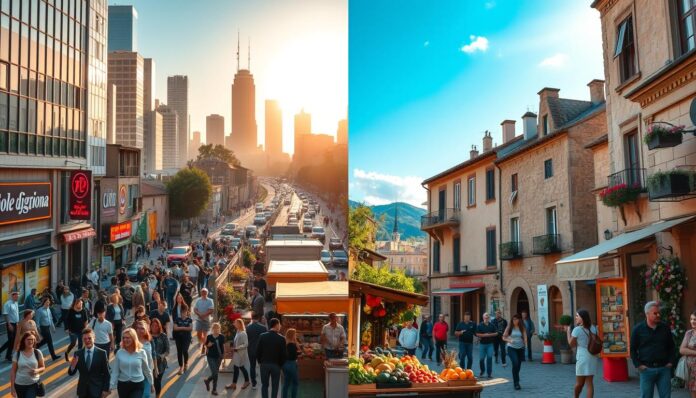
“A different language is a different vision of life,” wrote Federico Fellini, and that idea frames the choice many face when they move to Italy.
This guide frames how choosing a village or a major city shapes daily routines, budgets, career paths, and community ties. It highlights regional contrasts: the North often offers stronger infrastructure, better healthcare access, and denser job markets, while the South draws people for sun, scenery, and a slower pace.
Transport and access matter: major hubs like Rome and Milan make European travel easier, and high-speed rail links many places. Small-town living rewards those who want close-knit networks and deeper language immersion.
Expect trade-offs: higher rents and richer services in cities versus lower costs but fewer amenities outside big centers. This article aims to give practical, region-aware insight so readers can match their lifestyle and priorities to the right place and time.
Key Takeaways
- Region matters: North, Central, and South offer different jobs, health care, and infrastructure.
- Major cities provide better transport links and more English-friendly services.
- Smaller places offer cultural immersion and lower daily costs.
- Air quality and emergency services vary by region and should influence choice.
- Housing and lifestyle trade-offs depend on career needs and social preferences.
How to Choose Where to Live in Italy: Framing the Small Town vs Big City Decision
Choosing where to settle in Italy starts with a clear list of must-haves and deal-breakers.
First, define practical priorities: healthcare access, internet speed, proximity to airports, and local job markets. These factors shape everyday life more than size alone.
Next, match lifestyle preferences. Some prefer a slower rhythm and close community bonds. Others need round-the-clock amenities, cultural programming, and broader career options.
Regional differences that matter
The North is the economic engine with better rail links and fiber-optic coverage. Southern areas often trade some convenience for lower costs and stronger coastal climates.
Climate, local dialects, and the long national history matter. The same-sized place in different regions can feel very different for services and employment.
Practical shortlist method
- Map deal-breakers (long hospital drives, poor internet).
- List strong preferences (seaside, museums, forests).
- Compare regions, not just size: transport, healthcare, and jobs vary widely.
| Factor | North | Central | South & Islands |
|---|---|---|---|
| Connectivity | High (fiber, rail) | Moderate (balanced) | Variable (spotty in rural) |
| Healthcare access | Strong | Good | More limited in some areas |
| Climate | Alpine to mild | Mild, varied | Mediterranean |
| Language & culture | Dialect diversity | Balance of tradition and accessibility | Strong local dialects and traditions |
Living in Small Italian Towns vs Big Cities: What Expats Should Know
Settling into a village or a metropolitan center quickly reveals different routines and cultural beats.
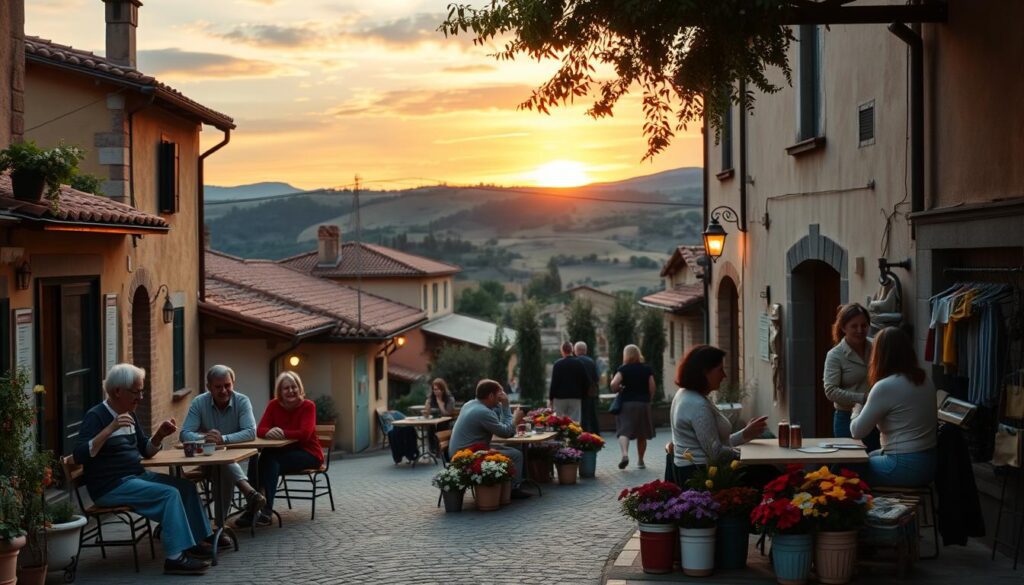
Village charm often means close ties and a slow tempo. Conversations in the piazza, seasonal festivals, and local processions—like the Naca before Easter in Davoli—structure times of the year. People report warm openness but say they must be proactive to be accepted.
Urban culture and pace
Life in a city such as Rome or Milan brings dense amenities: museums, concerts, and larger job markets. That experience also brings higher rents, traffic, and occasional pollution.
Common expat experiences
- Small town life rewards good Italian, initiative, and willingness to drive to supermarkets or hospitals.
- Big city living appeals to people seeking broader networks, frequent flights, and English-friendly services.
- Trade-offs are clear: anonymity and variety in cities; intimacy and routine in towns.
Lifestyle and Culture: Community, Language, and Day-to-Day Life
Daily rhythms and social patterns shape how people feel about their new home, whether it centers on a tight communal square or a bustling neighborhood.
Making friends often arrives naturally where locals are curious. In many villages a neighborly chat at market stalls or regular attendance at a procession—like Davoli’s Naca—fast-tracks acceptance.
By contrast, a city usually hosts established international groups and meetups. Those hubs can speed social entry and offer broader networks for work and leisure.
Language and dialects
Dialects remain common at home across regions. Learning Italian matters most for day-to-day interactions in small places.
Cities may provide more English-friendly services at work and shops, but knowledge of local speech always improves the experience.
Entertainment and events
Village calendars revolve around sagre, religious processions, and shared meals. These events are low-pressure ways to meet people.
Urban life prioritizes museums, theaters, and niche scenes that offer variety but less automatic familiarity.
- Use markets, festivals, and volunteering to build ties.
- Plan extra time for errands and casual chats in smaller communities.
- Choose the lifestyle that fits: intimate routines and known faces, or wider choices and larger crowds.
Cost of Living and Housing: Budgeting for Towns vs Cities
A realistic budget reveals whether a metropolitan hub or a quieter locale fits best.
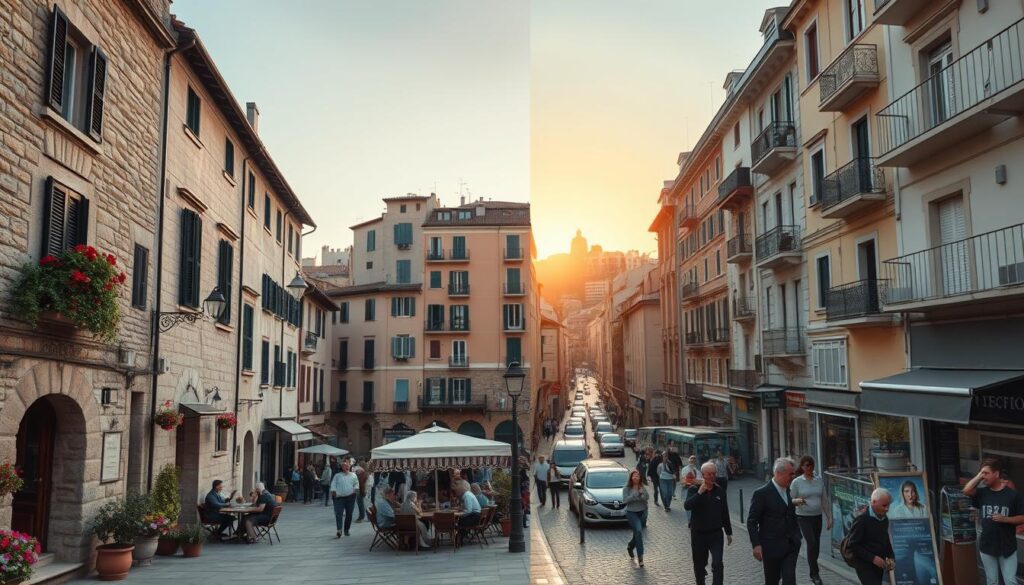
Rent and home-buying trends vary by region. Northern cities such as Milan have higher rents and everyday costs driven by demand and job density. Many southern towns offer low-price or symbolic homes to attract new residents and offset depopulation.
Pollution and service access can affect property value. Some areas in the North command premiums because of jobs and transport. Nearby smaller places often give better value with commutes that remain workable.
Daily expenses also shift by place. Groceries, utilities, and dining out tend to be cheaper at village counters but choices are narrower. Rural life may require a car; fuel and maintenance add to monthly cost.
- Compare total monthly spend: rent, transport, internet, healthcare, and leisure.
- Check regional taxes and incentives, especially in southern areas.
- Factor commute time and vehicle costs when lower housing prices seem attractive.
Jobs, Business, and Opportunities: Finding Work and Building a Career
Economic clusters and local services determine how easily a professional can land a job or launch a venture.
Industry hubs versus rural roles
Milan, Turin, and other northern centers concentrate corporate roles, startups, and support services. That concentration makes networking and job searches faster and more efficient.
Smaller places tend to offer seasonal tourism, agriculture, or microenterprise work. Many people adapt by combining local jobs with remote work.
Incentives and starting a business
Italy now offers tax benefits to attract foreign professionals and investors. Several programs give extra advantages to those moving to southern areas.
Entrepreneurs should assess local demand, municipal permits, supply chains, and logistics before committing.
Remote work realities
Fiber-optic is common in northern cities but can be patchy in rural zones. Remote workers should verify street-level coverage and mobile bandwidth before signing a lease.
Big-city coworking, industry meetups, and efficient commutes often expand opportunities compared with quieter places.
| Feature | North (hubs) | Rural / South |
|---|---|---|
| Job variety | High (corporate, startups, services) | Limited (tourism, agriculture, local trade) |
| Business support | Strong (incubators, logistics) | Variable (local initiatives, grants) |
| Connectivity | Reliable fiber and 4G/5G | Spotty; verify at address |
| Tax incentives | Available | Enhanced for relocation |
Transport, Connectivity, and Travel Access
Good transport and reliable internet reshape daily choices and weekend plans for anyone moving to Italy.
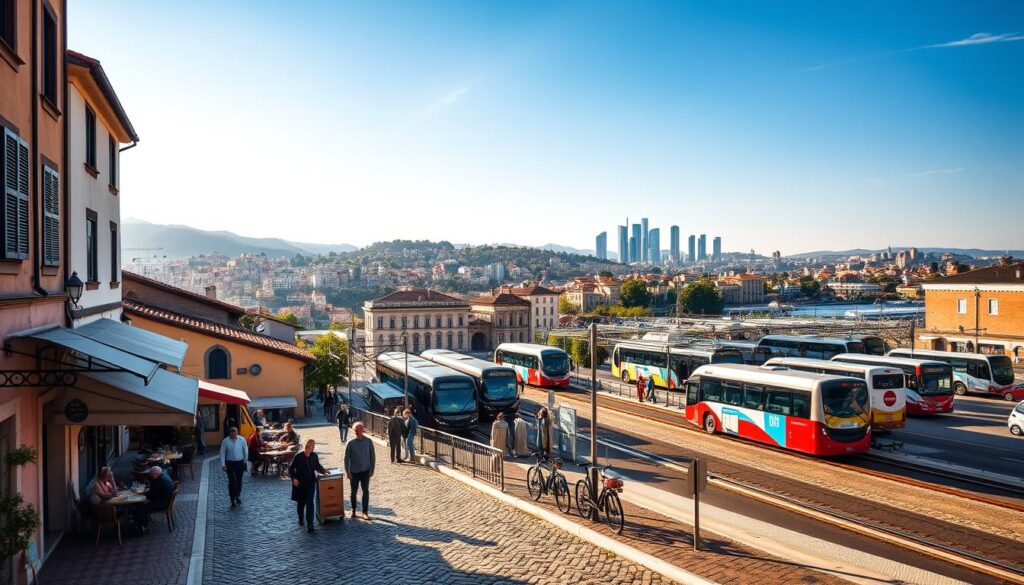
Public transport in cities often covers a broad range of needs. Trams, subways, buses, and regional trains run frequently, so a resident can commute, shop, and see friends without a car. This makes city life more flexible for work and leisure.
Public transit vs driving needs
Outside major hubs, many village and rural areas lack scheduled services. Year-round driving becomes essential for errands, work, and healthcare. Mountain roads and seasonal timetables add friction and extra travel time.
Rail, roads, and fiber gaps
Italy’s rail network links major cities with high-speed lines on core corridors. Northern areas more often have reliable fiber-optic internet and denser transport options. Southern and remote zones can be patchy for both rail stops and broadband.
Air travel and regional hubs
For international flights, use hubs like Rome and Milan. Smaller airports usually feed through these gateways. Factor door-to-door time: station access, airport transfers, and last-mile travel affect how much you can do in a single day.
- Tip: Check local services and schedule windows before choosing a home base.
- Plan: Measure commute and airport links to compare opportunities across areas.
Healthcare, Safety, and Environment: Quality of Life Factors
Access to care, personal safety, and green space are core factors that shape daily wellbeing.
Healthcare access and regional outcomes
Hospitals and specialists are more available in northern cities, where outcomes tend to be stronger. Some southern residents travel north for major procedures.
Small village or rural areas may lack 24/7 emergency units. When choosing a home, check distance to the nearest hospital and pharmacy.
Personal safety: tourist districts and local norms
Everyday safety is generally good, but petty theft is more common in busy tourist parts of a city.
People reduce risk by using basic street smarts: secure bags, stay aware at crowded stops, and avoid poorly lit routes at night.
Air quality, green space, and the countryside advantage
Air pollution can rise in some northern metros like Turin and Milan, while countryside and many southern areas offer cleaner air and easy outdoor access.
Quality of life includes both clinical access and environmental wellbeing; those priorities will tilt the balance toward cities or towns depending on personal needs and history.
| Feature | North | Central | South |
|---|---|---|---|
| Healthcare access | High, many specialists | Moderate, regional hospitals | Variable; travel for major care |
| Safety notes | Busy tourist areas; petty theft risk | Balanced; local norms matter | Generally low-crime; fewer crowds |
| Environment | Higher pollution in some cities | Mixed; urban and green pockets | Cleaner air; easy countryside access |
Conclusion
The choice between a major hub and a quieter place comes down to priorities: jobs, transport links, and cultural life versus cost, community, and cleaner air.
strong,
Readers should map non-negotiables — healthcare proximity, reliable internet, and public transport — against desired daily rhythms like festivals or galleries. A trial stay in both a village and a larger city helps compare real costs, commute time, and social fit.
Shortlist by region first, then pick one urban hub and one town to test. Factor language and dialect comfort, local services, and long-term job opportunities before signing a lease. This practical test will show where to build a lasting home and the best life in Italy.
FAQ
How does community life differ between villages and major urban centers like Rome or Milan?
In smaller municipalities, residents often know one another and social interaction centers on local cafes, parish events, and seasonal festivals. Neighbors may help with practical tasks and newcomers can integrate through repeated, informal encounters. In larger cities such as Rome or Milan, social life is more diverse and fluid. People meet through work, language exchanges, cultural venues, and organized expat groups. While anonymity is greater, opportunities for niche interests and professional networking expand.
What are the main cost differences for housing and daily living?
Rent and property prices tend to be lower outside metropolitan areas, and some towns offer incentives for long-term buyers or renovators. Daily expenses like groceries and local services can cost less as well. By contrast, big-city central neighborhoods command higher rents, while dining out, transport, and leisure activities often cost more. However, salaries and job prospects typically rise in economic hubs, which may offset higher expenses.
How important is regional choice — North, Central, or South — when moving?
Regional context affects climate, economy, public services, and cultural norms. The North (e.g., Lombardy, Emilia-Romagna) offers stronger job markets, faster public transport, and higher average incomes. Central regions like Tuscany and Umbria combine tourism and history with a slower pace. The South (Campania, Puglia, Calabria) often provides lower living costs and tight-knit communities but may show weaker infrastructure and fewer formal job opportunities. Personal priorities should guide the decision.
What should an expat expect about healthcare and local services in rural areas?
National healthcare is available across the country, but access varies. Hospitals and specialist services concentrate in larger cities, while small towns may rely on clinics and general practitioners. Emergency response times and appointment availability can be slower in remote zones. Expats with chronic conditions should verify nearby facilities and consider private insurance or periodic visits to urban hospitals.
How does transport and internet connectivity compare between small towns and cities?
Public transport networks are denser in metropolitan areas, with frequent buses, trams, and regional trains. Small towns often require a car for daily errands and reaching rail hubs. High-speed fiber availability is extensive in urban zones but patchy in some rural municipalities. Remote workers should research local internet options and consider co-working spaces or hybrid living near transport links.
Are language barriers harder to overcome in villages than in cities?
Smaller communities may speak stronger regional dialects and use less English, so basic Italian helps integration more in towns. In major cities, many services and younger people operate in English, and expat communities provide language support. Still, learning Italian improves everyday life, deepens social ties, and opens local job markets regardless of location.
How easy is it to find work or start a business outside large urban centres?
Career options are broader in industrial and financial centers where multinational firms cluster. Rural areas suit freelancers, remote employees, hospitality, agriculture, and niche artisans. Various regional and national incentive schemes encourage repopulation and entrepreneurship in small towns, but local market size and bureaucratic procedures require careful planning.
What social and cultural activities can one expect in smaller communities?
Smaller towns host religious festivals, local sagre (food fairs), historical pageants, and community markets. These events emphasize tradition and seasonal rhythms and often welcome newcomers. Museums and contemporary cultural programming concentrate in cities, which also offer theatres, international film festivals, and diverse dining scenes. The choice depends on whether one values intimate local rituals or a wide range of cultural options.
Are small towns safer than big cities for families or solo residents?
Crime rates generally fall in smaller communities, and lower traffic levels can make streets safer for children. Tourist hotspots in large cities sometimes see petty theft; urban residents should stay vigilant in crowded areas. Personal safety also ties to familiarity with local norms and day-to-day habits rather than location alone.
How should an expat decide between renting in a city or buying in a town?
The decision depends on job stability, lifestyle goals, budget, and long-term plans. Renting in a city allows mobility and access to work and services. Buying in a smaller locale can be cost-effective and offer lifestyle benefits but may limit job options and resale liquidity. Many choose a phased approach: rent while exploring regions, then buy where community fit and services meet needs.
What role do festivals and seasonal rhythms play in daily life across different areas?
Seasonal rhythms dominate small-town life; market days, harvest events, and religious feasts shape the calendar and business hours. Urban centers maintain year-round programming with rotating exhibitions, concerts, and nightlife. Understanding local timetables helps newcomers plan around holidays and business closures common outside big cities.
How can newcomers build friendships and local networks most effectively?
In towns, repeated face-to-face interactions at cafes, volunteer associations, parish groups, and local markets foster friendships. In cities, joining language exchanges, professional meetups, cultural associations, and expat networks accelerates connections. Consistent participation and learning basic Italian are key to deeper, lasting relationships.
What practical tips help manage everyday bureaucracy and services?
Prepare paperwork for residency, tax codes (codice fiscale), and health registration before long stays. Municipal offices in small towns may have limited hours; calling ahead helps. Urban institutions often offer multilingual support, but patience and local assistance—such as a bilingual fiscalista or relocation agent—ease procedures in all settings.
Are there incentives or programs encouraging foreigners to move to depopulated areas?
Some regions and municipalities offer incentives like reduced property prices, renovation grants, or tax breaks to attract residents and revive local economies. These schemes vary by region and change over time. Prospective movers should verify current municipal programs, legal requirements, and renovation costs before committing.