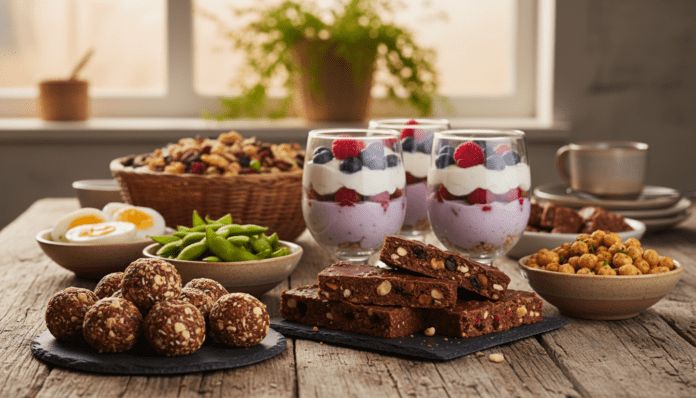
“The groundwork of all happiness is health.” — Leigh Hunt. I keep that line in mind when I plan quick bites for a busy day.
I mean simple, real food that boosts protein without fuss. These choices help me stay focused, curb hunger, and avoid energy crashes that come from heavier carb treats.
I’ll share the practical list I rely on: dairy, eggs, plant-based crunch, bars and jerky, plus smoothies. I also explain easy label tricks so the best pick is obvious at the store.
Expect specific portions in grams, rough calories per portion, and how I pair lower-calorie items with a protein hit to feel satisfied. A 2024 survey found 71% of U.S. adults aim for more protein, so this is a common goal, not just mine.
Key Takeaways
- Simple, portable options make it easier to meet daily protein goals.
- I favor foods that travel well and taste good to avoid grazing.
- Label cues speed up smart choices in the grocery aisle.
- Portion guidance includes grams and calories for real-world use.
- This list covers dairy, eggs, plant-based crunch, bars, jerky, and smoothies.
Why I Lean on High-Protein Snacks When My Energy Dips
That 3 PM slump used to derail my afternoon until I added a reliable protein pick. I now use small, protein-focused bites to steady energy and curb the impulse to reach for sugary treats.
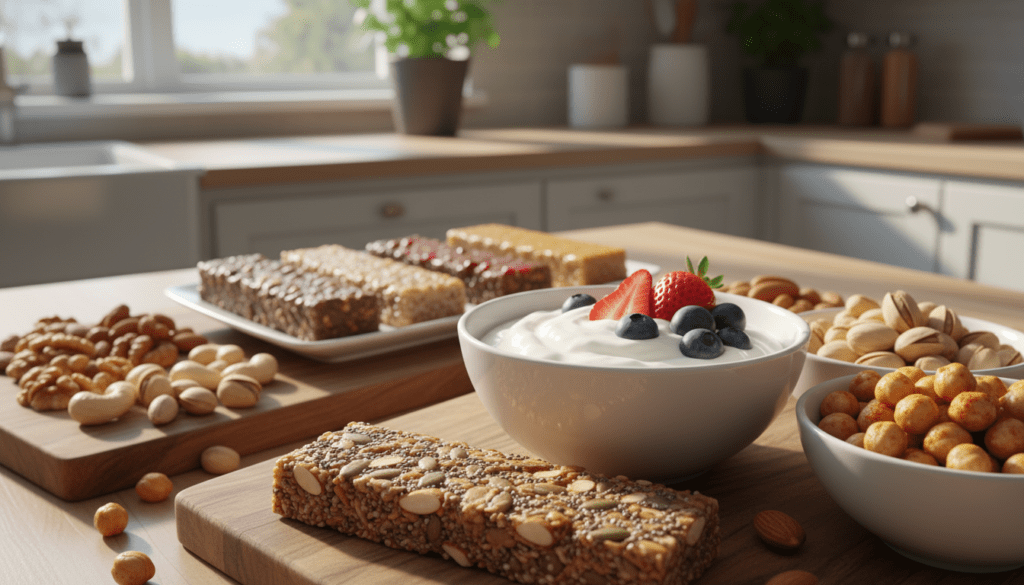
Steadier energy and fewer mid-day crashes
Protein slows digestion, which helps blunt sharp blood-sugar swings. In simple terms, it gives me a slower, longer release of fuel so I avoid quick spike-and-crash cycles.
More fullness compared with higher-carb options
Satiety feels different: fewer random cravings, less grazing, and clearer choices at my next meal. Studies show protein reduces hunger more than higher-fat or higher-carb picks, so I stop snacking out of habit.
Support for muscle recovery when my day includes workouts
On training days I use the snack to add targeted protein for repair. Post-workout guidance often lands around 20–40 grams, so I plan my smaller bites to fit that window when needed.
- I don’t turn every bite into a meal; I make protein the anchor when my schedule is unpredictable.
- Later on this page I’ll give concrete examples and quick label tips to help you pick the best options fast.
My Simple Target for Protein per Snack (and Why It Works)
I use a practical protein window per bite so I stay full and focused through the day.
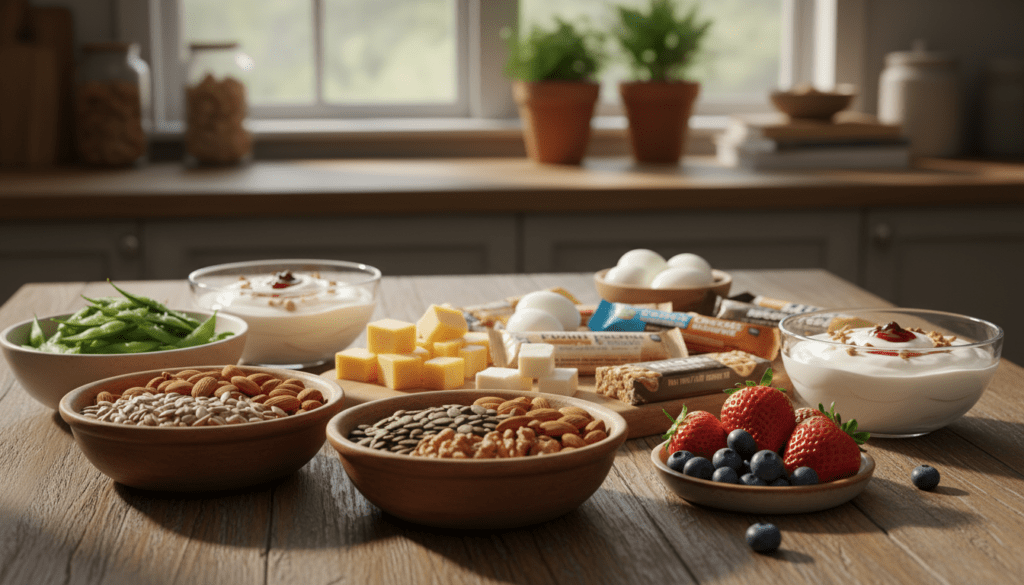
The sweet spot I aim for is about 10–20 grams of protein per serving. That range is big enough to reduce hunger but small enough to be realistic with foods I carry or buy.
If the gap to my next meal is short, I lean toward 10 grams. For long gaps or bigger hunger, I push closer to 20 grams.
When I go higher
After tough workouts I increase intake. Research-backed guidance often suggests 20–40 grams for repair, so I match that when I need recovery.
- I check grams protein per package, not just the serving name.
- A quick store filter I use: at least 10 grams protein per 200 calories.
- Adjust targets for body size and activity; this range is a simple default that fits most days.
| Situation | Target grams protein | Quick note |
|---|---|---|
| Short gap between meals | ~10 g | Small boost, light calories |
| Long gap or big hunger | 10–20 g | More filling, pairs well with fruit or veg |
| Post-workout recovery | 20–40 g | Higher-quality protein preferred |
High-protein snacks and healthy alternatives I Actually Keep on Hand
I keep a short list of go-to bites so I never reach for vending-machine food when hunger hits.
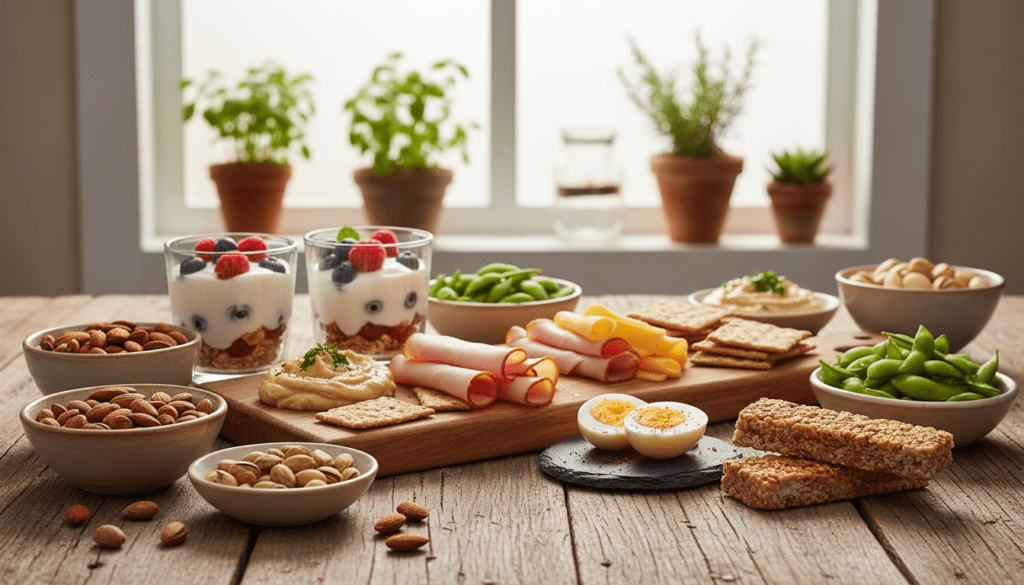
Greek yogurt parfait with berries and crunchy toppings
Greek yogurt gives about 15–20 grams per cup. I use plain yogurt, a handful of berries, and a sprinkle of toasted oats for crunch. This keeps sugar lower while feeling like a treat.
Cottage cheese with fruit
Cottage cheese delivers roughly 14 grams per half-cup. I add sliced fruit for balance. It’s sweet-savory and keeps me full longer.
Dry roasted edamame, eggs, and roll-ups
Dry roasted edamame hits 13+ grams plus ~5 g fiber; watch sodium by flavor. Hard-boiled eggs get a boost from everything bagel seasoning. Turkey-and-cheese roll-ups are no-cook, portable protein.
Travel-friendly options and quick mixes
Jerky or meat sticks give about 10–12 g per ounce; compare labels for sodium. A protein smoothie can deliver 20+ grams fast. Apple slices with peanut butter add protein, fiber, and lasting fuel. Roasted chickpeas mimic chips, while protein bars work when texture and taste don’t feel chalky.
| Item | Typical protein | Notes |
|---|---|---|
| Greek yogurt parfait | 15–20 g / cup | Lower sugar if plain yogurt used |
| Cottage cheese + fruit | ~14 g / 1/2 cup | Slow fullness, sweet-savory |
| Dry roasted edamame | 13+ g / serving | ~5 g fiber; sodium varies |
| Jerky / sticks | 10–12 g / oz | Shelf-stable; check ingredients |
Greek Yogurt Snacks That Feel Like Dessert (Without the Sugar Spike)
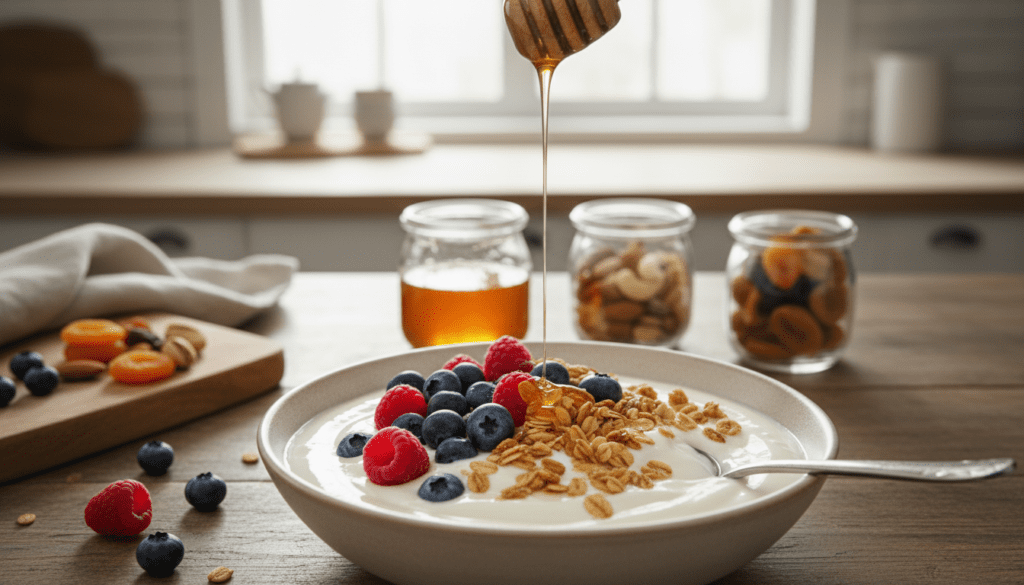
When I want dessert without a sugar crash, I reach for a bowl of plain Greek yogurt. It gives solid protein with minimal fuss. Nonfat plain Greek yogurt has about 12 grams per 1/2 cup; a full cup of plain yogurt often delivers 15–20 grams.
Plain yogurt basics and the smart sweeteners I use
I start with plain Greek yogurt to avoid added sugar found in many flavored cups. I add berries first for flavor and color. A teaspoon of honey or a dusting of cinnamon gives extra sweetness while keeping calories modest.
Texture boosters: nuts, seeds, and a little crunch
I keep toppings small so the bowl feels indulgent without excess calories. A tablespoon of chopped nuts, a sprinkle of seeds, and a teaspoon of granola add contrast and crunch.
“I prefer small, high-impact toppings. They satisfy cravings and keep me from reaching for pastries.”
| Topping | Typical amount | Why I use it |
|---|---|---|
| Berries | 1/4 cup | Low sugar, bright flavor |
| Nuts | 1 tbsp | Adds crunch and healthy fat |
| Seeds | 1 tsp | Small, protein boost |
| Dark chocolate chips | 5–6 chips | Chocolate hit without big sugar load |
Cottage Cheese Snacks for Slow, Steady Fullness
Cottage cheese is one of those simple foods I reach for when I want steady fullness without fuss. A half-cup delivers about 14 grams protein, so a modest bowl gives real staying power between meals.
Best fruit pairings for flavor and balance
I pair cottage with bright fruit to add sweetness without extra sugar. My favorites are pineapple, mixed berries, and sliced peaches.
Fruit adds contrast, fiber, and a fresh taste so I don’t need syrups or heavy toppings.
How I manage sodium and choose a serving that fits my day
Sodium varies by brand — some list roughly 468 mg per 1/2 cup — so I compare labels and pick lower-sodium options when I can.
If I’ve already eaten salty food, I shrink the serving. If lunch is far off, I go for a larger bowl to hold me longer.
- Sweet vs. savory: fruit for sweet; cherry tomatoes or sliced pepper for savory.
- Portion tip: a 1/2-cup serving gives ~14 grams protein; double it for bigger gaps.
- Label check: choose lower-sodium cottage when possible and watch added sugars in fruit mixes.
“I rely on cottage because it delivers meaningful grams protein fast and keeps me satisfied with minimal prep.”
| Choice | Typical amount | Why I pick it |
|---|---|---|
| Cottage cheese (plain) | 1/2 cup ≈ 14 g protein | Quick, filling, versatile for sweet or savory |
| Cottage + berries | 1/2 cup + 1/4 cup fruit | Sweet balance, low added sugar if plain cottage used |
| Cottage + tomatoes | 1/2 cup + cherry tomatoes | Savory, low sugar, low prep |
Edamame Snacks for Plant-Based Protein and Serious Crunch
For a portable crunch with real staying power, edamame is usually what I pack. A half cup of steamed edamame gives 8+ grams of protein and about 4 grams of fiber, so it fills me without feeling heavy.
Steamed vs. dry roasted: what I buy and when
I steam fresh or frozen edamame at home when I want warmth and a simple bite. It needs minimal prep and tastes great with a squeeze of lemon.
Dry roasted edamame is my desk-drawer option. It delivers more protein—often 13+ grams per serving—and extra crunch for when I’m tired of nuts.
Sea salt, bold flavors, and what I watch for on sodium
I usually season with a light dusting of sea salt or choose bold flavors for variety. Flavored packs often raise sodium, so I check labels before I buy.
“I scan the package for grams of protein, grams of fiber, and the sodium number so a healthy choice doesn’t turn into a salt bomb.”
| Form | Protein (typ.) | Fiber (typ.) | Notes |
|---|---|---|---|
| Steamed (1/2 cup) | 8+ grams | ~4 grams | Low prep; control the salt |
| Dry roasted (1 serving) | 13+ grams | ~5 grams | Crunchy, portable; check sodium |
| Seasoned options | Varies | Varies | Sea salt adds flavor; flavored packs may be high in sodium |
Why it works: edamame scratches the salty-craving itch like chips, but it adds protein and fiber that keep me satisfied longer. If I know dinner will be salty, I pick a lighter seasoning earlier in the day.
Protein Bars and Protein Balls When I Need Something Grab-and-Go
A compact bar or a hand-rolled protein ball is my go-to when the clock is tight and hunger is loud.
My protein-to-sugar checklist for bars
Quick filter: I aim for at least 10 grams of protein per 200 calories. I scan the label for recognizable ingredient content first.
I keep sugar low so the bite doesn’t feel like candy. For balls, I check serving size—many are sweeter per piece.
Why texture matters: avoiding heavy, chalky “protein bricks”
Texture is a dealbreaker. If a bar is chalky or dense, I won’t buy it again. I prefer a lighter, crispier mouthfeel that resembles a treat more than a block.
Some brands nail this and offer multiple flavors, which helps me stick to the plan without boredom.
When refrigerated bars make sense for my routine
Refrigerated bars often use whole-food ingredients and can stay okay at room temperature for about seven days. I stash them at home or in the office fridge when I shop often.
“Refrigerated options feel fresher and less processed, but shelf-stable bars win when I travel.”
| Choice | Why I pick it | Note |
|---|---|---|
| Shelf-stable bar | Portable, long shelf life | Check protein-to-calorie ratio |
| Refrigerated bar | Whole-food feel, better texture | Portable ~7 days at room temp |
| Protein balls | Bite-sized portions | Watch sugar per serving |
Jerky, Turkey Sticks, and Meat Snacks That Keep Me Full on Busy Days
For long commutes and back-to-back meetings, a meat stick has saved me more than once. They are compact, shelf-stable, and ready when I have no time to prep.
Why I pack jerky and turkey sticks: most deliver about 10–12 grams of protein per ounce, while single turkey sticks often provide 9–12 grams per stick. That makes them a quick, high protein option when I need fuel fast.
How I compare labels
I read ingredients first, then scan added sugar. Sodium is usually the biggest downside, so I compare milligrams across brands before I buy.
- I treat even cleaner-sounding packs as processed food and rotate them with fresher choices at home.
- I keep one stick in my bag for travel, long commutes, or tight meeting blocks.
- When possible I pair a meat bite with fruit or raw veg for fiber so the protein keeps me full longer.
“Sticks give reliable fuel fast, but I check sodium and ingredients to make smarter choices.”
| Item | Protein (typ.) | Note |
|---|---|---|
| Beef jerky (1 oz) | 10–12 g | Check sodium |
| Turkey stick (1 stick) | 9–12 g | Some are 0 g sugar |
| Pairing | — | Fruit or veggies add fiber |
Crunchy High-Protein Snack Swaps for Chips and Vending-Machine Cravings
When I crave chips, I actually want a quick hit of crunch, salt, and ease more than true hunger. That helps me pick swaps that satisfy the mouthfeel without the empty repeat snacking later.
Roasted chickpeas with spices
Roasted chickpeas give both protein and fiber in a chip-like package. I toss canned chickpeas with olive oil, smoked paprika, cumin, and a touch of cayenne, then roast until crunchy.
I pre-portion a 1/3–1/2 cup so grabbing them is as easy as reaching for a bag. They hold up well for a few days in an airtight jar.
Edamame as a salty, satisfying alternative
Dry roasted edamame offers a bold crunch with meaningful protein. I pick plain or lightly salted varieties and always check the sodium on flavored packs.
When I want warmth, steamed edamame with lemon and a pinch of sea salt does the trick and adds fiber to the bite.
Cheese sticks paired with produce for more fiber
Cheese sticks are a convenient protein hit, but pairing them with apple slices, grapes, or carrot sticks adds fiber and makes the combo feel fuller than chips alone.
Pre-portioning cheese and fruit into small containers keeps the swap as grab-and-go as a vending-machine buy.
“I trade the fleeting crunch of chips for options that give more lasting satisfaction and less of the vending-machine loop.”
| Swap | Protein (typ.) | Why it works |
|---|---|---|
| Roasted chickpeas (1/2 cup) | ~7–8 g | Crunch + fiber; spice keeps flavor high |
| Dry roasted edamame (1 serving) | 13+ g | Strong crunch; check sodium on flavored packs |
| Cheese stick + fruit | 6–8 g + fiber from fruit | Portable, pairs texture with fiber for longer fullness |
Popcorn and Other Low-Calorie Snacks I Pair with Protein
A generous bowl of popcorn lets me enjoy a lot of food while keeping calories in check. I use it when I want volume without a heavy bite.
Why popcorn works when I want volume and fiber
Popcorn gives big volume for modest calories. Six cups of some microwave varieties run near 100 calories, so I can munch longer without a big calorie hit.
The chew factor matters: it takes time to eat, which makes the bowl feel more satisfying than quick crunch options. Popcorn also packs more fiber than many common munchies.
How I “upgrade” popcorn with a protein side
I don’t try to make popcorn do the heavy lifting for protein. Instead, I pair it with a small protein side to balance the snack.
- My go-to pairings: a cheese stick, a small Greek yogurt, or a glass of milk.
- I add a handful of nuts when I need more staying power.
- I watch flavored versions: seasonings can raise sodium and extra calories fast.
“Pairing popcorn with a simple protein helps me curb cravings without feeling deprived.”
How I Choose Store-Bought High-Protein Snacks (Label Tips That Save Me)
I use a simple scan to separate real food from “protein-washed” marketing in one minute flat.
My quick filter: aim for at least 10 grams of protein per 200 calories. This ratio helps me avoid options that are mostly fat or sugar with a token protein claim.
The protein-to-calorie ratio I use as a quick filter
I check grams of protein first, then calories. If the math lines up, it stays on the shortlist.
Ingredient lists I trust
I favor packages that start with whole foods: nuts, seeds, dairy, eggs, or simple cuts of meat. Short lists usually mean fewer additives.
Hidden sugar and sugar alcohols: what I check first
Scan for words like maltitol, sorbitol, or syrups. They add sweetness and can affect appetite or digestion. I avoid surprises by reading the ingredients before the front label wins me over.
Sodium and preservatives: especially with jerky and packaged snacks
Jerky often packs a lot of sodium. I compare milligrams across brands and pick the lower option when possible.
“I don’t chase perfection. I pick a real-food ingredient list that gives meaningful grams of protein for the calories I spend.”
| Check | What I look for | Quick reason |
|---|---|---|
| Protein-to-calories | ≥10 g per 200 calories | Real fuel, not candy with protein |
| Ingredients | Starts with nuts, seeds, cheese, eggs, or meat | Short list, whole-food focus |
| Sugar & sweeteners | Minimal added sugar; no sugar alcohol overload | Less appetite rebound, gentler digestion |
| Sodium | Compare mg for jerky/packaged items | Avoid excess salt |
How I Fit High-Protein Snacks Into My Day Without Overdoing Calories
A simple weekly routine keeps a protein-focused bite within reach so I don’t trade hunger for vending-room convenience. I plan portions and pairings so each choice saves calories and time.
My prep routine for the week
I portion, wash, and batch the basics on Sundays. I pack single servings in small containers: a cup of yogurt, a hard-boiled egg, or a measured spoon of peanut butter with apple slices.
Pre-portioning makes a snack faster than takeout. It also keeps grams protein per portion consistent so I hit my target.
Where I stash snacks so I don’t default to sugary options
I keep a few spots stocked: my work bag, the car glove box, a desk drawer, and the fridge shelf. That prevents impulse buys when time is tight.
How I pair protein with fiber, fruit, and healthy fats
My rule is simple: protein + fiber + a bit of fat. Examples: apple slices with peanut butter, yogurt with seeds, or turkey roll-ups with cherry tomatoes.
- Aim for 10–20 grams protein per snack depending on hunger and schedule.
- Use a cup, a tablespoon, or an ounce to keep portions consistent.
- Measure peanut portions—peanut butter is calorie-dense but keeps you full longer.
“Consistency across the day wins. Small, measured bites bridge meals without excess calories.”
Conclusion
My final take: I lean on simple, protein-focused bites to stay energized, cut cravings, and support muscle recovery without making snack time a project.
Practical target: aim for roughly 10–20 grams per serving and adjust higher after workouts or when the next meal is far away.
Top picks I rely on include yogurt, cottage cheese, edamame, eggs, jerky or meat sticks, smoothies, and smart bars — choose what fits your routine and flavor preferences.
Quick label checklist: protein-to-calorie ratio, recognizable ingredients, low added sugar, and watch sodium on packaged items. Texture and taste matter — if a bar has the wrong texture, I won’t keep it.
Action step: pick two options for home, one for the desk or car, and one emergency serving. Reassess after a week to see what truly worked for your diet and time.
FAQ
Why do I reach for protein-rich snacks when my energy dips?
I choose protein-rich snacks because they help steady my energy and cut down on mid-day crashes. Protein slows digestion compared with carb-only choices, keeps me feeling fuller longer, and supports recovery if I’ve worked out or plan to later.
How much protein do I aim for in a single snack?
I typically aim for about 10–20 grams of protein per snack. That range gives me meaningful satiety without overdoing calories. I push toward the higher end after workouts or when I face a long stretch between meals.
What easy protein-packed foods do I keep on hand?
I stock Greek yogurt, cottage cheese, dry roasted edamame, hard-boiled eggs, turkey-and-cheese roll-ups, jerky or turkey sticks, protein shakes, apples with peanut butter, roasted chickpeas, and quality protein bars. These cover fridge, pantry, and grab-and-go needs.
How do I make Greek yogurt feel like dessert without the sugar spike?
I start with plain Greek yogurt and add a touch of fresh berries, a sprinkle of nuts or seeds for crunch, and a dash of cinnamon or vanilla extract. This keeps sugar low while delivering texture and flavor that satisfy dessert cravings.
What are good cottage cheese pairings that keep me full?
I pair cottage cheese with pineapple, peaches, or berries for sweetness, or with sliced tomato, cucumber, and cracked pepper for savory. To manage sodium, I pick lower-sodium brands or watch serving size and add fresh fruit or veggies for balance.
When should I choose steamed edamame versus dry roasted edamame?
I buy steamed edamame when I want a hot, freshly prepared side or snack; it’s higher in moisture and feels more like a mini-meal. I pick dry roasted edamame for a crunchy, shelf-stable option that satisfies salty cravings.
What do I look for on a protein bar label?
I check protein per serving (aiming for 10–20 grams), keep sugar low, and prefer bars with whole-food ingredients like nuts and oats. I avoid bars with long lists of sugar alcohols or unfamiliar additives and pay attention to calories so one bar fits my daily plan.
How do I avoid chalky or heavy protein bars?
I prioritize texture by choosing bars with nuts, seeds, or whole grains and sampling brands that use real food ingredients. If a bar lists mostly isolated proteins without fats or fiber, it often feels dry—so I skip those.
How do I compare jerky and meat sticks across brands?
I compare ingredient lists first, then sodium per serving and added sugars. I favor products with short ingredient lists—meat, salt, spices—and minimal preservatives. Lower sodium options help me enjoy these snacks more often.
What crunchy swaps do I use instead of chips?
I swap chips for roasted chickpeas, dry roasted edamame, or cheese sticks paired with apple or celery. These give me the crunch I want plus protein and often more fiber than vending-machine options.
Can popcorn be part of a protein-focused snack?
Yes. I use popcorn for volume and fiber and pair it with a protein source like a small handful of nuts, a piece of cheese, or a hard-boiled egg. That combo keeps me full without excess calories.
What label tricks save me time when I shop for store-bought options?
I use a quick protein-to-calorie ratio—aiming for a higher protein share per calorie—scan ingredient lists for nuts, seeds, dairy, or egg proteins, and check for hidden sugars and sodium. That helps me pick satisfying, real-food options quickly.
How do I fit protein snacks into my day without overeating?
I prep portions once a week, stash single-serve packs in my bag and fridge, and pair protein with fiber and healthy fats to boost fullness. Keeping ready portions prevents me from grabbing sugary convenience foods when I’m busy.
Are nut butters like peanut butter a good protein source for snacks?
Yes—peanut butter and other nut butters provide protein, healthy fats, and flavor. I measure servings (about a tablespoon or two) and pair with fruit, whole-grain toast, or celery to balance calories and add fiber.
How much sodium should I watch for in savory protein options?
I monitor sodium especially in jerky, meat sticks, and some roasted snacks. I compare labels and aim for lower-sodium versions or smaller portions so I can enjoy these items without pushing daily sodium too high.