
As management expert Peter Drucker once said, “What gets measured gets managed.” This wisdom rings especially true for distributed workforces.
Coordinating a scattered team presents unique hurdles. Without clear systems, work becomes chaotic. Deadlines get missed. Team dynamics suffer.
Effective Project Management Software for Remote Teams: The right software solution changes everything. It brings structure to remote collaboration. These platforms keep everyone aligned on goals and progress.
This guide explores top-rated options for distributed groups. It details key features that support productivity and cohesion. Readers will learn how to select tools that fit their specific needs.
Implementing the proper system prioritizes accountability and focus. It transforms how remote teams communicate and track tasks. The result is a more organized and effective workflow.
Key Takeaways
- Clear tracking systems prevent disorganization in distributed teams.
- The right software enhances both productivity and team cohesion.
- These tools help maintain focus on deadlines and project goals.
- Proper implementation improves communication and accountability.
- Selecting platforms with relevant features addresses remote work challenges.
- Effective tools automate workflows and improve collaboration.
- Informed choices are based on real user experiences and expert reviews.
Introduction to Remote Team Project Management
Geographically dispersed teams face unique organizational challenges that demand innovative solutions. This approach coordinates group efforts across different locations and time zones.
Digital transformation has accelerated remote work adoption. Companies now access global talent pools while offering flexibility. Employee satisfaction often increases with location independence.
Distributed groups rely heavily on digital platforms. These systems overcome distance barriers and coordination issues. They create virtual workspaces where collaboration thrives.
Essential tool categories include:
- Task and progress monitoring systems
- Time tracking and productivity software
- Communication and messaging platforms
- Video conferencing solutions
- Secure file sharing and document management
- Workflow automation and integration features
Effective platforms serve as central command centers. They provide transparency without micromanagement. Team members maintain accountability through visible progress tracking.
Complex initiatives break down into manageable components. Each element receives clear ownership and deadlines. This structure prevents overwhelm and keeps efforts focused.
These environments balance collaborative energy with deep work protection. Teams enjoy interactive moments while respecting concentration time. The result is both productive and positive.
Clear communication ensures goal alignment across locations. Real-time updates and shared dashboards keep everyone informed. Regular reporting features highlight achievements and adjustments.
Integration capabilities streamline existing workflows. Connections with platforms like Google Drive reduce app switching. This seamless experience enhances user adoption and efficiency.
Selecting appropriate solutions remains an ongoing process. As distributed work evolves, so do organizational needs. Regular evaluation ensures teams maintain optimal performance.
Why Remote Teams Need Specialized Project Management Tools
Distributed work environments present unique challenges that standard office solutions cannot address effectively. Geographic separation creates natural barriers to seamless coordination and visibility.
Specialized software bridges these gaps through targeted features. These platforms transform scattered individuals into cohesive units. They provide the structure needed for successful distributed operations.
The Challenge of Distributed Collaboration
Time zone differences create significant coordination hurdles. Team members working across multiple regions struggle to find overlapping work hours. This often leads to delayed responses and progress bottlenecks.
Communication gaps emerge without face-to-face interaction. Non-verbal cues get lost in digital exchanges. Misunderstandings become more common without visual context.
Visibility into individual workloads becomes limited. Managers cannot easily see who is overloaded or underutilized. This lack of transparency can lead to burnout or missed deadlines.
Coordinating across regions requires careful planning. Simple questions can take hours or days to answer. Project momentum suffers without real-time alignment.
Benefits of Implementing the Right Tool
Centralized communication platforms reduce email overload. Everything stays organized in one accessible location. Team members spend less time searching for information.
Accountability increases through visible task assignments and progress tracking. Everyone understands their responsibilities and deadlines. Shared timelines keep the entire team aligned.
Asynchronous collaboration features allow contributions across different schedules. People can work during their most productive hours. The workflow continues uninterrupted across time zones.
Automation features reduce manual administrative work. Tools like Motion and Asana can prioritize tasks and schedule meetings automatically. This saves valuable time for more important work.
Specialized software creates a more engaging work environment. Collaboration becomes smoother and more enjoyable. Team morale improves when systems work effectively.
Research from Owl Labs shows compelling results. Remote workers report 22% higher happiness when supported with proper systems. The right tools directly impact job satisfaction and performance.
| Challenge | Solution Feature | Benefit |
|---|---|---|
| Time zone differences | Asynchronous collaboration | Continuous workflow |
| Communication gaps | Centralized messaging | Clearer understanding |
| Lack of visibility | Progress tracking | Better workload management |
| Coordination delays | Automated scheduling | Faster decision making |
| Email overload | Integrated communication | Reduced clutter |
Selecting appropriate platforms requires understanding these specific needs. The right choice addresses both immediate challenges and long-term goals. It creates a foundation for sustainable distributed success.
Key Features to Look for in Remote Project Management Software
Choosing the right digital platform for distributed groups requires careful evaluation of specific capabilities. These systems must address unique challenges while supporting seamless operations.
The ideal solution combines powerful functionality with intuitive design. It should enhance productivity without creating additional complexity. Teams need tools that work with their existing habits.

Collaboration and Communication Capabilities
Effective platforms integrate multiple communication methods directly into the workflow. Real-time chat features allow instant discussions about specific tasks.
Comment threads keep feedback organized and accessible. Team members can reference previous conversations without searching through emails.
File sharing capabilities enable direct document collaboration. Users can edit, comment, and version files within the platform.
Video conferencing integrations support face-to-face meetings when needed. These features reduce reliance on external applications.
As one industry expert noted:
“The most successful platforms create natural collaboration spaces rather than forcing artificial interactions.”
Integration with Existing Tools
Seamless connectivity with popular applications streamlines daily operations. Platforms should connect with communication tools like Slack and Microsoft Teams.
Cloud storage integration with Google Drive ensures easy document access. Time tracking software connections provide accurate productivity data.
These integrations prevent constant app switching throughout the day. They maintain data consistency across different systems.
Workflow automation becomes more powerful with connected tools. Automated task assignments and notifications save valuable time.
Security Considerations for Remote Work
Distributed environments present increased security challenges. Robust protection measures are essential for sensitive information.
End-to-end encryption ensures data remains secure during transmission. Two-factor authentication adds an extra layer of account protection.
Compliance with regulations like GDPR protects user privacy. Regular security audits identify potential vulnerabilities.
Access controls limit information to authorized personnel only. Audit logs track all system activities for security monitoring.
| Feature Category | Essential Components | User Benefits |
|---|---|---|
| Collaboration | Real-time chat, file sharing, video integration | Reduced email clutter, faster decisions |
| Integration | Slack, Google Drive, time tracking connections | Streamlined workflows, consistent data |
| Security | Encryption, two-factor authentication, compliance | Data protection, regulatory compliance |
| Usability | Intuitive interface, minimal training required | Quick adoption, reduced learning curve |
| Visibility | Dashboards, real-time updates, progress tracking | Clear status overview, risk identification |
Ease of use remains critical for team adoption. Intuitive interfaces require minimal training and support.
Project visibility features like dashboards provide clear status overviews. Real-time updates keep everyone informed about progress.
Cost-effectiveness matters, especially for smaller organizations. Scalable pricing plans accommodate growing needs.
The right feature set balances powerful capabilities with simplicity. It supports distributed teams without overwhelming users.
These considerations help organizations select platforms that truly meet their requirements. The ideal choice enhances both productivity and security.
Motion: Best for Automating Project Workflows
Artificial intelligence transforms how distributed groups handle their daily operations. Motion stands out as a platform that eliminates manual scheduling chaos. It brings intelligent automation to task organization and team coordination.
This software uses smart algorithms to prioritize work items. It considers urgency, importance, and individual availability. The system creates optimal schedules without constant human intervention.
AI-Powered Scheduling and Calendar Integration
Motion connects directly with popular calendar applications. It syncs with Google Calendar and Outlook seamlessly. The platform identifies open time slots automatically.
Tasks get placed into available periods based on priority levels. Conflicts disappear as the system respects existing commitments. Team members always know what to work on and when.
The scheduling feature adjusts dynamically to changes. New urgent items can reshuffle less critical tasks. Everyone maintains focus on what matters most at any given moment.
Advanced Project Workflow Templates
Users can create structured initiatives with predefined stages. Templates include milestones and automatic task generation. Current and future phases get planned out systematically.
Version 2 introduces six-month projection capabilities. It helps groups anticipate resource needs well in advance. Long-term planning becomes more accurate and reliable.
These templates reduce setup time for new endeavors. Teams can replicate successful patterns across different initiatives. Consistency improves while administrative overhead decreases.
Team Capacity Planning Features
Visibility into individual workloads prevents burnout and underutilization. The platform shows who has bandwidth for new assignments. Managers can make informed decisions about task distribution.
Automatic assignment occurs at optimal times based on availability. Overload situations get avoided through intelligent allocation. Balance across the group maintains sustainable pace.
Capacity planning extends beyond immediate needs. Future resource requirements become visible months ahead. Organizations can prepare for upcoming demands proactively.
Motion offers multiple viewing options for different preferences:
- Board view for visual task organization
- Gantt charts for timeline perspectives
- Kanban boards for workflow monitoring
Pricing starts at $12 per user monthly with annual billing. Enterprise plans accommodate groups of twenty or more people. The platform serves freelancers, small businesses, and teams up to 250 members.
Some limitations exist regarding bulk task operations. Advanced analytics features remain under development. The team continuously works on enhancing these areas.
Motion delivers unique value through automation of repetitive processes. It optimizes schedules and prevents coordination headaches. Teams seeking efficiency gains find this solution particularly valuable.
Basecamp: Simplifying Team Communication
Some platforms excel at cutting through digital clutter with clean, focused interfaces. Basecamp represents this approach perfectly for distributed groups. It prioritizes straightforward communication over complex features.
This management tool consolidates multiple functions into one cohesive platform. Teams can handle messaging, task assignment, and file sharing in one place. The system reduces the need for separate applications like Slack or Microsoft Teams.
Centralized Messaging and File Sharing
Basecamp organizes discussions through project-specific message boards. Each initiative gets its own dedicated communication space. This structure keeps all relevant conversations accessible and searchable.
File sharing capabilities integrate directly with these message boards. Team members can upload documents, images, and other files. Colleagues can then discuss these items within the same thread.
The platform connects with cloud storage services like Google Drive. This integration maintains workflow continuity while keeping files centralized. Users avoid constant switching between different applications.
To-Do Lists and Progress Tracking
Task management features help teams stay organized and accountable. Users create to-do lists with clear assignments and deadlines. Each task shows who’s responsible and when it’s due.
Progress tracking provides basic but effective visibility into completion status. Team members can check off completed items as they work through lists. Managers get a clear overview of what’s finished and what remains.
This system creates natural accountability without micromanagement. Everyone understands their responsibilities and timeframes. The simplicity encourages consistent use across the team.
Integrated Group Chat Functionality
Basecamp includes Campfire, its built-in group chat feature. This allows real-time conversations for quick questions and updates. Teams can create different chat rooms for various topics or projects.
The chat functionality keeps conversations context-specific and searchable. Unlike external messaging apps, these discussions remain within the platform. This reduces information fragmentation across multiple tools.
Security features ensure protected communications throughout the platform. Two-factor authentication adds an extra layer of account protection. The software complies with EU-US and Swiss-US Privacy Shield frameworks.
Basecamp offers several distinct advantages for distributed groups:
- Reduced tool sprawl by combining multiple functions in one platform
- Simplified onboarding due to intuitive interface design
- Clear communication channels that reduce email overload
- Basic progress updates that help managers stay informed
The pricing structure uses a flat monthly rate of $299 billed annually. This can be cost-effective for larger teams but less scalable for very small groups. The platform doesn’t offer per-user pricing options.
Some limitations exist for teams needing advanced functionality. The software lacks built-in time tracking capabilities. Detailed reporting features remain relatively basic compared to specialized tools.
Task prioritization options are somewhat limited within the system. Teams requiring complex workflow automation might find the features insufficient. Custom reporting needs may not be fully met.
Basecamp works best for groups prioritizing clear communication over complex project management. Its strength lies in simplifying collaboration rather than offering extensive features. Teams that value straightforward organization will find this platform particularly effective.
The software serves as an excellent solution for keeping distributed teams aligned. It creates a single source of truth for discussions, tasks, and files. This consolidation reduces confusion and improves overall productivity.
Trello: Visual Task Management with Kanban Boards
Visual organization transforms how groups handle their daily operations. Trello stands out as a platform that makes complex initiatives feel simple and intuitive. It brings the Kanban method to digital collaboration with remarkable clarity.
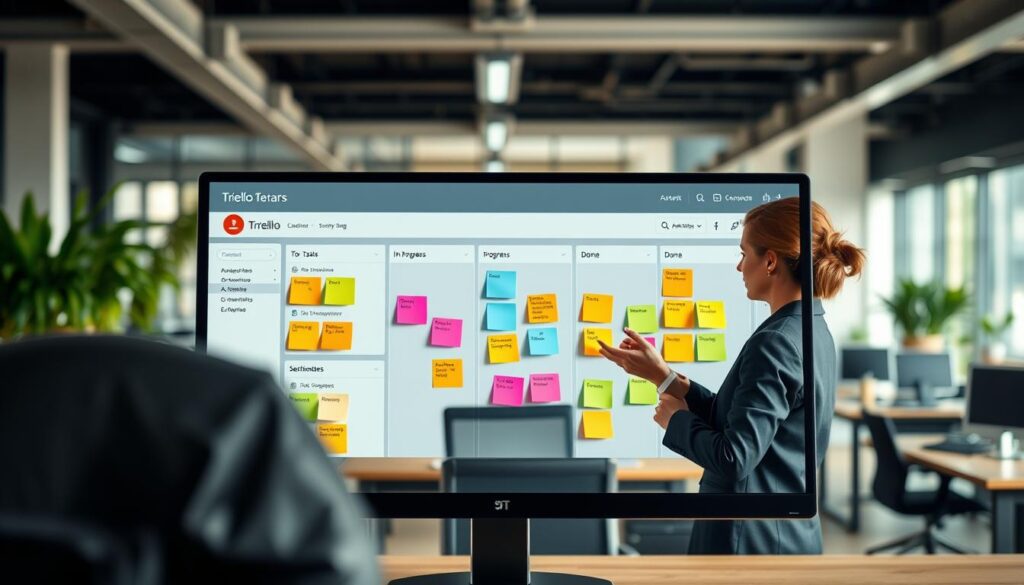
This software uses colorful cards and columns to represent work items. Each element receives clear ownership and deadlines. The system creates visual workflows without overwhelming users.
Intuitive Board Views and Drag-and-Drop Interface
Trello offers multiple viewing options for different preferences. Users can switch between board, timeline, table, and calendar views. Each perspective provides unique insights into work progress.
The drag-and-drop interface makes reorganization effortless. Team members can move cards between columns like “To Do” and “Done” instantly. This flexibility supports changing priorities and unexpected adjustments.
Visual indicators show status at a glance. Color-coded labels, due dates, and member assignments appear on each card. Everyone understands current priorities without lengthy explanations.
No-Code Automation Features
Butler, Trello’s automation feature, handles repetitive tasks automatically. Users create rules without coding knowledge. The system can move cards, assign tasks, or send notifications based on triggers.
Common automations include:
- Moving cards to specific lists when due dates approach
- Assigning new tasks to appropriate team members
- Sending reminder messages before deadlines
- Creating follow-up tasks when items get completed
These features save significant time on administrative work. Teams focus on meaningful contributions rather than manual updates.
Extensive Template Library
Over 1,000 ready-made templates accelerate setup processes. Options exist for marketing campaigns, product launches, and event planning. Teams can customize these foundations to match their specific needs.
Popular templates include:
- Content calendars for editorial planning
- Product roadmaps for development tracking
- Hiring processes for recruitment coordination
- Agile sprints for software development
New users can launch their first board within minutes. The templates provide proven structures that work across industries.
Trello connects with over 200 other applications seamlessly. Integrations include Slack, Google Drive, and time tracking software. These connections extend functionality without leaving the platform.
Mobile applications ensure access from any location. Team members can update progress during commutes or between meetings. The experience remains consistent across devices.
Pricing starts with a free plan for basic needs. Standard plans begin at $5 per user monthly. Premium options cost $10 per user monthly with additional features.
Some limitations exist for complex initiatives. The platform lacks built-in time tracking and detailed reporting. Gantt chart capabilities require third-party integrations.
Trello works exceptionally well for creative groups and startups. Its visual approach suits teams that prefer simplicity over complexity. The platform delivers outstanding value for visual task organization.
Monday.com: Customizable Workflows and Integrations
Adaptable systems transform how distributed groups approach their daily operations. Monday.com stands out as a versatile work operating system that enables deep customization. This platform empowers users to create tailored solutions for their specific requirements.
The software serves as a centralized hub for various business functions. It combines task coordination, team communication, and progress monitoring in one place. Organizations can standardize processes while maintaining flexibility.
Flexible Board Customization Options
Users enjoy extensive control over their workspace layout. They can add custom columns, status indicators, and specialized fields. This flexibility allows teams to mirror their actual workflow precisely.
Different view options cater to various working styles. Teams can switch between Kanban boards, timeline views, and calendar formats. Each perspective offers unique insights into project progression.
Color-coding systems enhance visual organization at a glance. Team members quickly identify priorities and status levels. This visual clarity reduces confusion across distributed groups.
200+ Pre-Built Automations
The platform includes an extensive automation library. Over two hundred pre-built options handle repetitive tasks automatically. These features save significant time on administrative work.
Common automations include:
- Automatic notifications when deadlines approach
- Status updates triggered by specific actions
- Task assignments based on workload capacity
- File sharing and document management triggers
One satisfied user noted:
“The automation features cut our manual updates by 70%. Now we focus on actual work instead of administrative tasks.”
Advanced Reporting Dashboards
Comprehensive reporting tools provide deep insights into team performance. Over thirty widget options create customized dashboards. Managers can track KPIs and project health in real-time.
These dashboards help identify bottlenecks before they become problems. Teams can adjust resources based on actual data rather than assumptions. This proactive approach maintains momentum across initiatives.
Time tracking features integrate seamlessly with reporting functions. They provide accurate data on productivity and resource allocation. This information supports better planning decisions.
| Feature Category | Key Components | Business Impact |
|---|---|---|
| Customization | Flexible boards, custom fields, multiple views | Tailored workflow alignment |
| Automation | 200+ pre-built options, notification systems | Reduced manual work |
| Reporting | 30+ widgets, real-time dashboards, KPI tracking | Data-driven decisions |
| Integration | Google Drive, Microsoft Teams, time tracking | Streamlined operations |
| Templates | Industry-specific blueprints, quick setup | Faster implementation |
The template library accelerates onboarding for new teams. Industry-specific options exist for marketing, sales, and HR functions. These blueprints reduce setup time while incorporating best practices.
Integration capabilities extend the platform’s functionality. Connections with Google Drive and Microsoft Teams maintain workflow continuity. Teams avoid constant application switching throughout their day.
Pricing starts with a free plan for basic needs. Paid options begin at $8 per user monthly for the Basic tier. The Pro plan costs $16 per user monthly with enhanced features.
All paid plans require a minimum of three seats. Enterprise options offer additional security and support features. The pricing structure works best for established organizations.
Some challenges exist with platform adoption. The extensive customization options create a steep learning curve. Teams may need training to fully leverage automation capabilities.
Monday.com excels for groups needing deep process customization. Marketing departments and operations teams benefit particularly. The platform standardizes workflows while maintaining adaptability.
Despite the initial learning investment, the long-term benefits justify the effort. Organizations gain a powerful system that grows with their needs. This adaptability makes it valuable for evolving businesses.
Asana: Comprehensive Goal and Project Tracking
Organizations seeking alignment between strategic objectives and daily execution often turn to specialized platforms. Asana stands out as a powerful enterprise work management solution. It connects company-wide goals with individual task completion.
This platform helps distributed groups maintain clarity and direction. Teams understand how their work contributes to larger objectives. The system creates visible connections between daily tasks and strategic outcomes.
Task Dependencies and Milestone Features
Asana enables teams to establish clear relationships between work items. Task dependencies prevent bottlenecks by showing what must complete before other work begins. This visibility helps distributed groups coordinate efforts across time zones.
Milestone tracking marks significant project phases and achievements. Teams celebrate progress and identify potential delays early. These markers provide natural checkpoints for evaluation and adjustment.
The system automatically notifies team members when dependent tasks finish. This automation keeps workflows moving without manual follow-ups. Everyone stays informed about changes that affect their responsibilities.
Multiple Project Views
Different working styles require flexible visualization options. Asana offers list, board, timeline, and calendar views. Each perspective provides unique insights into work progress.
List view presents tasks in simple prioritized sequences. Board view organizes work into customizable columns. Timeline view shows Gantt-style charts with dependencies and deadlines.
Teams can switch between views based on their current needs. This flexibility supports various planning and review processes. Different departments can use the views that work best for their workflows.
Enterprise-Level Security Controls
Large organizations require robust protection for sensitive information. Asana provides advanced admin features and security protocols. SAML authentication ensures secure access management.
Data encryption protects information both in transit and at rest. Compliance certifications meet industry standards for data protection. Audit logs track all system activities for security monitoring.
Access controls limit information to authorized personnel only. Custom permission settings protect confidential projects and data. These features make the platform suitable for regulated industries.
Asana integrates seamlessly with popular business applications. Connections with Microsoft Teams and Slack keep communication centralized. Google Drive integration enables smooth document collaboration.
The platform offers custom forms for streamlined task creation. Teams can create standardized request processes. This reduces miscommunication and ensures complete information gathering.
Pricing includes a free plan for up to fifteen users. Premium plans start at $10.99 per user monthly. Business tier costs $24.99 per user monthly with advanced features.
Some limitations exist for very large organizations. The per-user pricing can become expensive for big teams. Tasks cannot be assigned to multiple people simultaneously.
Marketing departments benefit from campaign tracking features. Operations teams use it for process management. Administrative groups appreciate the goal alignment capabilities.
Asana helps distributed teams stay organized without constant meetings. The platform supports asynchronous collaboration across different schedules. It fosters accountability through visible progress tracking.
“The clarity we gained through goal tracking transformed how our remote team operates. Everyone understands how their work contributes to our objectives.”
This platform balances advanced functionality with user-friendly design. Teams can implement complex workflows without overwhelming complexity. The system grows with organizations as their needs evolve.
Best Project Management Tools for Remote Teams: Comparative Analysis
Selecting the right digital solution requires understanding how different platforms address specific needs. Each option brings unique strengths to distributed collaboration. This comparison helps identify the optimal fit for various organizational requirements.
Pricing Structure Comparison
Cost considerations play a crucial role in platform selection. Different pricing models suit various budget constraints and team sizes.
Motion charges $12 per user monthly for its automation features. This model works well for groups valuing intelligent scheduling.
Basecamp uses a flat $299 monthly rate regardless of user count. This approach benefits larger organizations seeking predictable expenses.
Trello offers flexible options from free to $10 per user monthly. Its visual management system accommodates different budget levels.
Monday.com ranges from $8 to $16 per user monthly. This tiered pricing supports various customization needs.
Asana spans free to $24.99 per user monthly. Its enterprise tracking capabilities justify higher costs for complex operations.
Feature Set Evaluation
Each platform excels in specific functional areas. Understanding these strengths helps match features to organizational needs.
Motion stands out with AI-powered scheduling and capacity planning. Its algorithms automatically optimize task assignments and timelines.
Basecamp focuses on centralized communication and simplicity. It reduces tool sprawl by combining messaging, tasks, and file sharing.
Trello delivers exceptional visual organization through Kanban boards. Its drag-and-drop interface makes task management intuitive.
Monday.com offers extensive customization and automation options. Users can create tailored workflows with 200+ pre-built automations.
Asana provides comprehensive goal tracking and dependency management. It connects daily tasks to strategic objectives effectively.
“The right platform should feel like an extension of your team’s workflow rather than an additional complication.”
| Platform | Key Strength | Pricing Range | Ideal Team Size |
|---|---|---|---|
| Motion | AI automation | $12/user/month | Freelancers to medium |
| Basecamp | Communication simplicity | $299/month flat | Small to large |
| Trello | Visual task management | Free to $10/user/month | Startups to creative |
| Monday.com | Workflow customization | $8-$16/user/month | Tech-savty departments |
| Asana | Enterprise tracking | Free to $24.99/user/month | Growing businesses |
Ideal Use Cases for Each Tool
Different organizational contexts benefit from specific platform strengths. Matching tool capabilities to work patterns ensures optimal results.
Motion serves groups needing automated workflows and capacity planning. Its AI scheduling handles complex coordination across time zones.
Basecamp fits small teams prioritizing straightforward communication. It eliminates complexity while keeping everyone connected.
Trello excels for visual task management in creative environments. Its Kanban boards suit iterative processes and flexible workflows.
Monday.com supports departments requiring deep customization. Marketing and operations teams benefit from its adaptable structure.
Asana works best for enterprises with complex project tracking needs. It maintains alignment between strategic goals and daily execution.
Integration capabilities vary significantly across platforms. Asana and Monday.com offer extensive connections with other applications.
Basecamp focuses on built-in features rather than external integrations. This approach reduces dependency on additional software.
Security features address remote work challenges differently. Enterprise-grade options provide robust protection for sensitive data.
Most platforms offer free trials or entry-level plans. Teams can test functionality before making financial commitments.
The final choice depends on specific workflow requirements and team size. Budget considerations and feature priorities guide the selection process.
Organizations should evaluate their collaboration patterns and communication needs. Trial periods help assess real-world usability and adoption rates.
The optimal platform feels intuitive and supports natural work rhythms. It should enhance productivity without creating additional complexity.
Additional Essential Tools for Remote Team Success
Successful distributed operations require more than just task coordination platforms. They need a complete ecosystem of supporting applications. These additional tools address specific challenges that arise when working across distances.
The right combination enhances productivity and maintains team cohesion. It creates a seamless digital workspace where everyone can thrive. These solutions work together to support effective remote operations.
Time Tracking and Productivity Software
Understanding work patterns becomes crucial with distributed teams. Time tracking software like DeskTime provides valuable insights automatically. It logs hours worked and measures productivity without micromanagement.
These platforms integrate with popular project management systems. They help identify bottlenecks and optimize workflows. Managers gain visibility into actual work patterns across the organization.
Productivity analytics reveal peak performance hours. Teams can schedule demanding tasks during high-energy periods. This data-driven approach improves overall efficiency.
Billable hour tracking becomes more accurate with automated systems. Clients receive precise invoices based on actual work completed. The transparency builds trust in professional relationships.
Video Conferencing Solutions
Face-to-face interaction remains vital for team connection. Platforms like Zoom and Microsoft Teams bridge the distance gap effectively. They create virtual meeting spaces that feel personal and engaging.
Screen sharing features enable collaborative discussions about work in progress. Virtual whiteboards facilitate brainstorming sessions across locations. Recording capabilities allow absent members to catch up later.
These solutions support client meetings and internal check-ins. They help maintain strong relationships despite physical separation. The visual component reduces communication misunderstandings.
Regular video meetings foster team culture and camaraderie. They create opportunities for informal conversations and relationship building. This social connection improves overall job satisfaction.
File Sharing and Document Management
Centralized document repositories prevent version control chaos. Platforms like Google Drive and Dropbox serve as organized knowledge bases. They ensure everyone accesses the most current files.
Search capabilities make finding documents quick and easy. Team members spend less time hunting for information. Version history features prevent accidental overwrites or data loss.
These systems become especially valuable as teams grow. New members can quickly access historical documents and resources. The organized structure supports scalable operations.
Integration with other tools creates seamless workflows. Documents connect directly to relevant tasks and discussions. This connectivity reduces context switching throughout the day.
Security measures protect sensitive information in distributed environments. VPNs encrypt internet connections for remote workers. Password managers ensure strong, unique credentials across all platforms.
Regular automated backups prevent data loss from technical issues. These precautions become more critical with geographical dispersion. They provide peace of mind for both organizations and clients.
Quality-of-life tools like Calendly simplify scheduling across time zones. Remote desktop access enables technical support from any location. These utilities streamline daily routines and reduce friction.
Employee satisfaction increases when systems work smoothly. Teams can focus on meaningful work rather than administrative hurdles. The right tools create a positive and productive environment.
These additional solutions complement core project management platforms. They form a complete ecosystem that addresses all remote work needs. Organizations should evaluate requirements across all categories.
A holistic approach ensures comprehensive support for distributed success. The combination of specialized tools creates an environment where remote teams can excel. Careful selection leads to sustainable productivity and satisfaction.
Implementation Strategies for Remote Teams
Rolling out new platforms successfully requires addressing both technical and human factors. The transition involves more than just software installation. It demands careful change management and team alignment.
Effective implementation starts with understanding team workflows. It considers existing habits and communication patterns. The goal is seamless integration rather than disruptive change.
Onboarding and Training Considerations
Comprehensive training ensures smooth adoption of new systems. Teams need different learning approaches. Video tutorials work well for visual learners.
Written documentation supports those who prefer reading. Live sessions allow for interactive questions. Hands-on practice builds confidence with the platform.
Training should cover all essential features. Focus on daily use cases first. Advanced functions can come later.
One team leader noted:
“Our most successful implementations included role-specific training sessions. Each department learned how the tool served their unique needs.”
Establishing Clear Usage Guidelines
Clear protocols prevent confusion across distributed groups. Define expected response times for different channels. Specify which tools to use for various communication types.
Create standards for task management and file organization. Establish naming conventions for consistency. Set guidelines for meeting schedules and availability.
These guidelines should be documented and accessible. Regular reminders help maintain compliance. Flexibility allows for adjustments as needs evolve.
Integration with existing systems like Google Drive simplifies adoption. Connections with Microsoft Teams keep communication centralized. These integrations reduce learning curves.
Measuring ROI and Team Adoption
Tracking implementation success requires specific metrics. Monitor user engagement rates within the platform. Measure project completion times before and after adoption.
Calculate time saved through automated features. Compare productivity levels across different periods. Assess quality improvements in deliverables.
Most platforms offer built-in analytics for adoption tracking. These tools show active users and feature usage. Supplement with regular team surveys for qualitative feedback.
Pilot programs with small groups provide valuable insights. Test implementation strategies before company-wide rollout. Refine approaches based on pilot results.
| Implementation Phase | Key Activities | Success Indicators |
|---|---|---|
| Preparation | Needs assessment, tool selection, pilot group formation | Clear requirements definition, stakeholder buy-in |
| Training | Session delivery, resource creation, hands-on practice | High participation rates, positive feedback scores |
| Rollout | Phased implementation, support system establishment | Smooth transition, minimal disruption to workflows |
| Evaluation | Metric tracking, feedback collection, adjustment making | Improved productivity, high adoption rates |
| Optimization | Process refinement, additional training, tool customization | Sustained usage, continuous improvement |
Ongoing support maintains momentum after initial implementation. Regular check-ins address emerging challenges. Quick response to issues prevents frustration.
Flexibility remains crucial throughout the process. If a platform doesn’t meet business needs, explore alternatives. The right fit matters more than sticking with a poor choice.
Successful implementation hinges on clear communication and continuous evaluation. It transforms how distributed groups collaborate and track progress. The result is enhanced productivity and team satisfaction.
Overcoming Common Remote Work Challenges
Navigating the complexities of remote collaboration requires addressing three fundamental areas of team dynamics. These elements determine whether distributed groups thrive or struggle in their daily operations.

Maintaining Team Alignment Across Time Zones
Geographical separation creates scheduling hurdles that demand creative solutions. Asynchronous communication platforms allow members to contribute during their productive hours.
Tools like Loom enable video messages that colleagues can watch at convenient times. Shared documents in Google Drive support collaborative editing across different schedules.
Project management software with time zone features displays deadlines in local times. This functionality reduces confusion and ensures timely task completion.
Clear expectations about response times prevent frustration across regions. Teams establish protocols for urgent versus non-urgent communications.
Ensuring Accountability and Transparency
Visibility into individual contributions becomes crucial with distributed work. Task assignment features clearly define ownership and responsibilities.
Progress tracking through shared dashboards makes everyone’s work visible. Regular status updates keep stakeholders informed about project developments.
Reporting features provide data-driven insights into team performance. These metrics help identify bottlenecks before they impact deadlines.
One team leader observed:
“Transparent systems create natural accountability without micromanagement. Everyone understands their role in achieving collective goals.”
Fostering Team Collaboration and Culture
Virtual interactions require intentional effort to build strong connections. Video conferencing platforms facilitate face-to-face meetings that maintain personal bonds.
Chat applications support informal interactions that mimic office conversations. Digital team-building activities create opportunities for social connection.
Celebrating achievements reinforces positive culture and motivation. Recognition features within platforms highlight individual and group successes.
Collaboration tools like virtual whiteboards simulate in-person brainstorming sessions. These features boost creativity and engagement during planning phases.
Work-life balance protections prevent burnout in distributed environments. Time tracking software helps members maintain healthy boundaries between professional and personal time.
Clear goals and expectations reduce misunderstandings across the organization. Platforms that reinforce objectives keep everyone aligned on priorities.
Overcoming these challenges creates cohesive and productive distributed teams. The right combination of tools and strategies transforms potential obstacles into advantages.
Conclusion: Selecting the Right Tool for Your Remote Team
Choosing the ideal platform depends on your group’s size, budget, and workflow needs. Different solutions excel in various areas.
Some focus on automation while others prioritize simplicity or visual organization. Each addresses challenges like time zone differences and accountability.
Free trials help test functionality before commitment. Proper implementation involves training and clear guidelines.
The right software enhances productivity and supports global talent access. It should integrate with existing systems like Google Drive.
Evaluate your specific requirements for scheduling, communication, or security features. Start exploring options today to build a stronger distributed workflow.
FAQ
What makes project management software essential for remote teams?
These platforms provide centralized communication, task tracking, and file sharing that keep distributed teams aligned. They help maintain visibility into progress and ensure everyone meets deadlines regardless of location.
How do tools like Motion use AI to assist remote teams?
Motion uses artificial intelligence to automate scheduling, optimize team capacity, and adjust timelines dynamically. This reduces manual coordination and helps teams focus on execution rather than administration.
Can these platforms integrate with other software like Google Drive or Slack?
Yes, most leading tools offer integrations with popular apps such as Google Drive, Slack, and Microsoft Teams. These connections streamline workflows and reduce the need to switch between different applications.
What security features should teams look for in remote work software?
Important security measures include data encryption, user permission controls, two-factor authentication, and compliance certifications like SOC 2 or GDPR. These protect sensitive information and ensure regulatory adherence.
How does Trello’s Kanban system improve task management?
Trello’s visual boards allow teams to organize tasks into columns like “To Do,” “In Progress,” and “Done.” This clarity helps remote members track work status and priorities without constant meetings or updates.
Are there tools suitable for both small teams and large enterprises?
Platforms like Asana and Monday.com offer scalable plans. They provide basic features for small groups and advanced controls, reporting, and security for larger organizations with complex needs.
What is the typical cost range for these types of software?
Pricing varies widely—some tools offer free plans for small teams, while premium tiers range from to + per user monthly. Enterprise solutions often require custom pricing based on specific requirements.
How can teams ensure high adoption rates when implementing new software?
Successful adoption involves thorough training, clear usage guidelines, and choosing intuitive platforms. Involving team members in the selection process also increases buy-in and reduces resistance to change.