
“Travel isn’t always pretty. It isn’t always comfortable. Sometimes it hurts, it even breaks your heart. But that’s okay. The journey changes you.” — Anthony Bourdain
This guide sets simple expectations for anyone planning a move to the country. It defines what cost living covers — rent, utilities, food, transport, healthcare — and explains why location and lifestyle shape monthly outlays.
Recent data show average household spending around €2,728 per month, with higher figures in the North and Center and lower in the South. Housing and utilities remain the biggest single line item, while food, transport, and healthcare add notable shares.
Inflation ran about 1.1% in 2024 and was projected near 1.9% in 2025, prompting a recommended household budget north of €2,810 per month. With average net pay near €1,572, city life can strain wallets, while smaller towns offer relief.
Key Takeaways
- Understand that rent and utilities drive most spending in this country.
- Average household outlays sat near €2,728 per month in recent data.
- Regional splits matter: North and Center cost more than the South.
- Plan budgets above €2,810 to account for 2024–2025 price shifts.
- Compare average net salary to local prices when choosing a city.
2025 snapshot: The real monthly cost of living in Italy for expats
The 2025 snapshot reveals how location and timing shape a household budget. Monthly totals vary a lot by region, with housing and utilities as the top drivers.
National averages and regional splits
The national average household spend in 2023 was €2,728 per month. The North and Center averaged roughly €2,965 and €2,953, while the South sat near €2,234.
Housing and utilities made up about €982 of that total. Groceries averaged €525, transport €289, and restaurants €155.
| Region | Average per month (€) | Housing & utilities (€) | Food & drink (€) |
|---|---|---|---|
| North | 2,965 | 982 | 525 |
| Center | 2,953 | 982 | 525 |
| South | 2,234 | 782 | 525 |
| National | 2,728 | 982 | 525 |
How inflation and purchasing power shape monthly budgets
Headline inflation eased to 1.1% in 2024 and was projected near 1.9% in 2025. That kept purchasing power relatively stable compared with larger EU swings.
Still, city-level prices and service charges made big-city budgets tighter. With average net pay around €1,572 per month, living in major cities often required careful trade‑offs.
- Renewing leases or energy contracts at different times can raise or lower monthly bills.
- Utilities and local tariffs vary by climate zone and provider, affecting regional costs.
- Budgeting guidance suggests planning at least €2,810 per household to cover 2024–2025 shifts.
Housing and rent in Italy: average prices, cities vs countryside
Where a person lives — downtown or countryside — changes housing bills more than any other factor.

Typical city rents and benchmarks
Nationally, average rent sits near €13.90/m². With an 81 m² home that equals roughly €1,125/month (Dec 2024).
Major markets push higher: Rome ~€1,401 (€17.30/m²), Bologna €1,507 (€18.60/m²), Torino €956 (€11.80/m²). Room, studio, and apartment benchmarks in Milan, Rome, Florence and Turin show strong central premiums.
Cheaper rental markets and small towns
Southern markets are far cheaper. Cities like Caltanissetta and Reggio Calabria offer 81 m² rents under €500, making them budget-friendly alternatives to big-city life.
Buying vs renting and practical costs
Average property price is about €1,798/m² nationally. Banks limit mortgage terms by borrower age (many stop new loans near 75), so purchase math must include age and term limits.
What expats actually pay
Furnished rental units often cost more monthly but cut startup expenses. Unfurnished apartments lower monthly outlay but add furniture costs and larger deposits.
- Example rents: Milan apartment €1,800; Rome apartment €2,000; Turin apartment €950.
- Typical renter’s insurance with earthquake coverage runs near €284/year.
Utilities and monthly bills: electricity, gas, water, internet
Utility bills can swing widely depending on home size, heating type, and region. For small to mid-size apartments in 2025, benchmark monthly utility spending near €120–€310. Usage, insulation, and whether heating is central or autonomous explain most variation.
What to budget per month for basics
Unit rates help estimate bills: gas ~€0.085/kWh and electricity ~€0.2451/kWh (H1 2024). Water averages €2.62/m³ nationally, with the Center notably higher at €3.57/m³.
Regional differences and payment zones
Italy’s six gas zones mean northern cities often face higher heating charges than southern areas. Annual water bills can range from about €181 in Molise to €770 in Tuscany, showing clear regional price gaps.
Bundling telecoms and a rural case study
Fiber packages start near €29.99 per month; mobile 5G plans can be under €10. A rural detached home using mixed heating (pellets, wood, gas) may see all-in bills exceed €800 per month, far above apartment averages.
- Tip: Confirm heating type, building efficiency, and which charges are in condo fees before signing.
- Tip: Align move-in dates with billing cycles to avoid overlapping invoices from the billing system.
Healthcare and health insurance: public coverage, private add‑ons, real costs
Healthcare access and out-of-pocket bills shape a household’s annual budget more than many expect. The national system provides near‑universal public care for residents, but users often face copays for medicines and some procedures. Eligibility commonly depends on residency status; after about six months and with proper documents, an expat can enroll and use the public network.
Public coverage handles GP visits, hospital care, and emergency treatment. Typical household spending averages about €117 per month, with regional splits (North €122, Center €135, South €99). A simple public premium comparison places minimal local contributions near €12.50 per month in some summaries.
Private insurance speeds specialist access and adds benefits like dental or English-speaking providers. Entry-level plans start around €50/month. Premiums rise with age, pre-existing conditions, and broader coverage limits.

| Item | Typical annual (€) | Monthly equivalent (€) | Notes |
|---|---|---|---|
| Average household spend | 1,404 | 117 | Includes GP, prescriptions, small copays |
| Expat couple example | 1,348 | 112 | National insurance + prescriptions (case study) |
| Basic private plan | 600 | 50 | Entry-level supplemental coverage |
| Public minimal fee (sample) | 150 | 12.50 | Varies by region and scheme |
- Compare provider networks, coverage limits, and claims processes before buying a plan.
- Budget a baseline combining likely copays plus a modest private premium for faster access.
- Expect premiums and prices to scale with age and medical history.
Groceries and dining out: realistic food costs per month
A practical view of grocery bills and dining shows how choices change a household budget. A sensible starting point for a typical household is €525 per month on food and non‑alcoholic drinks, with small regional variation (North €510, Center €527, South €547).
Supermarket basket: typical prices and saving strategies
Staples vary: apples €1.30–2.60/kg, bread €0.90–4.40/loaf, eggs €2.63–6.78/dozen, tomatoes €1.98–12.30/kg, milk €1.50–2.20/liter, rice €2.10–10.00/kg.
Save money by shopping at markets, using discount chains, buying seasonal produce, and joining store loyalty programs. Cooking at home most days keeps monthly totals low; rural households focused on fresh products may average closer to €600.
Restaurant prices: coffee, pizza, lunch menus, and mid‑range dining
Casual treats are affordable: cappuccino €1.42–1.77, pizza margherita €7–8, and set lunch menus around €15. A three‑course mid‑range dinner typically runs €28–36 in many cities.
- Inexpensive meal: €15–25 at a simple eatery.
- Mid‑range dining: €60–100 for a full dinner in tourist areas.
- Beer: €3–6 depending on location.
People who prefer organic or imported items should plan higher monthly food costs. Aligning eating habits with local, seasonal options helps preserve quality while keeping the food portion of the cost living budget manageable.
Transportation: public transport, trains, and owning a car
Getting around has a big effect on a household budget, whether they rely on buses or a private vehicle.
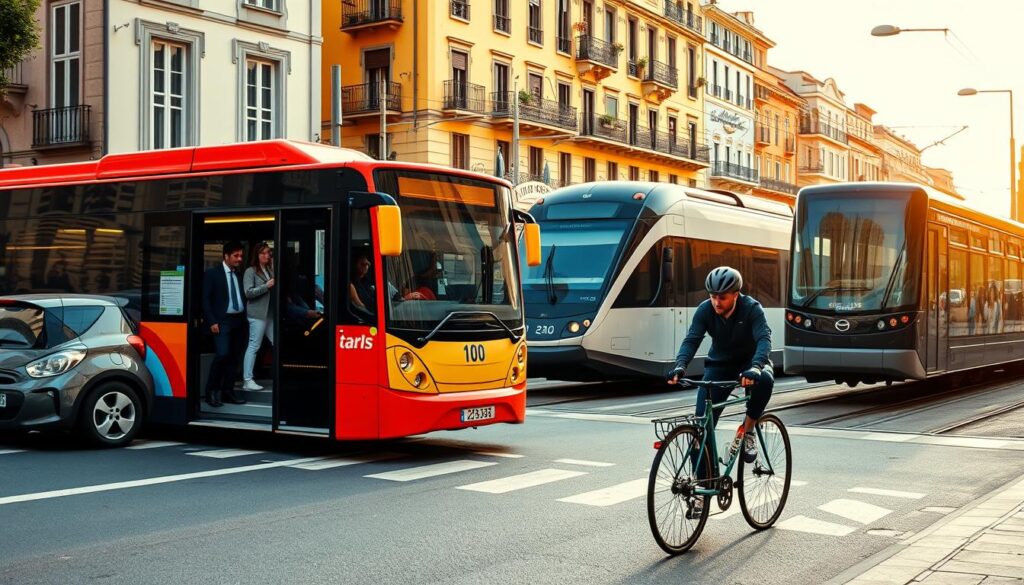
Public transport in major cities is affordable for frequent riders. Single fares vary: Rome’s 100‑minute ticket is €1.50 and a day ticket is €7. Milan’s 90‑minute ticket is €2.20 and a day pass €7.60. Turin offers single tickets near €1.90 (paper €2) and a day pass €3.70 (paper €4.50).
City tickets and passes
Monthly passes cost roughly €35–39 in many urban areas. For daily commuters, a pass often beats paying per ride and lowers monthly transportation bills.
Intercity trains: speed vs price
High‑speed trains between milan rome can be around €100 one way. Regional services often cost roughly half but take more time. Booking early and traveling off‑peak reduces price and saves time.
Car ownership basics
Owning a car adds steady costs: average insurance about €316/year, gas around €1.83/l (Feb 2025), inspections €45–80 every two years, plus road tax and parking. A practical estimate is about $298 per month including fuel, insurance, and upkeep.
“Central city residents can lean on public networks; rural households often need a car.”
| Item | Example | Typical price | Notes |
|---|---|---|---|
| Rome single | 100‑minute ticket | €1.50 | Short trips across zones |
| Milan day | 90‑minute / day | €2.20 / €7.60 | Good for tourists or errand days |
| Intercity | High‑speed vs regional | ~€100 vs ~€50 | Time vs price trade‑off |
| Car (monthly) | All‑in example | ~$298 | Fuel, insurance, maintenance, taxes |
Italian Cost of Living Explained: What Expats Really Spend Each Month
Looking at sample budgets makes it easier to see where money flows for couples and singles outside big metros.
Sample monthly budgets: couple vs single in a smaller city
Real budgets from a small central city show the split in real life. A couple in Rieti totals roughly $3,425 per month. Key lines: housing $869, food $720, healthcare $135, utilities $804, car $267, misc/ent $630.
A single person in the same town totals about $2,317 per month. Their main items are housing $600, food $480, healthcare $100, utilities $540, car $267, misc/ent $330.
| Category | Couple ($) | Single ($) |
|---|---|---|
| Housing / home | 869 | 600 |
| Food | 720 | 480 |
| Healthcare / insurance | 135 | 100 |
| Utilities | 804 | 540 |
| Transport + misc | 897 | 397 |
Lifestyle extras: leisure, gyms, childcare, and education costs
Leisure commonly adds modest sums: culture and sports average about €101, and restaurants/hotels about €155 per month. Gym memberships run ~€30–€80; cinema tickets €5–€12.
Parents should budget for schooling. International primary tuition often sits between €5,000–€10,000 per year. High school international fees can reach €25,000. Public universities range roughly €500–€3,000 annually.
Italy vs United States: where people save most
Compared with some U.S. cities, expats often save on housing and healthcare. A typical couple’s annual private healthcare can be near €1,348, while U.S. bills with high deductibles may run much higher.
- Benefit: A modest apartment or home outside top metros lowers monthly costs.
- Trade-off: Lower rent can mean more driving and longer commutes.
- Tip: Adjust your plan for dining out, gym fees, and travel to match real living expenses.
Bottom line: Choosing to live italy in a smaller town can improve quality and reduce overall cost, but individual choices determine final totals.
Conclusion
A practical budgeting plan anchors on national averages, then narrows to the chosen city or region.
Start with the national baseline — average household spending near €2,728 and a recommended safe budget around €2,810 per month. Then adjust for city-level rent, utilities, and food.
Housing and utilities drive most monthly costs. Choosing a modest apartment outside big cities cuts expenses dramatically. Check heating type, water rates, and energy prices (gas and electricity) before signing a lease.
Balance transport choices (public transport or car), and weigh public healthcare plus optional private insurance to see real out-of-pocket costs. Track local prices over time, run a trial budget, and revisit figures each month to stay on target.
FAQ
How much should a single expat expect to pay for rent in major cities like Milan and Rome?
Rent varies widely by city and neighborhood. In Milan and Rome, a one‑bedroom apartment in a central area typically costs significantly more than in smaller cities. Prices drop in suburbs and when choosing unfurnished units. Expats often budget for higher initial costs such as a two‑ to three‑month deposit and agency fees.
What monthly budget is realistic for utilities and internet?
Monthly bills for electricity, gas, water, and internet depend on usage and region. A reasonable estimate for a small apartment includes moderate heating and cooling use. Bundled broadband and phone packages can reduce costs, while colder regions may see higher gas bills in winter.
Is public healthcare available to residents and what does it cover?
The national public health system provides wide coverage for residents registered with the local health authority. It covers general practitioner visits, hospital care, and emergency services. Some services may require co‑payments, and wait times vary, so many opt for private supplemental plans for faster access.
How much do private health insurance premiums typically run for expats?
Premiums depend on age, coverage level, and deductible. Basic private plans for an adult start at modest monthly rates, while comprehensive international or family plans cost more. Many expats choose private policies to cover specialist visits, private hospital rooms, and quicker diagnostics.
What should one budget monthly for groceries and eating out?
Grocery spend varies with diet and shopping habits. A typical supermarket basket for one person in a smaller city is modest; buying seasonal produce and local brands saves money. Dining out costs range from inexpensive coffee and pizza to mid‑range restaurant meals—regular dining at sit‑down places will raise the monthly food bill substantially.
Are transportation costs high, and when is a car necessary?
Urban public transport is affordable in major cities, where monthly passes provide good value. High‑speed intercity trains cost more than regional services but save time. A car becomes practical in rural areas or for families; ownership adds fuel, insurance, taxes, and maintenance to the monthly budget.
How do living expenses differ between North, Center, and South regions?
Northern regions usually show higher housing, service, and some utility costs due to stronger local economies. Central cities with heavy tourism also command higher prices. Southern towns and smaller communities generally offer lower rents and daily expenses, though incomes and certain services may be more limited.
What are typical startup costs when moving into a rental?
Expect the first month’s rent, a security deposit (commonly two to three months), agency or contract fees, and basic home insurance. Furnished rentals can reduce initial furniture costs, while unfurnished places require additional spending to set up a household.
How does buying a property compare to renting in terms of monthly outlay?
Buying requires a mortgage down payment, monthly loan repayments, property taxes, condominium fees, and upkeep. Monthly mortgage payments can be higher or lower than rent depending on location, loan terms, and property price per square meter. Buyers should factor in closing costs and potential renovation expenses.
Can expats save substantially compared with living in the United States?
Savings depend on lifestyle choices and location. Expats often find lower prices for housing (outside top cities), healthcare with strong public coverage, and local food. Conversely, imported goods, private international schools, and frequent travel can negate savings. Comparing specific budgets helps identify where costs fall.
What monthly budget example works for a couple in a smaller city?
A couple in a smaller city can expect lower rent and everyday expenses than in large metros. Typical monthly categories include rent, utilities, groceries, local transport, leisure, and health insurance. Choosing local services and moderate dining keeps the total manageable, while international schooling or frequent travel raises it.
How does inflation affect monthly budgets and purchasing power?
Inflation raises prices for food, energy, and services, shrinking purchasing power if income does not keep pace. Wages, pension adjustments, and rental contracts may respond slowly, so expats should build buffer room into budgets and seek fixed‑rate services where possible.
Are there ways for newcomers to reduce monthly expenses quickly?
Newcomers can save by choosing smaller cities or suburbs, buying local brands, using public transport, signing bundled broadband plans, and comparing private health plans. Renting unfurnished apartments and negotiating lease terms can lower upfront and monthly costs.
What are the main hidden costs expats often overlook?
Hidden costs include agency fees, residency paperwork, home insurance, municipal taxes, higher utility use in extreme seasons, and unexpected medical co‑payments. Setting aside an emergency fund and researching local fees helps avoid surprises.