
“To improve is to change; to be perfect is to change often.” — Winston Churchill. This quote frames the reality newcomers face when they meet Italy’s administrative world.
Italy’s system often runs offline, paper-first, and varies by comune. An expat arriving must register within eight days and, for stays over three months, start the permesso di soggiorno process. Local offices interpret national rules differently, so outcomes shift by town and by clerk.
Practical hurdles include in-person appointments, proof of accommodation, and delays before a residence card activates services. Patience and persistence help, as do duplicate documents and calm follow-ups. The article maps the path from visa to residency, notes common bottlenecks, and offers clear advice to plan life in this country with fewer surprises.
Key Takeaways
- Expect offline, in-person steps and local variation in rules.
- Register within eight days; start permesso di soggiorno if staying over three months.
- Bring duplicate documents and remain patient when offices delay.
- Language basics or trusted help speed processes, especially in small towns.
- Know where to go (post office vs questura) and how to track applications.
Start here: how Italy’s bureaucracy actually works today
Many municipal offices still run on paper, so expect trips, stamps, and signatures rather than instant online confirmations.
What “offline-first” means
Offline-first means appearing in person for submissions, signatures, and follow-ups. Online portals exist, but the system is uneven and incomplete in many comuni.
National rules, local practice
National law provides the framework, yet local clerks often interpret lists differently. That makes one town’s acceptance rules vary from another’s.
Practical tips:
- Ask locals which office handles the task (questura, anagrafe, post office).
- Bring extra copies, translations, and apostilles to avoid repeat visits.
- Prepare basic language phrases and note the clerk’s name and date of each visit.
Being polite but firm helps. Use community groups for up-to-date help and to get answers to specific questions before you go.
| Issue | Why it happens | What to do |
|---|---|---|
| Missing online info | Small comuni lack updated sites | Ask locals; call ahead |
| Extra document requests | Clerk discretion | Bring backups and apostilles |
| Language gaps | Limited English in small towns | Learn phrases or bring a helper |
These practices ease the process and help expats italy navigate local culture while working with the system.
Visas and first steps on arrival: from embassy to questura
After visa approval, the first days on Italian soil set the clock running on local registration and residency paperwork.
Choosing the right visa matters. Elective residence suits those with steady private income or savings; consular guidance often cites a baseline near €8,400/year, though higher funds strengthen the case. Student visas accept degree enrollment or a letter of hospitality. Work visas require employer sponsorship. Ancestry routes help those pursuing citizenship recognition.
Start the permesso di soggiorno within eight days. Kits are picked up at the post office and trigger a questura appointment for fingerprints. Some provinces let applicants begin directly at the questura.
| Step | Who | Key documents | Typical delay triggers |
|---|---|---|---|
| Consulate application | Applicant | Passport, photos, proof of income, accommodation | Missing apostilles, weak proof of funds |
| Post office kit submission | Applicant | Completed kit, receipt, four passport photos | Wrong photo format, incomplete kit |
| Questura appointment | Police | Fingerprints, originals, copies | Long wait times; inconsistent dates |
Bring extra copies, U.S. bank statements, and carry the registered mail tracking code. Processing times vary by city and season, so keep receipts as temporary proof while the residency permit card is issued.
Residency, residenza, and the 45-day police check
Once an expat files for residenza at the anagrafe, the comune often opens a short verification. This step is separate from immigration status and affects access to services and taxes.
What residenza means. Residenza is local residential registration. It lets a resident access health care enrollment, local benefits, and municipal services.
Codice fiscale and common uses. The codice fiscale acts like a tax ID. It is needed for leases, utilities, bank accounts, and most public registrations.
Registering at the anagrafe and the expected check
Bring ID, proof of accommodation, and the permesso receipt if applicable. The office will log the submission and often request a police address check.
When police don’t arrive within 45 days
The law allows a 45 days window for verification. If no visit or report appears after that period, many comuni treat the registration as confirmed.
| Step | Who | What to bring |
|---|---|---|
| Anagrafe submission | Applicant | ID, proof of address, codice fiscale |
| Police verification | Local police | Submission receipt, mailbox name |
| Follow-up | Applicant & office | Receipt, contact details, polite inquiry |
If no check occurs, visit the local police station politely with your receipt. Note names and dates at the office, confirm hours in advance, and keep your name on the doorbell to help verification. Use neighborhood groups for recent tips and quick help with specific questions.
Housing realities: leases, letters of hospitality, and what landlords expect
Rent contracts and hospitality letters are the hinge between arrival plans and official registration. Clear paperwork speeds visa or residency steps and avoids last-minute issues.

Standard lease terms and what surprises Americans
Long-term leases commonly use 2+3 or 4+4 structures. Renewals follow fixed increments, not the month-to-month flexibility many Americans expect.
Agents often charge a fee around one month’s rent. Alternatives include direct landlord deals, expat noticeboards, or short-term rentals while searching.
Proving accommodation: contract vs letter
For many applications, a signed rental contract is best. A properly worded letter of hospitality can substitute if a host signs it and includes full details.
Align lease start dates with visa and arrival timelines to avoid gaps in eligibility for registration or services.
Utilities, accounts, and practical workarounds
Opening utilities or a bank account may be hard without local credit or a residence card. Landlords sometimes keep accounts in their name.
Workarounds: prepay services, reimburse the owner in writing, or agree a timeline to transfer accounts once residency is confirmed.
| Issue | Typical ask | Quick fix |
|---|---|---|
| Non-resident deposit | Larger security | Offer additional ID or references |
| Agent fee | One month rent | Negotiate direct with owner |
| Utility activation | Residence proof | Use landlord account + written reimbursement |
Check heating, insulation, and appliances and document move-in condition with photos and a signed inventory. In local culture, personal references and reliability often sway landlord decisions as much as formal paperwork.
Language and culture: why Italian skills speed up every process
Learning the local tongue cuts through most delays and prevents repeated trips to offices. Speaking basic phrases helps applicants explain details and catch clerk questions fast.
In small towns staff often do not speak English. Knowing simple terms for dates, documents, and addresses reduces mistakes and builds goodwill.
Integration courses vary by comune; some materials feel outdated. Combining a vetted course with self-study usually gives more practical results.
- Learn core vocabulary for forms, appointments, and legal terms.
- Bring a trusted Italian-speaking friend or paid interpreter when stakes are high.
- Keep a short personal glossary of phrases from visits to speed future steps.
| Situation | Benefit | Quick action |
|---|---|---|
| Conflicting instructions | Fix errors on the spot | Ask for written notes and confirm names |
| Outdated local program | Self-study fills gaps | Use reputable online courses and exchanges |
| Non-English staff | Fewer repeat visits | Bring interpreter or clear, polite greetings |
Clear speech also helps with landlords, banks, and utilities and makes daily living easier. Online groups offer practical help and real-world practice that benefits expats.
Money matters: bank accounts, taxes, and paying the fees
Money matters often create the sharpest hurdles when settling abroad, from bank rules to tax deadlines.
Opening a full-featured bank account usually requires a residence card. Without it, many banks offer only a basic account with limited online payments and transfers.
Applicants should gather recent U.S. bank statements and, if possible, an official bank letter to prove income. These documents are widely accepted for visa and permesso applications.

When tax residency starts and what that means
A person typically becomes tax resident by registering locally and spending most of the year in the country. Tax residency triggers global income reporting and local obligations.
“Track every fee and keep originals: stamps, postal receipts, and permit payments matter in follow-ups.”
- Common charges: IRPEF brackets, regional and municipal surcharges, and stamp duties on applications.
- Healthcare links: public enrollment can bring contributions; private policies may be needed while pending residency.
- 2025 incentives target retirees and investors; seek professional advice before relying on them.
| Issue | Typical impact | Quick action |
|---|---|---|
| No residence card | Limited account features | Open basic account; prepare manual transfers |
| Proving income | Visa and permesso acceptance | Use recent U.S. statements and bank letters |
| Tax residency | Global reporting, IRPEF exposure | Consult a tax pro; time move within the year |
Plan cash flow for months-long gaps between application and card issuance. Clarify bank requirements in advance (codice fiscale, ID, proof of address) and keep originals with duplicates for every submission.
Understanding Italian Bureaucracy: A Simple Guide for Expats in practice
Treat the post-visa phase like project work: set milestones, record every step, and check progress weekly. This mindset helps when waiting stretches across months.
A practical month-by-month timeline
Month 0: visa issued abroad. Week 1 after arrival: start the permesso application at the post office and get the receipt.
Month 1–2: expect the questura fingerprint appointment; bring four passport photos and all copies.
Month 2–6+: card pickup can take months depending on city and season. Use the registered mail code to track status.
When instructions conflict — document and escalate
Do this: note names, dates, and exact wording. Ask clerks to confirm next steps in writing when possible.
- Save postal receipts and appointment notices.
- Return with documented notes, ask for a supervisor if needed.
- Carry the temporary receipt — it often suffices while the physical card is pending.
Calm persistence, clear records, and planned buffers turn detours into manageable steps.
| Stage | Key action | Typical timing |
|---|---|---|
| Post-visa | Start application, gather photos | Week 1 |
| Fingerprints | Questura appointment | Month 1–2 |
| Card | Pickup after notice | Month 2–6+ |
Citizenship and long-term options: jus sanguinis, residency years, and status upgrades
Choosing where to file can speed recognition of a family line to citizens much faster than expected.
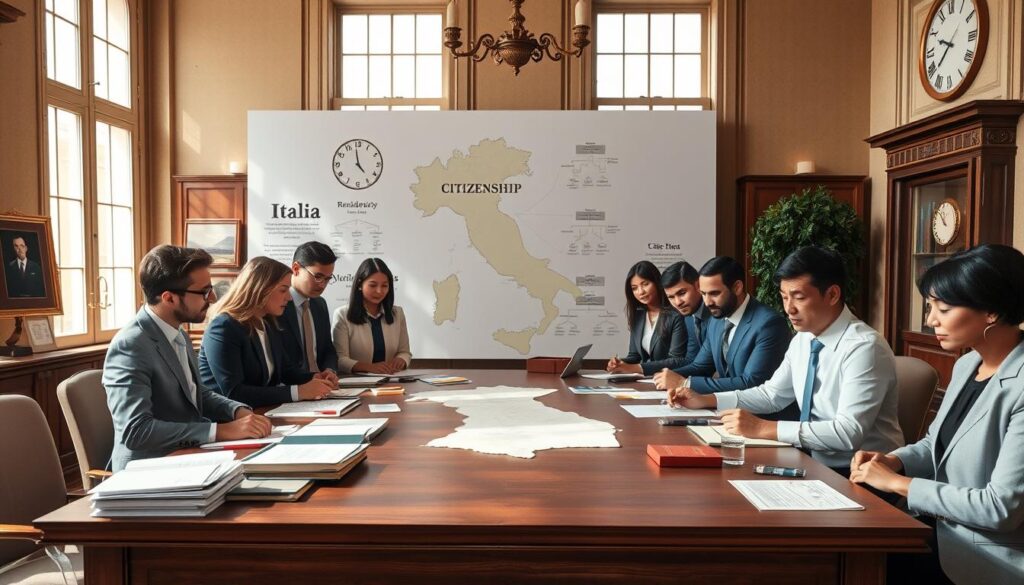
Jus sanguinis claims require an unbroken chain of vital records, apostilles, and certified translations. Applicants should gather birth, marriage, and death certificates from U.S. offices before travel.
Choosing a comune
Smaller comuni often process claims quicker, but local clerk interpretation varies. Building rapport and clear paperwork helps when lists are strict.
Permits, renewals, and longer-term choices
Keep a clean compliance record; timely renewals of a residency permit ease moves to permanent status. Workers on employer permits must track employer-linked timelines to avoid gaps.
Track continuous years of residence carefully. Eligibility windows for permanent residency or citizenship depend on legal presence and stable ties.
“Prepare for unpredictable document requests; a U.S. relative ready to fetch records saves weeks.”
- Organize a notarized binder of originals and copies plus a digital archive.
- Coordinate family applications when possible to prove relationships quickly.
- Assess local capacity: some comuni know expats italy workflows better than others.
| Topic | Practical tip | When to act |
|---|---|---|
| Jus sanguinis records | Order apostilled certificates and certified translations | Before filing |
| Permit renewals | Start 90 days before expiry; keep receipts | 3 months prior |
| Permanent options | Document continuous residence and language ability | After required years |
Plan ahead, keep copies, and involve family. Those steps reduce delays and give clearer options toward full citizenship.
Conclusion
, Treat each office visit like a meeting: arrive prepared, polite, and with a clear checklist. This approach helps turn paperwork into predictable steps and reduces repeat trips.
Prepare copies, start the permesso within eight days, and track residenza checks, housing proof, and bank needs. Use language skills and local contacts to shorten timelines.
Keep tax and cash-flow plans while waiting on cards. Use community tips to anticipate local practice and refine appointment strategies.
Final advice: note outstanding questions, make simple checklists, and review immigration rules each year. With patience, documents, and good relationships, living a stable life in this country is achievable.
FAQ
What should a new arrival do first at the embassy and questura?
They should confirm visa validity with the issuing embassy, keep originals and certified copies of travel documents, and book the questura appointment if the visa requires a permesso di soggiorno. It helps to bring the visa packet, passport, and proof of accommodation to both offices.
How does the “offline-first” process affect appointments and paperwork?
It means many steps require in-person visits, paper forms, and sometimes long waits. Applicants must bring hard copies, stamped receipts, and follow local opening hours. Online portals exist but rarely replace physical presence and original documents.
Why do national rules feel different in each comune?
National laws set the framework, but local anagrafe and questura practices vary by staff, workload, and regional procedures. This creates differences in appointment timing, required proofs, and document checks between municipalities.
Which visa types should expats consider: elective residence, student, work, or ancestry?
Elective residence suits retirees or those with independent income. Student visas are for accredited courses. Work visas depend on employer sponsorship or EU ICT moves. Ancestry (jus sanguinis) claims require thorough civil records and often a different consular path.
What is the eight-day rule and the permesso kit?
The eight-day rule asks visitors to register presence with local authorities within eight days of arrival if required by the visa. The permesso kit refers to the packet of documents and post office forms needed to start the residency permit application.
Should applicants use the post office or questura for the permesso di soggiorno?
Initial applications usually start at designated post offices with a kit and appointment request. Fingerprints and final issuance happen at the questura. Timelines vary; applicants should track receipts and appointment dates closely.
Which documents often cause delays (apostilles, proof of funds, photos)?
Common delays stem from missing apostilles on foreign documents, incomplete translations, insufficient proof of stable funds or income, and non-compliant ID photos. Early verification and certified translations reduce setbacks.
What is the difference between residenza and residency permit?
Residenza is municipal registration with the anagrafe that records where someone lives. The residency permit (permesso di soggiorno) is a national immigration document. Both are necessary for services like healthcare and tax registration.
How does one obtain a codice fiscale and register at the anagrafe?
The codice fiscale is issued by Agenzia delle Entrate using passport data and date of birth. Anagrafe registration requires proof of address, a rental contract or declaration of hospitality, and identification—handled at the local comune office.
What happens if the police check after residenza takes longer than 45 days?
If the scheduled verification is delayed, applicants should follow up with the anagrafe and provide additional documentation or witness statements. Keeping dated correspondence and receipts helps escalate the case if necessary.
What lease types should renters expect, like 2+3 or 4+4?
Standard residential leases include the 4+4 (four years plus renewal) and the 3+2 or 2+3 variations linked to tax or local agreements. Americans often find fixed renewal terms and required registration with the Agenzia delle Entrate surprising.
How can someone prove accommodation: rental contract vs letter of hospitality?
A registered rental contract with the landlord’s ID and stamp is the strongest proof. A letter of hospitality (dichiarazione di ospitalità) from an Italian host must be sworn at the police station and often requires the host’s ID and property documents.
How do utility contracts and credit history affect applications?
Utility bills in the applicant’s name help prove residence. Without local credit history, some banks or landlords request larger deposits or a guarantor. Using a registered lease and current bills often suffices for administrative checks.
How important is learning the local language for administrative tasks?
Speaking Italian speeds up appointments, reduces errors in form completion, and helps negotiate with local officials. Translators or bilingual consultants help, but basic Italian phrases significantly reduce misunderstandings.
Can a non-resident open a bank account, and what ID is needed?
Many banks open basic accounts for non-residents using passport, codice fiscale, and proof of address. Some require a residency card or an Italian phone number. Digital banks may offer simpler onboarding but check SEPA and tax reporting rules.
Are U.S. bank statements accepted as proof of income?
U.S. bank statements are commonly used to show funds, but they may need translation, apostille, or notarization for certain visa types. Consistent statements and supporting tax returns strengthen applications.
When do expats become Italian tax residents and what are obligations?
Tax residency typically applies after spending more than 183 days per year in Italy, or when registering domicile or residence. Obligations include filing income tax returns (IRPEF), reporting foreign assets (RW), and paying regional taxes where applicable.
What does a month-by-month timeline from visa approval to residency card look like?
Month 0: visa issued and travel. Week 1–2: register presence and gather documents. Week 2–6: submit permesso kit at post office. Month 2–3: questura appointment for fingerprints. Month 3–6: receive residency card, register at anagrafe and open accounts. Timelines vary by region.
How should someone document conflicting instructions from different offices?
They should collect written confirmations, emails, stamped receipts, and signed notes from officials. Photocopies of forms and a dated communication trail help when escalating to higher offices or a consulate.
How does jus sanguinis citizenship work and what records are needed?
Citizenship by descent requires certified civil records proving an unbroken lineage to an Italian ancestor. Applicants need birth, marriage, and death certificates, apostilles, translations, and often long municipal searches in the ancestor’s comune.
When should someone consider permanent residency or citizenship?
They should consider permanent residency after continuous lawful residence periods (typically five years for EU long-term residence), or citizenship after meeting residence and language requirements. Benefits include stability, social rights, and simplified travel in the EU.