“To have another language is to possess a second soul,” wrote Charlemagne. That idea sets a gentle tone. It reminds readers that small efforts open doors and smiles.
The guide shows practical steps for everyday success. It focuses on realistic wins: paying at a cafe, finding transport, and ordering food. It warns when English will suffice and when a phrase helps smooth an interaction.
Simple tools make a big difference. Google Translate’s camera and conversation mode, the Vidalingua phrasebook and printable cards all save time. A free podcast can teach quick lines before the flight.
Mindset matters: patience, politeness, and a friendly question like “Parli inglese?” often starts helpful exchanges with locals. The goal is better travel life, not perfect fluency, and small habits at home set readers up for success once they arrive this year.
Key Takeaways
- Carry a few printed phrases and a translator app for quick fixes.
- Use camera and conversation features on translation apps during busy days.
- Learn polite phrases; locals reward effort with smiles.
- Prepare at home: podcasts and phrasebooks speed early progress.
- Keep a patient, friendly attitude to ease common problems.
Understanding the reality: where English works and where Italian matters
Travelers often find that English works well in Italy’s busiest spots, but gaps appear beyond the main routes.
Major cities—Rome, Milan, Florence, and Venice—offer the most English-friendly service. Museums, hotels, and many restaurants list menus in English. In Milan, business centers and offices often use English during the workday, which saves time for professionals and visitors.
Outside tourist hubs, the picture changes. Small towns and rural areas have fewer international people and less English on signs. That can create a real problem when buying tickets, paying, or asking directions.

- In city centers, basic communication usually works smoothly in shops and transit points.
- Beyond the center, younger locals may help, but simple phrases and gestures are the easiest way forward.
- Plan the part of a trip that leaves big hubs by preparing short requests for tickets, payments, and directions.
These differences shape travel experiences. A tiny playbook of phrases saves a bit of time and reduces common misunderstandings when English is less available.
Essential words and phrases to navigate daily life
Simple words and short phrases are the quickest way to handle common errands and meals. This mini toolkit focuses on practical expressions that help with greeting people, shopping, ordering, and catching transport.
Greetings and polite language
Start the morning with Buongiorno and switch to Buonasera later. Keep polite words ready: Per favore, Grazie, Mi scusi, and Prego.
Shopping basics
- Quanto costa? — point at the item while asking.
- Posso pagare con la carta? — clarifies payment quickly.
Dining made easy
- Un tavolo, per favore. / Il menù, per favore.
- Vorrei questo. and Cosa mi consigli? reduce guesswork.
- Il conto, per favore. and reply to water choices: Acqua naturale o frizzante?
Transport phrases
- Un biglietto, per favore. for buses and trains.
- Dove si trova la stazione? and A che ora parte il treno? keep connections on track.
“A few useful words are often all it takes for clear communication.”
Tip: Memorize this short set and carry it. These words and phrases improve daily communication, help people help you, and make each day smoother while learning italian or when trying to learn language basics abroad.
Smart tools and tips: using technology without learning Italian
A few reliable apps make it quick to read menus, buy tickets, or ask for directions. These tools save time and reduce small frustrations when English isn’t available.
Google Translate features
Camera, conversation, and handwriting input each solve a common problem. Use the camera for instant menu and sign scans. Conversation mode handles back-and-forth speech. Handwriting helps when stylized text won’t scan. These functions speed errands and lower stress.
Specialized apps and light learning
Italian Translator+ (iOS) and Italian English Dictionary+ (Android) add phrasebooks, verb conjugators, quizzes, and flashcards. Download a few light apps like Duolingo and try “My Daily Phrase Italian” podcasts to build a simple habit across the year.
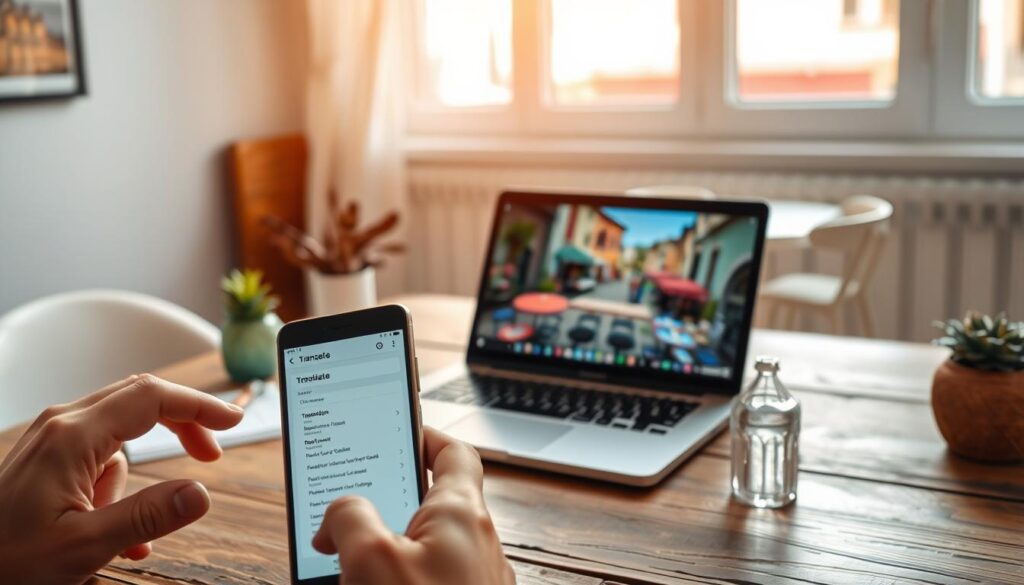
- Print phrase cards for the fastest access.
- Create a home-screen folder with maps, tickets, and translators.
- Pre-translate addresses and products before leaving the hotel.
| Tool | Main feature | Best use |
|---|---|---|
| Google Translate | Camera, conversation, handwriting | Menus, live chats, stylized labels |
| Italian Translator+ | Phrasebook, conjugator, flashcards | One-word lookups, study on the go |
| My Daily Phrase Italian | 100 short podcast episodes | Build phrases in spare minutes |
“Treat tech as a learning companion: small, steady use turns apps into a practical way learn essentials.”
Day-to-day scenarios: practical ways to get things done
A handful of gestures and short phrases will solve most ordinary errands. This section shows quick, reliable moves for markets, pharmacies, cafés, and restaurants.
At the market or pharmacy: showing, pointing, and confirming
Pointing works well. At markets, point at the item and ask Quanto costa? Then scan the label with a camera translator and nod with Sì, grazie.
In pharmacies, show a pre-translated note describing symptoms. Repeat the product name while pointing before paying. Locals often appreciate hearing Sto imparando l’italiano; it eases the exchange.
In restaurants and cafés: recommendations and ordering confidently
Start simply: Un caffè, per favore or point at a pastry. Ask Cosa mi consigli? and then say Vorrei questo while indicating the choice.
If a problem appears, politely ask Parli inglese? Younger people or staff often help. Keep phrases short and pair them with gestures to save time and reduce confusion.
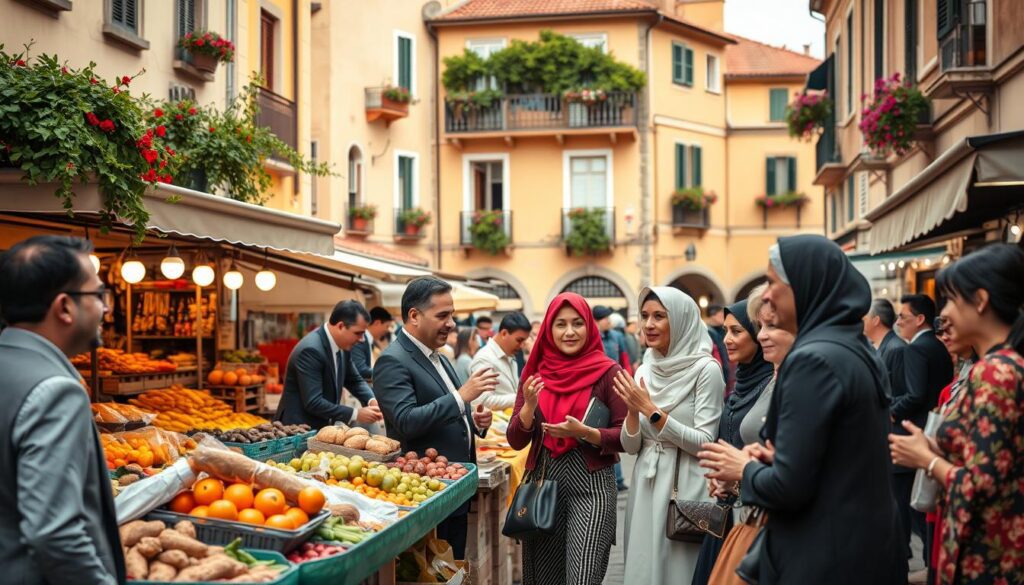
“Simple words, confident gestures, and tech make daily life easier and more pleasant.”
- Paying: Ask Posso pagare con la carta? to avoid surprises.
- Confirming: Show numbers on your phone for unclear prices or doses.
- Two-step meals: Ask for local suggestions, then point at the menu line to confirm.
| Scenario | Best immediate move | Tech or phrase |
|---|---|---|
| Market | Point, ask price, scan label | Camera translator; “Quanto costa?” |
| Pharmacy | Show translated note, repeat product | “Sto imparando l’italiano”; product name |
| Café / Restaurant | Point at item, ask recommendation | “Cosa mi consigli?”; “Un tavolo, per favore” |
How to Manage Daily Life in Italy Without Speaking Italian: mindset, effort, and local help
A respectful, patient attitude often turns a short exchange into a helpful lesson. Small visible effort invites kindness and reduces most routine problems.
Showing effort: “Sto imparando l’italiano” and other confidence builders
Saying “Sto imparando l’italiano.” signals respect and usually earns a smile. Staff may slow down, repeat words, or offer simple alternatives.
Key moves:
- Greet, say the line, then ask the short request. This three-step flow keeps interactions clear.
- Accept gentle corrections; these micro lessons make learning italian part of real experiences.
- Practice one or two phrases each errand and reuse them; this steady effort builds a natural rhythm.
When in doubt, ask younger locals or say “Parli inglese?”
If a problem remains, asking “Parli inglese?” is a quick opener. Younger locals often know enough English to resolve the issue fast.
“A bit of patience, a smile, and a short phrase will keep most days moving.”
Use tech as support but not a substitute. Pre-translate a line before approaching the counter so the exchange feels human-first. Celebrate small wins — each one is a part of the journey and a way learn that boosts confidence.
Conclusion
Readers will find that short phrases, polite greetings, and a few apps cover most common problems.
, A simple routine makes moving across cities easier. English helps in Rome, Milan, Florence, and Venice, while small towns reward a few remembered words and clear gestures.
Prepare at home with offline apps, a short phrase list, and light podcasts like My Daily Phrase Italian. Use Google Translate and Italian Translator+ when a problem appears. Asking Parli inglese? or saying Sto imparando l’italiano often opens friendly help.
Over time, this way of steady practice improves communication and boosts confidence. Small morning greetings, one phrase each day, and polite attention make everyday life more pleasant and manageable.
FAQ
Which cities have the most English speakers?
Major urban centers such as Rome, Milan, Florence, and Venice host many bilingual staff in hotels, museums, and tourist sites. Visitors can often find English menus and signage there, though proficiency varies by neighborhood and venue.
Will basic phrases work in small towns and villages?
Yes. A few polite words and gestures go a long way in smaller communities. Locals appreciate attempts like “buongiorno,” “per favore,” and “grazie,” and those phrases often open service and helpful responses even when full conversations aren’t possible.
What are the must-learn expressions for shopping?
Useful phrases include “quanto costa” for price checks and “posso pagare con la carta” for card payments. Pointing at items and showing a phone with a translated phrase is a practical backup when exact words fail.
Which dining phrases make ordering easier?
Key terms: “un tavolo” for a table, “il menù” for the menu, and “il conto” for the bill. Asking “acqua naturale o frizzante?” helps with water preferences. Saying “Consiglia qualcosa?” invites recommendations from staff.
What transport phrases should travelers know?
Learn “un biglietto,” “dove si trova la stazione,” and “a che ora parte” for tickets, station locations, and departure times. Showing a printed address or route on a phone often speeds up directions from locals or drivers.
How effective is Google Translate for everyday needs?
Google Translate’s camera and conversation modes are very effective for menus, signs, and live exchanges. The app can handle quick lookups and spoken translation, making it a reliable tool for routine tasks.
Are other apps worth using alongside Google Translate?
Yes. Dedicated phrasebook apps, flashcard tools, and podcasts help build essential vocabulary. Apps such as Duolingo or Babbel and phrasebooks provide offline access and reinforce common expressions.
What’s the best approach at markets and pharmacies?
Pointing, holding up the item or prescription, and using simple numbers for quantity work well. Repeat price and confirm with “va bene?” to ensure understanding. Pharmacists often understand basic English medical terms.
How should someone act in cafés and restaurants if they don’t speak Italian?
Smile, make eye contact, and use basic phrases. If uncertain, ask for a recommendation or point at a nearby table’s dish. For the bill, say “il conto, per favore” or tap a translation on the phone.
How can one show effort and build rapport with locals?
Simple statements like “Sto imparando l’italiano” show willingness to engage. Politeness and a few learned words signal respect and often lead to more patient and friendly interactions from locals.
Whom should a person ask for help when language barriers appear?
Younger residents, hospitality staff, and shop employees often speak some English and can assist. Tour guides and front-desk personnel are reliable options for complex requests like booking trains or arranging services.
Is it feasible to live in Italy for a year without learning much Italian?
It is possible, especially in cities with international communities, but learning basics improves daily life and access to services. Over time, small study habits—apps, podcasts, short lessons—make routines smoother and integrate someone into local life.