Can a smart system change the way you choose food and manage your health? This question matters as chronic conditions like obesity, diabetes, and heart disease rise across the US.
Today’s tools do more than list facts. They learn from data, spot patterns, and make tailored dietary suggestions fast. That shift moves care from broad rules to personal plans that fit your life.
This article gives you a clear roadmap: what machine learning systems do, real-world uses in dietary assessment and food manufacturing, and practical pros and cons to weigh. You will see how research and technologies push personalized nutrition forward and why accuracy, bias, privacy, and accountability matter.
Use this as information—not medical advice. The goal is to show how tools can support you and when to consult a registered dietitian.
Key Takeaways
- You’ll learn how data-driven systems reshape nutrition decisions.
- Tools now go beyond basic search to generate tailored recommendations.
- The rise in chronic disease drives demand for individualized care.
- Benefits include faster assessments; risks include bias and privacy concerns.
- This piece stays informational and recommends consulting professionals for care.
Why AI Is Becoming a Bigger Part of Your Nutrition and Health Decisions
As rates of obesity, diabetes, and cardiovascular disease climb, one-size-fits-all dietary guidance is losing ground. Population-level rules miss how your genes, labs, daily routine, and environment change what works for you.
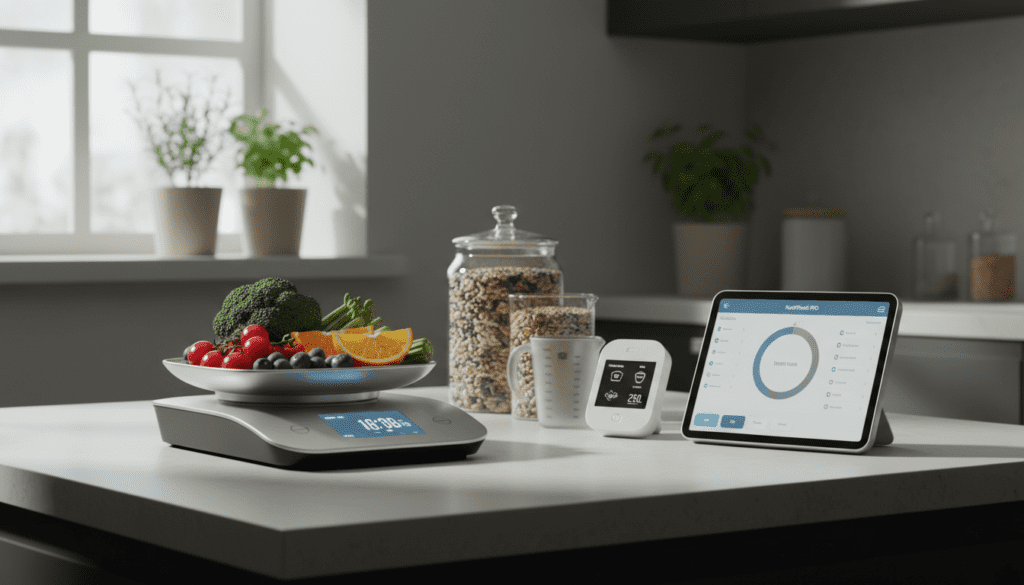
That gap is why data-driven systems are moving into routine care and consumer apps. They can spot patterns from wearables and food logs, then suggest timely interventions to support chronic disease management.
From broad guidelines to timely, personal advice
For many patients, static advice feels generic. Personalized suggestions can adapt when your condition changes. Remote monitoring helps care teams tune dietary interventions faster.
Tools you already use are the bridge
Search, chatbots, food-logging apps, and wearables already embed similar prediction features. Bringing those features into dietetic workflows makes adoption more natural for patients and clinicians.
“Personalized, real-time recommendations can turn daily data into actionable care.”
- Why it matters: better matching of meals to your metabolism and meds.
- Where it fits: tracking, pattern detection, and early intervention.
- What to watch: accuracy, privacy, and when to seek professional care.
| Use case | Common devices/tools | Benefit for patients |
|---|---|---|
| Glucose response monitoring | CGMs, apps | Faster diet adjustments for blood sugar control |
| Food logging and feedback | Apps, image recognition | Better portion and pattern detection |
| Remote monitoring | Wearables, telehealth platforms | Early signals for changing interventions |
Key Terms You Need to Understand: Artificial Intelligence, Machine Learning, and Deep Learning
Before you test tools, learn the terms that explain how they make decisions.
What the umbrella term covers
You’ll see “artificial intelligence” used to describe any system that classifies, predicts, or recommends. Think of it as the umbrella for decision-making tools that turn raw inputs into suggestions you can act on.
How machine learning models learn from data
Machine learning means algorithms that find patterns in diet logs, wearables, and lab results. These models improve as they get more data, so predictions adapt over time.
Deep learning and neural networks for complex inputs
Deep learning uses layered neural networks to handle messy inputs like photos or sensor streams. Convolutional nets (CNNs) are common for food image recognition and eating-detection from motion sensors.
- You get clear definitions to judge app claims.
- ML shows up in recommender systems; DL handles images and sensor feeds.
- A more complex model is not always more trustworthy—check accuracy and explainability.
| Term | Typical use | Why it matters to you |
|---|---|---|
| Artificial intelligence | User-facing recommendations | Frames what the tool promises |
| Machine learning | Predictors and recommenders | Improves with your diet and biomarker data |
| Deep learning | Image and sensor analysis | Handles complex, high-volume inputs |
Artificial Intelligence in Nutrition and Dietetics: Where It Shows Up in Real Life
Real-world systems now help clinicians and communities collect better food data faster. You’ll find four high-impact applications that matter for care, public programs, and consumer tools.
Dietary assessment in clinical and field workflows
Clinical nutrition teams use automated intake tools to speed triage and save charting time.
Field nutrition programs scale surveys and image-based logs to reach more people with fewer staff.
Disease monitoring and remote patient monitoring
Remote monitoring flags biomarker or weight shifts for earlier tweaks to care plans for chronic disease.
Monitoring helps you and your team react faster to trends that deserve action.
Personalized planning and meal generation
Meal and recipe engines craft plans from your preferences, allergies, and goals.
These applications can boost adherence, but outputs must be checked against clinical guidelines before use.
Nutrigenomics and multi-omics for precision interventions
AI uncovers gene–nutrient links and microbiome patterns that guide targeted interventions.
When databases and validation are strong, these insights make personalized nutrition more precise.
| Use case | Typical role | Benefit for you |
|---|---|---|
| Dietary assessment | Automated logs, image analysis | Faster intake capture and accurate portion data |
| Disease monitoring | Remote sensors, alerts | Early signal for plan changes in chronic disease care |
| Personalized planning | Recipe generators, recommendation engines | Tailored meal plans that match needs and preferences |
| Nutrigenomics | Multi-omics analytics | Targeted interventions based on gene and microbiome patterns |
AI-Assisted Dietary Assessment Tools That Track What You Eat
Today’s assessment systems use images or wearables to record eating moments you might miss. These digital approaches let you move beyond memory-based logs and give clinicians faster, richer dietary assessment.
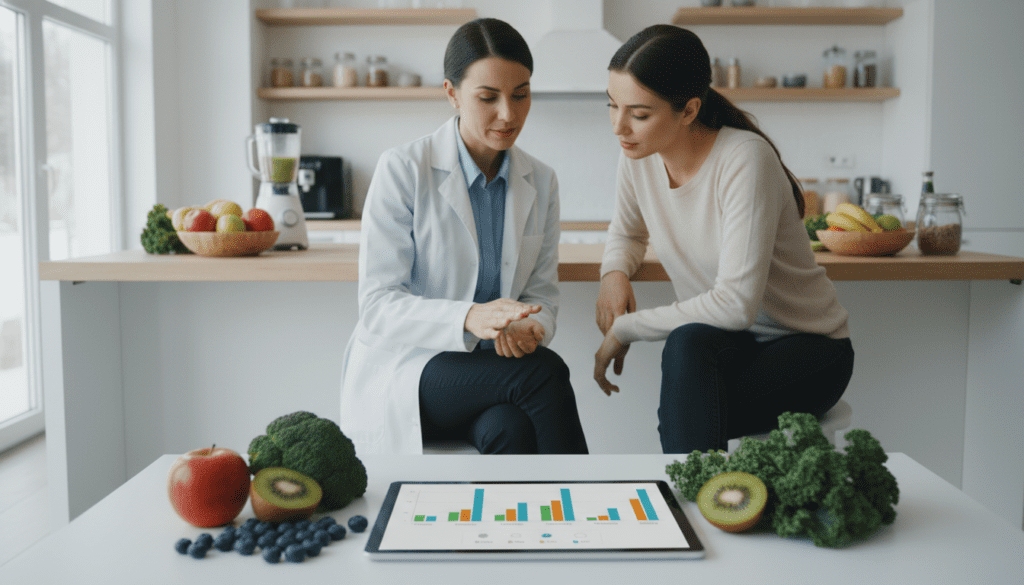
Image-based dietary assessment using computer vision
Photo apps follow a clear pipeline: image preprocessing → segmentation → classification → portion or volume estimation → nutrient database matching. Each step helps convert a meal photo into a usable record.
Where errors arise: mixed dishes, odd angles, and database gaps can skew portion estimates and nutrient matches. That affects overall accuracy.
Wearable devices that detect eating
Sensor devices capture jaw motion, hand-to-mouth actions, or passive images. These wearables catch snacks and brief meals you forget to log.
Limitations: battery life, false positives from speaking or chewing gum, and privacy concerns can limit use in daily life.
Why traditional methods fall short
Conventional methods like 24-hour recall, food diaries, and FFQs take time and rely on memory. They often miss snacks and underestimate portion sizes.
“Passive monitoring can reduce recall bias, but only when images and sensors are paired with good databases.”
- Two main categories: image-based apps and sensor wearables, each captures different behaviors.
- Pipeline view: knowing the photo processing steps shows where assessment errors start.
- Clinical fit: faster assessment helps hospitals and clinics act earlier on dietary risk.
Image Recognition for Food Logging: Accuracy, Limits, and What Affects Results
Photo-based food logs can look impressive in lab tests but behave very differently at your dinner table. Deep learning and CNN models reach high accuracy on controlled datasets, yet real-world photos bring new challenges.
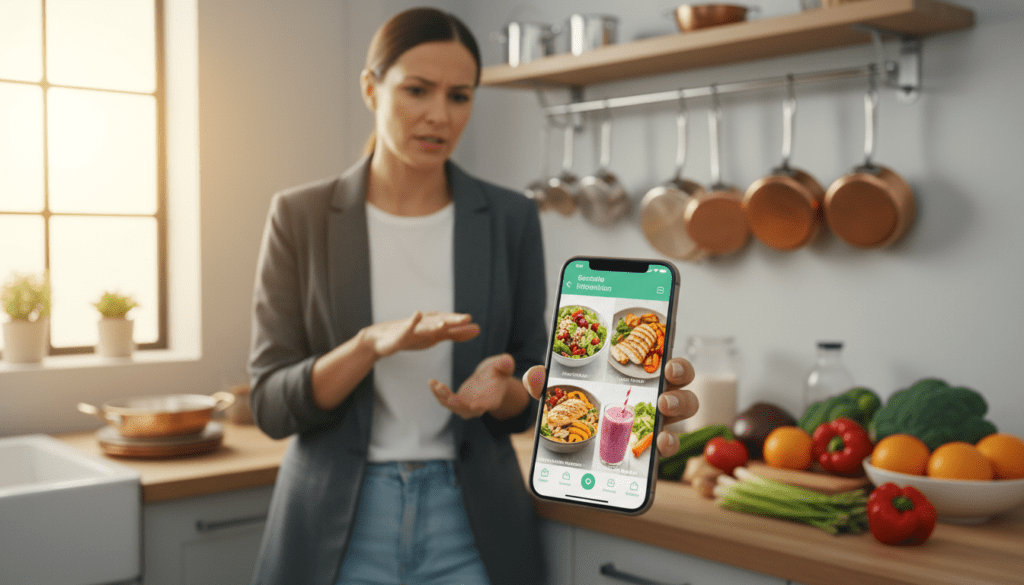
Why lighting, angles, and mixed dishes change classification
Lighting, shadows, and camera angle distort how a model sees textures and colors. That reduces classification accuracy for many foods.
Mixed dishes—casseroles, burrito bowls, stir-fries—often confuse models because multiple ingredients overlap. Even strong lab results may not translate to a school cafeteria or restaurant plate.
Portion estimation and nutrient matching as common failure points
Estimating volume from one photo is hard. Portion size errors usually cause bigger nutrient mistakes than wrong food labels.
Nutrient database matching fails when brand, recipe, or regional cooking changes a dish. The processing that links an image to a database entry can break down without extra context.
“Treat photo-derived nutrient outputs as trend estimates rather than exact clinical measures.”
- How to improve results: use consistent angles, add a reference object, and type brief notes when prompted.
- Practical view: rely on image logs for trends and pattern analysis, not precise calorie counts.
Wearables and Passive Monitoring: When Devices Track Eating for You
When devices record routine moments, you get clearer signals about when and where you eat. Passive monitoring captures timing, place, and unreported snacks that manual logs often miss.
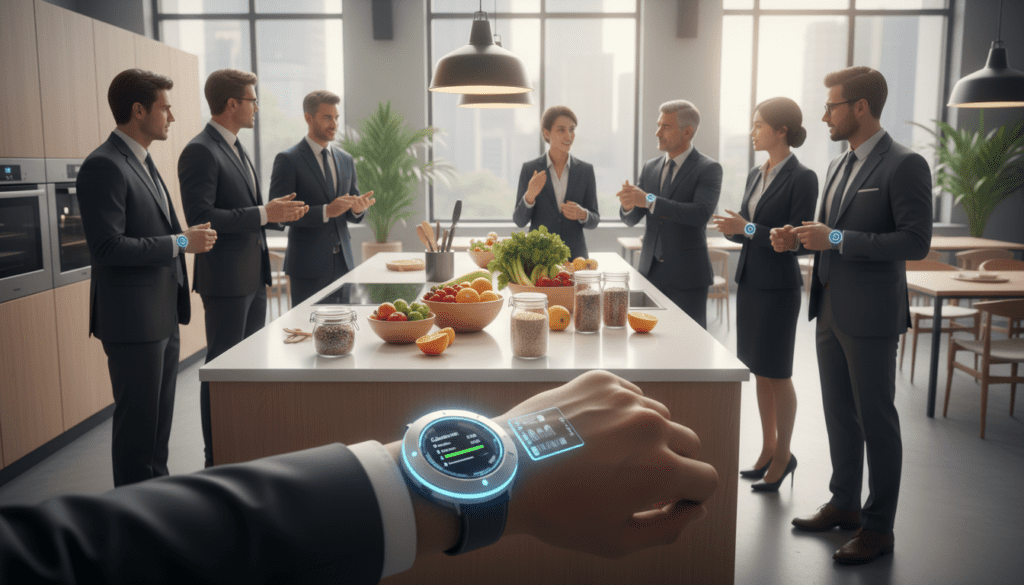
What passive tools capture well
Patterns: recurring meal times and frequent snacking that affect dietary routines.
Context: where you eat, who you are with, and triggers linked to food choices.
Missed items: brief snacks or sips that you might not recall during recall interviews.
Common failure modes
- Incorrect camera position or dark settings that produce blurred images.
- False positives—recording someone cooking rather than you actually eating.
- Device malfunctions and long processing time that delay usable outputs.
Why this matters for real populations
Children and adolescents underreport snacks more than adults. Wearable devices such as e-button, AIM glasses, Narrative Clip, and Kids’Cam often reveal context that caregivers and clinicians miss.
Be aware: passive monitoring can improve trend detection but still needs human review for high-stakes healthcare decisions. Balance the benefits against privacy and accuracy risks when you choose tools.
“Passive tools boost behavioral insight—but they are best paired with clinician oversight.”
Personalized Nutrition Powered by Data: From Biomarkers to Recommendations
When your body speaks through sensors, recommendations can follow immediately.
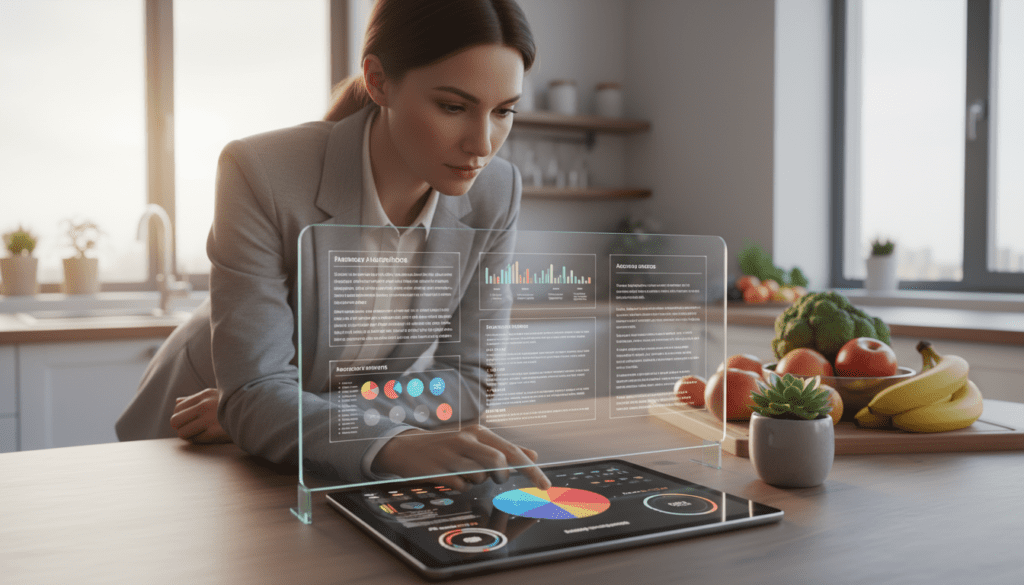
Continuous glucose monitoring (CGM) shows how a single meal shifts your blood sugar in real time. That stream of data moves your plan from “set once” to “adjust continuously,” which matters most if you manage diabetes or other chronic disease.
Using CGMs and real-time data to adjust meals for blood sugar control
CGM platforms feed minute-by-minute readings to systems that suggest meal timing, portions, or swaps to blunt spikes. You see which foods trigger large rises and which help steady your levels.
Reinforcement learning and feedback loops that adapt to your responses
Reinforcement learning tests small changes, measures outcomes, and updates next steps. Over time the models learn what works for your body, not just the population average.
How microbiome and lifestyle inputs can change what works for you
Microbiome profiles, sleep, stress, activity, and meds alter responses to the same meal. Platforms like ZOE and DayTwo combine these markers with metabolic data to refine personalized nutrition.
- What you gain: tailored interventions that match your responses.
- What to watch: quality of data, gaps in measurement, and clinically safe limits on automated suggestions.
“Data-driven adjustments can reduce glycemic excursions, but good outcomes depend on complete and accurate inputs.”
NLP and AI Chatbots in Nutrition: Digital Coaching, Food Diaries, and Behavior Insights
Chat-driven tools can turn a simple food log into a map of habits and triggers. Natural language processing (NLP) reads your entries and extracts patterns like late-night eating, skipped meals, and common triggers.
Turning text logs into clear behavior signals
NLP performs rapid analysis of your messages and diary notes to spot trends. Systems flag times, words, and repeat phrases that signal low adherence or stress eating.
That summary helps you and your clinician focus on the biggest opportunities for change.
Where chatbots help—and where they can go off track
Chatbots provide continuous prompts, meal ideas, and short summaries that boost accountability. They are great for basic information and routine planning.
However, confident-sounding output can be wrong if models were trained on mixed-quality data. Misinformation and bias are real risks without oversight.
“Use chat feedback for habit coaching, but validate medical or complex dietary decisions with a professional.”
| Feature | When it’s useful | Limitations |
|---|---|---|
| Pattern analysis | Detects late-night eating, skipped meals | Misses context without timestamps or meds |
| Behavioral nudges | Improves adherence via prompts | Can feel generic without personalization |
| Quick summaries | Saves time for dietetic review | May omit clinical contraindications |
- Ask chatbots for sources and set constraints (allergies, meds).
- Use outputs as supportive information, not definitive medical advice.
- Watch for hallucinations—repeated errors, ignored context, or overly simple fixes.
AI in Food Science and “Intelligent Food” Manufacturing
Food makers are applying neural networks to tweakprocessing steps that protect vitamins and texture. These systems use production data to adjust dryer temperatures, hold times, and slicing speed to reduce nutrient loss during processing.
Neural networks and process optimization
Neural networks model complex relationships between temperature, moisture, and nutrient degradation. Models run trials virtually and recommend parameters that balance quality and throughput.
Quality control, waste reduction, and resource use
Vision systems and sensor analytics flag defects faster than human inspection. That cuts rejects and food waste while lowering energy and water use on the line.
Traceability for transparency
Traceability systems link batch data across suppliers, processors, and distributors. When an issue arises, you get clearer provenance, faster recalls, and better safety signals.
“Optimized processing and traceability can improve product reliability and reduce losses on a large scale.”
- What this means for you: more consistent products, fewer shortages, and clearer labels about origin and quality.
- Be skeptical of vague “intelligent food” marketing; look for measurable process gains and published validation from food science labs.
Pros of AI-Based Nutrition Advice: Faster, More Accessible Support
Access to round-the-clock meal planning and basic dietary answers changes how you solve small food decisions. These systems synthesize scattered pages into concise responses so you spend less time searching.
Always-on access for nutrition information and planning
You can get quick clarification about ingredients, swaps, or portion ideas any hour. Chat-driven tools supply fast summaries, simple meal plans, and grocery lists that you can adapt immediately.
Lower cost compared with ongoing one-on-one care
Many tools are free or subscription-based, which lowers barriers when dietitian visits are costly or scarce. This makes basic dietary support more available to more individuals.
“Fast, affordable support helps you stay consistent—but it is not a substitute for personalized clinical care.”
How to use these advantages: treat quick outputs as starting points. Verify major changes with a licensed provider, add context like meds and health goals, and expect faster help to save time on routine tasks.
Pros: Better Dietary Assessment Accuracy and More Complete Monitoring
Complete, timely data help systems identify gaps that a single recall cannot. When you provide clear meal photos, timestamps, and context, automated assessment can reduce common errors from memory-based logs.
Reducing human error when the right data inputs are available
High-quality inputs improve accuracy. When image-based records link to a trusted nutrient database, portion and nutrient estimates become more consistent than hand-written recalls.
This does not mean perfect values, but it cuts transcription errors and missed items that humans often introduce.
Spotting missed snacks, underreporting, and inconsistencies
Passive wearables and photo logs reveal snacks and brief meals that people forget to report. That leads to more complete dietary assessment and clearer trend signals over time.
Better completeness helps you and your clinician spot adherence issues and habits that one-time assessment misses.
Earlier intervention in hospitals and faster workflows
Faster assessment workflows let clinical teams flag nutrition risk sooner. That supports earlier interventions for malnutrition, post-op recovery, or glycemic control.
Quick, reliable monitoring can shorten time to action without replacing clinician judgment on high-stakes decisions.
- You learn why complete data reduce human error in dietary assessment.
- Image and wearable methods reveal underreporting and missed snacks.
- Faster assessment workflows enable earlier clinical interventions when needed.
- Monitoring over time shows patterns—timing, consistency, and adherence—that a single recall cannot capture.
- Better accuracy often means improved trend detection and completeness rather than perfect nutrient precision.
| Benefit | How it works | Impact for patients |
|---|---|---|
| Reduced transcription error | Automated photo-to-database matching | More consistent nutrient estimates for trend analysis |
| Catch missed intake | Passive wearables and time-stamped images | More complete records, fewer forgotten snacks |
| Faster clinical workflows | Automated summaries for dietitians | Earlier interventions and quicker care decisions |
“AI-based assessment can be more accurate when inputs are complete and systems are matched to reliable nutrient data.”
Even with better tools, clinician oversight remains essential. When decisions affect meds, dialysis, or severe malnutrition, you should treat automated outputs as supportive assessment and confirm them with a provider.
Cons: Dehumanization of Care in Clinical Nutrition
When care feels transactional, people are less likely to stick with long-term dietary changes. You need more than data to change habits; you need trust, empathy, and tailored conversations that respect your values.
Why empathy, rapport, and patient-centered communication still matter: emotional context shapes what is realistic for you. Beliefs, finances, culture, and readiness to change decide whether an intervention works.
Limits for motivational interviewing and values-based food choices
Automated systems lack emotional capacity and human judgment. They cannot read subtle cues, probe ambivalence, or adapt phrasing to your concerns the way a skilled clinician does.
This gap matters most when choices hinge on values or mental health. Eating disorders, pregnancy, pediatric care, and complex medical histories need human nuance for safe, effective interventions.
- Nutrition counseling is not just numbers — it requires listening to your story.
- Empathy and rapport boost adherence, especially for chronic conditions and food insecurity.
- Over-automation can reduce trust and increase risk of dropout from care.
| Situation | Why human care matters | How to use tools |
|---|---|---|
| Eating disorders | Requires trauma-informed, nuanced dialogue | Use tools for tracking only; keep a clinician central |
| Pregnancy | Rapidly shifting needs and safety concerns | Support with meal prep suggestions, confirm with provider |
| Pediatrics | Family dynamics and growth monitoring | Combine automated logs with family-centered counseling |
“Use technology as a support—prep, tracking, and questions—but keep a registered dietitian at the center for counseling and clinical judgment.”
Cons: Bias, Misinformation, and Outdated Nutrition Information
Gaps in training data often show up as unfair recommendations for certain groups. When a system learns mainly from a narrow set of records, it may miss cultural diets, socioeconomic factors, or rare health profiles.
How gaps in training data can create skewed outputs across populations
Underrepresented populations get less accurate dietary suggestions because the underlying data lack diversity. That bias can push inappropriate portion sizes or food swaps that ignore culture, access, or cost.
Why research evolves quickly—and models may lag behind
Nutrition research updates frequently. Models that are not regularly retrained will repeat outdated guidance from older studies (see JM Nutrition; Arslan, 2024; Chatelan et al., 2023; Detopoulou et al., 2023).
Risks of confident-sounding answers that aren’t evidence-based
Confident language does not equal strong evidence. Misinformation can enter through low-quality sources, platform incentives, or brief prompts that remove clinical context. Repeating flawed outputs over time raises real health risk.
- Quick checks: ask the tool for evidence strength and recent sources.
- Compare advice against reputable guidelines before you change medication or therapy.
- Verify condition-specific dietary guidance with your clinician to avoid compounded errors.
| Problem | How it appears | Practical step for you |
|---|---|---|
| Biased recommendations | Wrong portions or unsuitable food swaps | Share cultural context and access limits when prompted |
| Outdated guidance | Old thresholds or deprecated supplements | Check publication dates and recent reviews |
| Misinformation | Confident but unsupported claims | Ask for citations and confirm with a professional |
Cons: Privacy, Security, and Accountability Risks in AI Nutrition Systems
Your food photos, wearables, and app logs can collect more than meal details. Together they create personal profiles that link daily habits to medical history and identity.
What happens to your health data from apps, devices, and food photos
Apps may gather photos, location tags, biometrics from devices, and past health records. That mix is sensitive and worth protecting.
Ask where data is stored, who can access it, how long it is kept, and whether it is shared or sold for ads.
Who is responsible if AI guidance harms your health
Liability can fall on developers, the platform, clinicians who use outputs, or you as the user. Legal lines are still evolving, so caution matters when following automated care suggestions.
Emerging approaches and tradeoffs
Federated learning and encryption methods aim to keep raw data on your device while training models. These methods reduce central exposure but raise costs and complexity.
Tradeoffs: better privacy can mean slower updates, higher device demands, and harder governance for healthcare use.
“Privacy and accountability are essential to trust; technology alone is not enough.”
| Risk area | What it includes | How you can reduce exposure |
|---|---|---|
| Data aggregation | Photos, location, biometrics, health history | Limit permissions; avoid extra context in uploads |
| Unauthorized access | Breaches or insecure storage | Choose apps with strong security and review privacy policies |
| Liability | Harm from wrong recommendations | Confirm major changes with a licensed clinician |
| Privacy tech tradeoffs | Federated learning, encryption | Weigh privacy gains vs performance and cost |
How You Can Use AI Nutrition Tools Safely and Effectively
Good results depend less on the app and more on the details you supply up front. Clear inputs help tools deliver useful dietary suggestions that match your goals, schedule, and health status.
What to include in your inputs to improve accuracy
Tell the tool your goal, daily schedule, allergies, and food preferences.
List medical conditions, medications, lab limits, and any recent test results.
Pro tip: brief context like typical portion sizes or cultural foods boosts accuracy of nutrient estimates and meal swaps.
When to treat outputs as general education vs clinical advice
Use tools for idea generation, grocery lists, and simple macro ranges.
Stop and seek professional care when recommendations affect meds, pregnancy, kidney disease, or complex conditions.
How to combine tools with a registered dietitian for better outcomes
Adopt a hybrid workflow: let tools draft logs and meal plans, then review those drafts with a dietitian for safety and personalization.
Dietitians add evidence-based judgment, check drug–food interactions, and use motivational methods tools cannot replicate.
Red flags that signal you should stop and seek professional care
- Advice that pushes extreme restriction or promises cures.
- Recommendations that contradict your clinician or ignore symptoms.
- Outputs that lack sources, show inconsistent portion logic, or repeat the same error.
“Ask any tool for its assumptions, alternatives, and sources before you act on dietary guidance.”
| What to check | Why it matters | Action |
|---|---|---|
| Context completeness | Improves output accuracy | Include meds, labs, allergies |
| Source and date | Prevents outdated information | Request citations and recent studies |
| Portion logic | Reduces nutrient errors | Verify with a dietitian |
Conclusion
Overall, this review summarizes where modern systems aid food assessment, monitoring, planning, and production.
What you can expect: faster access to advice, more complete tracking, and clearer pattern detection when inputs are accurate and consistent.
What to watch for: care that feels less human, recommendations that may be biased or outdated, and unclear privacy or accountability around your data.
The practical bottom line: use these tools for support, organization, and trend review—never as a substitute for clinical judgment when your health is at stake. Align any major changes with evidence-based guidance and consult a registered dietitian for complex goals or concerning symptoms.
FAQ
What is the role of AI-powered systems in your nutrition and health decisions?
These systems analyze large amounts of food, biomarker, and lifestyle data to offer tailored guidance. They help identify patterns, predict blood glucose responses, and suggest meal plans or portion changes faster than manual methods. Use their outputs as informed support—not a substitute for professional clinical judgment.
How does machine learning differ from deep learning for nutrition tasks?
Machine learning uses statistical models that learn relationships from labeled diet and outcome data. Deep learning uses neural networks to detect complex patterns in images or sensor streams—useful for food recognition and wearable signal interpretation. Each method has tradeoffs in data needs and transparency.
Where will you see these tools in everyday life?
You encounter them in search results, nutrition apps, chatbots, and wearables like Fitbit or Apple Watch. Hospitals use decision-support software for dietitians and remote monitoring platforms for chronic disease care. Food manufacturers use models for quality control and product optimization.
Can image-based food logging accurately track what you eat?
Image recognition can classify simple foods and estimate portions, but accuracy drops with mixed dishes, poor lighting, or unusual plating. Results also depend on the nutrient database used for matching. You should add context (ingredients, cooking method) to improve estimates.
What should you know about wearable devices that detect eating?
Wearables can capture patterns like meal timing, chewing, or hand-to-mouth motions and detect missed snacks. Common issues include camera angle, motion blur, false positives from similar movements, and battery or processing limits. They work best combined with manual entries or short prompts.
How can continuous glucose monitors (CGMs) change your meal decisions?
CGMs provide real-time glucose trends so you can see how specific foods affect you. Systems that use reinforcement learning can adapt recommendations based on your responses. Always discuss CGM-guided changes with your clinician, especially if you have diabetes or use insulin.
Are chatbot diet coaches reliable for behavior change?
Chatbots can identify patterns in your text logs—late-night eating, emotional triggers, or adherence lapses—and offer timely prompts and education. They can improve engagement but may give inaccurate or overly confident advice if training data is flawed. Use them as a supplement, not a sole source of care.
What privacy risks should you consider when using nutrition apps?
Your food photos, sensor streams, and health metrics may be stored, shared, or sold unless protected. Check app privacy policies, data retention, and whether a service uses federated learning or encryption. Avoid sharing sensitive medical details unless you trust the provider and platform security.
How do biases show up in diet models, and who is affected?
Models trained on limited or skewed datasets may underperform for certain races, ages, or dietary patterns, producing inaccurate recommendations. These gaps can worsen health disparities. Prefer tools validated across diverse populations and ask vendors about their training data and fairness testing.
When should you treat AI outputs as general education rather than clinical advice?
Treat outputs as educational if they lack peer-reviewed validation, don’t incorporate your full medical history, or recommend medication or major therapy changes. Seek a registered dietitian or physician for diagnostic, medication, or treatment decisions.
How can you improve accuracy when using diet-tracking tools?
Provide context: portion notes, ingredients, cooking methods, medications, and relevant health conditions. Sync devices (activity trackers, CGMs) and regularly correct misclassified items. That additional input reduces errors and makes recommendations more useful.
What are the main limitations of current food image recognition systems?
Key limits include mixed-dish segmentation, portion estimation errors, varying lighting and angles, and mismatches with nutrient databases. These systems also struggle with cultural dishes not present in training data. Manual verification remains important for precise nutrient tracking.
Can these technologies replace a registered dietitian?
No. Tools can scale monitoring, flag issues, and support planning, but they can’t replace the empathy, individualized counseling, and clinical judgment a dietitian provides. Combining tools with professional care offers the best outcomes.
What red flags tell you to stop using an app and seek professional help?
Stop and consult a clinician if recommendations cause harmful weight loss, unstable glucose levels, severe nutrient deficiencies, or conflicting medical instructions. Also act if an app ignores your medications, pregnancy, or chronic conditions.
How do food science models improve manufacturing and food quality?
Neural networks optimize processing to preserve nutrients, detect defects in real time for quality control, and reduce waste by predicting shelf life. Traceability systems help you confirm sourcing and safety across the supply chain.
What should you ask vendors before using a nutrition AI tool?
Ask about validation studies, the diversity of training datasets, data handling and encryption, regulatory compliance, and how clinicians are involved. Request published performance metrics and examples relevant to your population or condition.