
Artificial intelligence is no longer something people “experiment” with. In 2026, AI automation has quietly become part of everyday online work. Many tasks that once required constant human attention are now handled automatically in the background—often without users even realizing it.
This shift isn’t about job loss headlines or futuristic robots. It’s about efficiency. Businesses, freelancers, and content creators are using AI automation tools to reduce repetitive work, save time, and focus on decisions that actually matter. That is why searches related to AI automation tools and AI replacing manual work continue to rise on Google.
This article explains how AI automation tools are changing online work, what types of tasks are being replaced, and how individuals can adapt without being left behind.
What Are AI Automation Tools?
AI automation tools are software platforms that use artificial intelligence to perform tasks automatically once they are properly set up. Unlike traditional automation, which follows rigid rules, AI automation can analyze data, recognize patterns, and adjust actions based on context.
For example, instead of manually sorting emails, updating spreadsheets, or responding to common customer questions, AI tools can do these tasks continuously. They work in the background, learning from usage and improving over time.
This is why AI automation is becoming a standard part of online workflows rather than a “nice-to-have” feature.
Why Manual Online Work Is Being Replaced
Manual online work is not disappearing because it lacks value. It’s being replaced because it is inefficient when repeated at scale. Businesses operating online deal with large volumes of data, messages, and content every day. Handling these tasks manually slows growth and increases costs.
AI automation tools solve this by working continuously, without fatigue or delays. They allow individuals and companies to maintain consistency while reducing human error. In competitive digital environments, speed and accuracy matter more than ever.
As a result, many organizations now automate first and hire later.
Types of Online Work AI Is Replacing in 2026
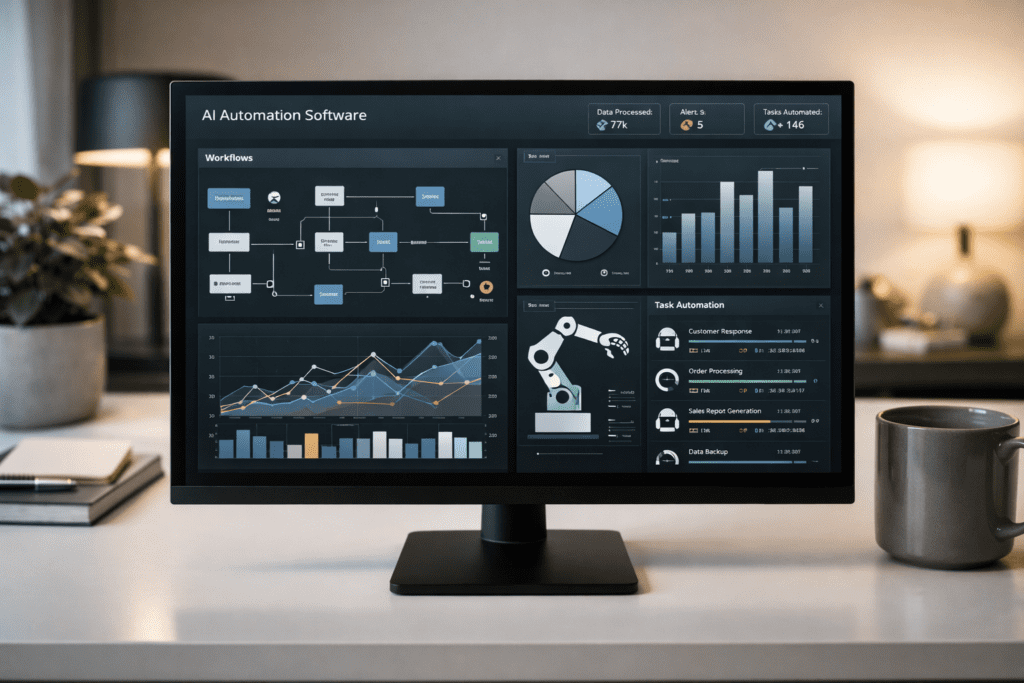
AI automation tools are especially effective at handling tasks that follow predictable patterns. One major area is content support work. While humans still create ideas and final edits, AI now drafts outlines, rewrites text for clarity, and improves SEO structure. This reduces the time needed to publish high-quality content.
Another area is customer communication. AI-powered systems can respond instantly to common questions, guide users through processes, and escalate complex issues to human agents. This improves user experience without increasing staff workload.
Administrative tasks are also being automated rapidly. Data entry, file organization, scheduling, and reporting are now commonly handled by AI-driven systems. What once required hours of attention can now be completed automatically in minutes.
Marketing operations have also changed. AI automation tools analyze user behavior, test variations of messages, and adjust campaigns in real time. This allows even small online businesses to operate with the efficiency of large teams.
How AI Automation Tools Actually Work
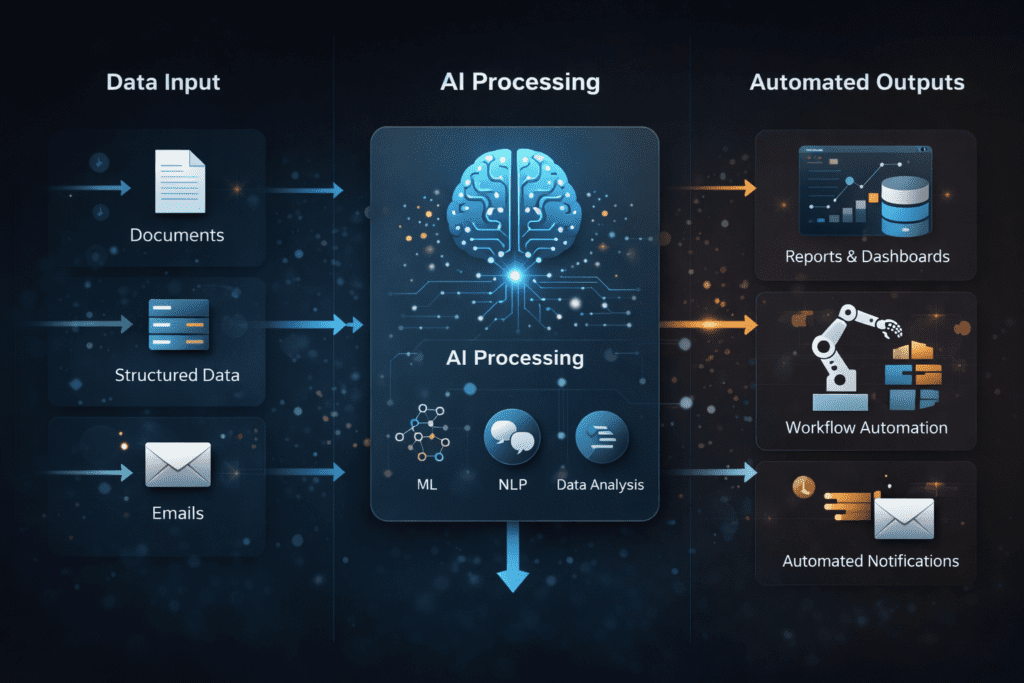
Most AI automation tools follow a simple structure. First, the user provides input, such as rules, examples, or objectives. The AI then processes this information and identifies patterns. Once configured, the system performs tasks automatically and delivers results to the user for review or approval.
This human-in-the-loop approach is important. It ensures accuracy, compliance, and control—especially for content and customer-facing tasks. AI does not replace human judgment; it supports it.
This balance is one reason AI-generated content and workflows are accepted by platforms like Google and advertisers when used responsibly.
Are AI Automation Tools Safe for SEO and AdSense?
Yes, when used correctly.
Search engines prioritize helpful, original, and well-structured content. AI automation tools assist in producing content faster, but quality still depends on human oversight. As long as content is written for users—not manipulation—it remains compliant with SEO best practices.
From an AdSense perspective, informational articles that educate readers about technology trends are considered safe and valuable. AI automation topics naturally fit into this category because they explain tools, workflows, and industry changes without making unrealistic claims.
The key is transparency and usefulness.
How Individuals Can Adapt Instead of Compete With AI

The most successful online workers are not trying to outwork AI. They are learning how to use it.
By understanding automation tools, individuals can offer higher-value services, manage larger workloads, and focus on strategy rather than execution. Skills such as workflow design, content review, and automation management are becoming more important than manual task execution.
In many cases, AI does not replace a person—it replaces several inefficient steps. The person who controls the system becomes more productive and more valuable.
Why This Trend Will Continue Beyond 2026
AI automation is no longer experimental technology. It is becoming core infrastructure for online work, similar to cloud computing or email.
As tools improve, automation will become easier to set up and harder to avoid. Those who learn early gain a long-term advantage, while those who resist may struggle to keep up.
For online businesses, freelancers, and content creators, understanding AI automation is no longer optional—it is essential.
How AI Automation Tools Learn and Improve Over Time
One important detail many articles miss is how AI automation tools improve after deployment. Unlike traditional software, these tools do not remain static. They continuously learn from user interactions, feedback, and data patterns.
For example, when an AI system handles customer inquiries, it begins to recognize which responses resolve issues faster and which require human intervention. Over time, the system prioritizes more effective responses and reduces unnecessary escalations. This learning process makes automation more accurate and reliable without additional manual configuration.
From an SEO and content perspective, this adaptive behavior is significant. It explains why AI-assisted workflows often outperform purely manual systems in consistency, speed, and scalability—an insight Google’s AI Overviews tends to surface when explaining automation trends.
How Small Online Businesses Are Using AI Automation in 2026

In 2026, AI automation is no longer limited to large companies. Small online businesses and solo entrepreneurs use these tools to manage tasks that would otherwise require hiring staff. Website owners automate content formatting, email categorization, and basic analytics reporting, allowing them to operate more efficiently with limited resources.
This shift has changed how online businesses scale. Instead of growing teams first, many businesses now grow systems. This is one of the main reasons AI automation tools are discussed frequently in Google AI summaries related to productivity and digital work trends.
The Importance of Human Oversight in AI Automation
While AI automation tools handle repetitive work effectively, human oversight remains essential. Automation works best when humans supervise outputs, review decisions, and intervene when context or judgment is required.
Search engines and advertising platforms favor content and workflows that maintain quality and transparency. This is why responsible automation—where AI supports human decision-making rather than replacing it entirely—aligns with long-term SEO and monetization guidelines.
Final Thoughts
AI automation tools in 2026 are quietly reshaping online work by removing repetitive manual tasks and enabling smarter workflows. This change is not about replacing people but about redefining how work gets done.
Those who understand and adopt automation will save time, reduce stress, and remain competitive in an increasingly digital world.
❓ FAQs
Frequently Asked Questions
Are AI automation tools replacing human jobs completely?
No. AI automation tools mainly replace repetitive and time-consuming tasks. Humans remain responsible for strategy, creativity, and final decisions.
Can beginners use AI automation tools without technical skills?
Yes. Most AI automation tools in 2026 are designed for non-technical users and offer visual interfaces, templates, and guided setup.
Is AI-generated or AI-assisted content safe for SEO?
Yes, as long as the content is helpful, original, and reviewed by humans. Search engines prioritize quality over how content is produced.
Do AI automation tools work for small websites and blogs?
Absolutely. Small websites benefit greatly from automation by saving time on formatting, research, and repetitive administrative work.
Will AI automation continue to grow after 2026?
Yes. AI automation is becoming core digital infrastructure, similar to cloud services, and its adoption is expected to increase across industries.